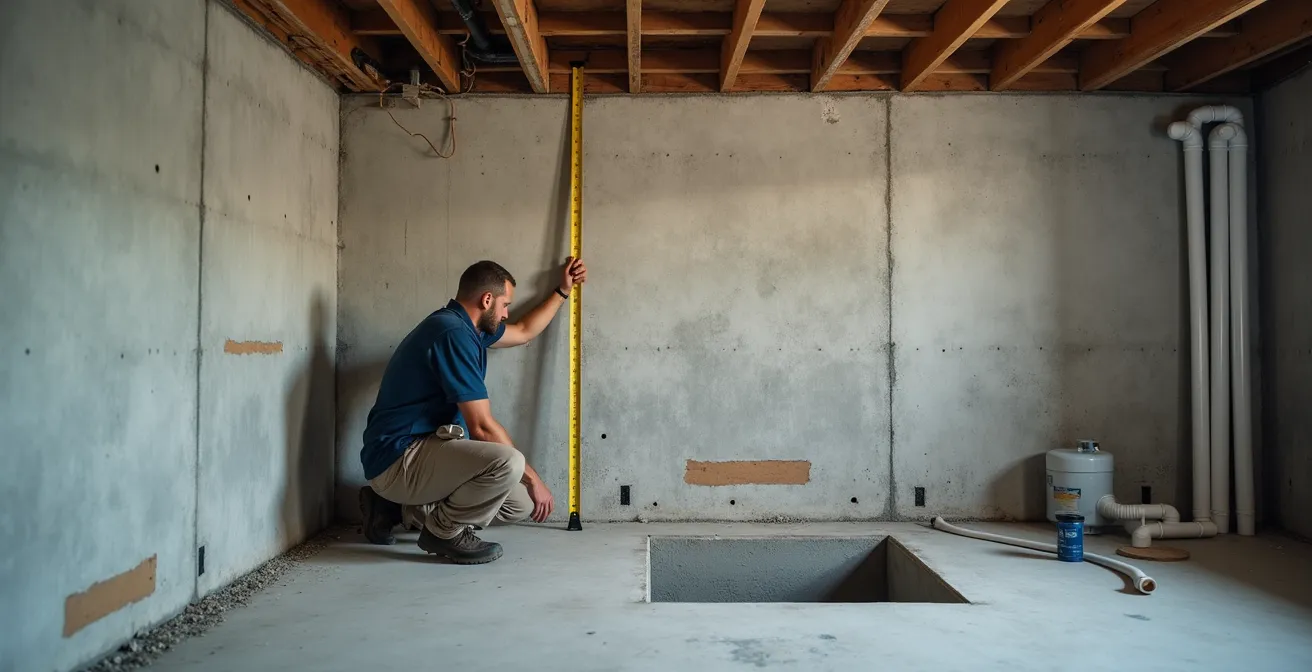
Choosing the right sump pump isn’t just about horsepower; it’s about building a complete, resilient system tailored for Montreal’s unique flood risks.
- Power outages and switch failures are the most common points of failure, making a reliable backup and the right switch type critical.
- Proper discharge and sewage backflow prevention are just as important as the pump itself, especially in older boroughs with combined sewers.
Recommendation: Focus on a layered defense including a correctly sized pump, a battery backup, an electronic switch, and a legally required backwater valve to ensure true peace of mind.
For any homeowner in a low-lying Montreal borough like Pierrefonds, the threat of a flooded basement is a recurring anxiety, especially with the heavy spring thaws and intense summer storms. The first question that often comes to mind is about the sump pump itself: what size do I need? While calculating capacity for a 1000 sq. ft. basement is a valid starting point, relying solely on horsepower or Gallons Per Hour (GPH) is a common but dangerous oversimplification.
The reality of protecting a Montreal home goes far beyond the pump’s motor. True flood mitigation is about building a resilient, integrated system. This system must be designed to withstand our city’s specific challenges: the infamous Hydro-Quebec power outages during ice storms, the silty clay soil that clogs mechanisms, the deep winter freezes that block pipes, and the aging sewer infrastructure in many historic neighbourhoods. A powerful pump is useless if the power is out, the switch is jammed, or the discharge line is a frozen block of ice.
This guide moves beyond generic advice. We will act as your flood mitigation specialist, breaking down each critical component of a robust defense strategy. We’ll examine why one pump is louder than another, how to guarantee operation during a blackout, and navigate the specific legal requirements and subsidy programs available right here in Montreal. The goal is not just to keep water out, but to give you complete confidence in your home’s protection.
To navigate this essential topic, we have structured this guide to address every key concern, from the technical details of your pump to the legal obligations in your borough. Explore the sections below to build your comprehensive flood defense plan.
Summary: Your Complete Guide to Basement Flood Protection in Montreal
- Why Pedestal Pumps Are Louder Than Submersible Models?
- How to Ensure Your Pump Works During a Hydro-Quebec Outage?
- Vertical or Tether Switch: Which Is Less Likely to Jam with Debris?
- The Mistake of Never Testing the Check Valve Before Heavy Rains
- Where to Route Discharge Water to Avoid Recycling It Into the Foundation?
- Why Do Heavy Rains Cause Sewage Backups in Older Neighborhoods?
- Why Wi-Fi Shut-Off Valves Are Safer Than Simple Alarms?
- Do You Legally Need a Backwater Valve in Your Montreal Borough?
Why Pedestal Pumps Are Louder Than Submersible Models?
The noise a sump pump makes is a primary concern for homeowners, especially if the basement is a finished living space. The difference in sound levels between pedestal and submersible pumps is not arbitrary; it’s a direct result of their fundamental design. A submersible pump’s motor is housed in a waterproof casing and sits at the bottom of the sump pit, fully submerged in water. The water itself acts as a natural and effective sound insulator, dampening the vibrations and noise of the motor’s operation.
In contrast, a pedestal pump is designed with its motor mounted on a column, positioned high above the water level. This keeps the motor dry and easily accessible for maintenance, but it also means the motor is exposed to the open air. With no water to muffle its sound, the mechanical whir of its operation propagates freely throughout the basement. The noise difference is significant; pedestal pumps typically operate in the 70-85 decibel range, comparable to a vacuum cleaner, while submersible models are much quieter, running at 45-60 decibels, similar to a quiet conversation.
While submersible pumps are the clear winner for quiet operation, if you have an existing pedestal pump, you are not without options. There are effective sound-dampening techniques that can dramatically reduce the noise level and make your basement a more peaceful space. These solutions focus on isolating the pump’s vibrations and containing the airborne sound from the motor, offering a practical path to a quieter home environment without needing a full pump replacement.
How to Ensure Your Pump Works During a Hydro-Quebec Outage?
A sump pump is your first line of defense against groundwater, but it is entirely dependent on electricity. For Montreal homeowners, this presents a critical vulnerability. Our region is no stranger to severe weather events, from summer thunderstorms to major ice storms, that can lead to prolonged Hydro-Quebec power outages. A blackout during a period of heavy rain or rapid snowmelt is a recipe for disaster, rendering your primary pump useless precisely when you need it most. This is why a backup system is not a luxury, but an absolute necessity for robust flood protection.
Modern backup systems offer substantial protection. For instance, a high-capacity system like the UltraSump battery backup can pump between 11,500 and 12,000 gallons of water on a single full charge, providing a powerful response during an emergency. These systems activate automatically the moment the power fails, ensuring seamless protection without any manual intervention. Having this safety net means your basement remains dry even when the rest of the neighbourhood is dark.
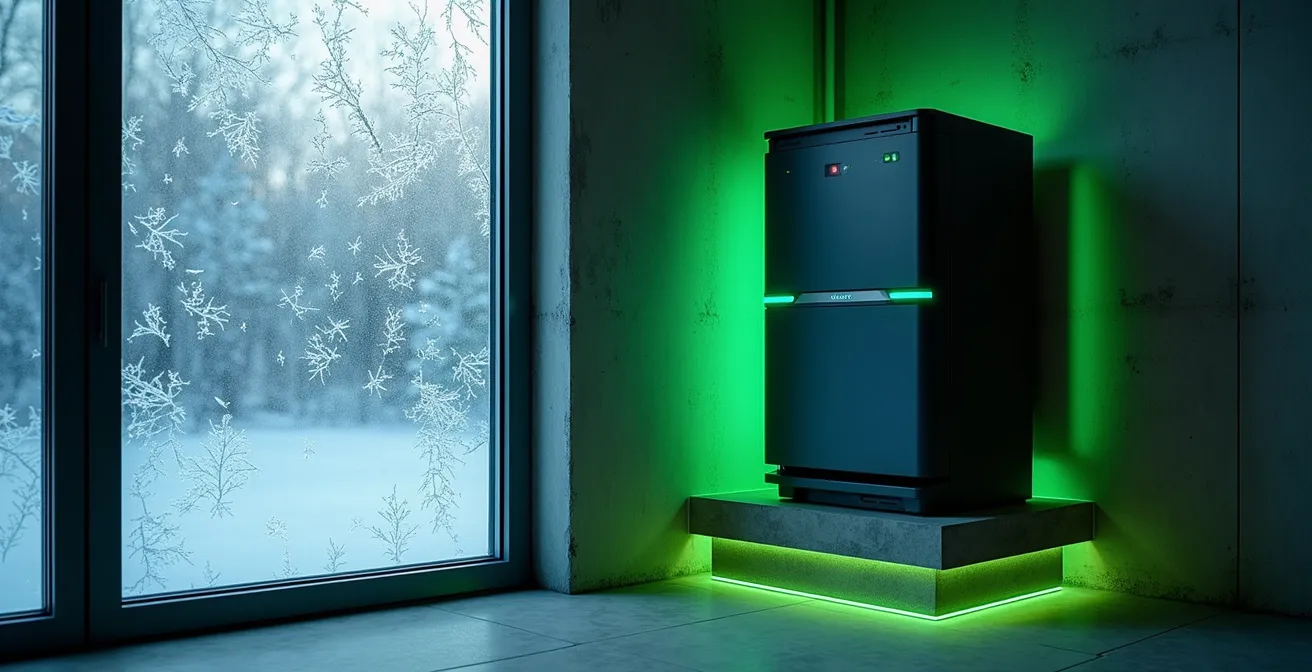
The image below illustrates a modern battery backup system, a key component of resilience against the extreme weather conditions we face in Quebec. It represents the peace of mind that comes from being prepared for the unexpected.
However, battery backups are not the only option. Choosing the right solution depends on your budget, risk tolerance, and the specific layout of your home. Water-powered pumps offer unlimited runtime but have their own drawbacks, while generators provide more power but require manual setup and fuel. Understanding the trade-offs is crucial for making an informed decision.
The following table provides a clear comparison of the primary backup power solutions available to Montreal homeowners, detailing their costs, runtime, and key advantages and disadvantages. This data, drawn from an analysis of modern backup systems, is essential for planning your home’s layered defense.
| Backup Type | Cost Range | Runtime | Pros | Cons |
|---|---|---|---|---|
| Battery Backup | $800-$2000 | 8-24 hours | Automatic activation, quiet operation | Limited runtime for multi-day outages |
| Water-Powered Backup | $300-$800 | Unlimited (with water pressure) | No electricity needed, unlimited runtime | Wastes 3-5 gallons per 1 gallon pumped, requires high water pressure |
| Portable Generator | $1000-$3000 | Days (with fuel) | Powers multiple devices, extended runtime | Manual start, requires fuel storage, outdoor placement |
| Whole-Home Generator | $5000-$15000 | Continuous | Automatic, powers entire home | High initial cost, professional installation required |
Vertical or Tether Switch: Which Is Less Likely to Jam with Debris?
Beyond power outages, the most common point of failure for a sump pump is its switch. This small component is responsible for detecting the rising water level and activating the pump. If the switch fails, the pump will never turn on, regardless of how powerful it is. The two most common mechanical switch types, tether and vertical, each have vulnerabilities, especially in the challenging soil conditions found around Montreal.
A tether switch is a floating ball on a cord that rises with the water, eventually tilting and activating the pump. While simple, it requires a wide sump pit to prevent the float from getting snagged on the pit walls or the pump itself. A vertical float switch moves up and down on a fixed rod, requiring less space and reducing the risk of snagging. However, both mechanical types are susceptible to jamming from silt, sediment, and debris—a significant problem in areas with the St. Lawrence Lowlands’ characteristic clay soil, which can easily wash into the sump pit.
This is where a third, more reliable option becomes crucial for ensuring system resilience.
Case Study: The Superiority of Electronic Switches in Montreal’s Clay Soil
For homes in Montreal, particularly older properties undergoing renovation where construction debris is common, electronic float switches represent a major leap in reliability. These solid-state switches have no moving parts to jam or wear out. Instead, they use two conductivity sensors to detect the presence of water. When water touches both probes, the switch activates the pump. An analysis of switch-related failures in high-sediment environments shows an incredible 90% reduction in failures for electronic switches compared to their mechanical counterparts. This design makes them virtually immune to jamming from the silt and debris that are common during the heavy water flow of ‘la fonte des neiges’ (the spring thaw).
Given their superior reliability, most modern sump pumps can be retrofitted with an electronic switch. While it’s a feasible DIY project for some, professional installation is recommended to ensure the sensors are calibrated correctly for your specific sump pit depth and pump capacity, guaranteeing flawless operation when you need it most.
The Mistake of Never Testing the Check Valve Before Heavy Rains
A sump pump system includes several critical components, and one of the most frequently overlooked is the check valve. This one-way valve is installed on the discharge pipe and has a simple but vital job: to prevent the water that has just been pumped out of your basement from flowing back into the sump pit once the pump shuts off. Without a functioning check valve, the same water will cycle in and out of your pit, forcing your pump to work constantly.
This failure has two major consequences. First, it puts immense and unnecessary strain on the pump motor, drastically shortening its lifespan. Second, it leads to a significant increase in energy consumption. According to industry data, a malfunctioning check valve can cause the pump to cycle up to 60 times per hour, compared to a normal rate of 10-12 times. This constant short-cycling will be directly reflected in a higher Hydro-Quebec bill. In essence, you are paying to pump the same water over and over again.
The check valve is a mechanical device with moving parts that can wear out, get stuck with debris, or crack from age, especially under the stress of Quebec’s freeze-thaw cycles. Regular inspection is not just recommended; it’s essential for system health.
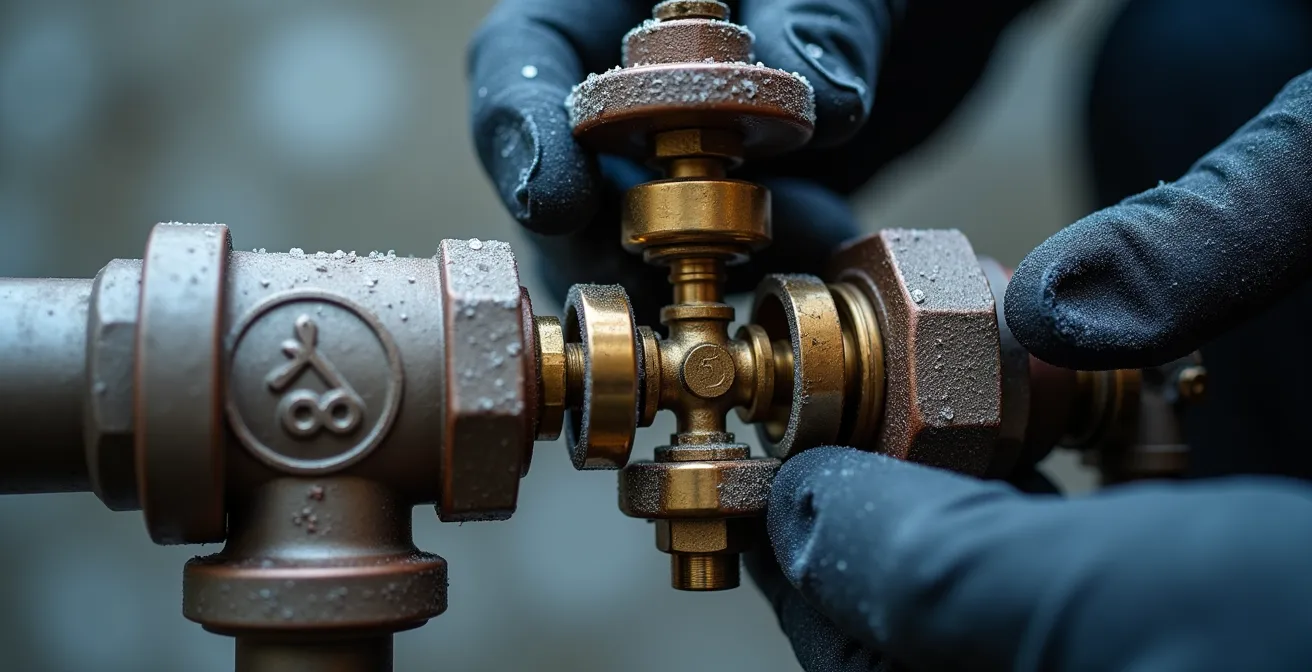
As shown in the close-up inspection above, these valves contain flaps or springs that must move freely. Testing is simple: after the pump completes a cycle, you should hear a single “thump” as the valve closes. If you hear water rushing back into the pit, or if the pump immediately turns on again, your check valve has likely failed and needs immediate replacement. Performing this simple test before the spring thaw and the fall rainy season is one of the most effective preventative maintenance tasks a homeowner can perform.
Where to Route Discharge Water to Avoid Recycling It Into the Foundation?
Once your sump pump has collected groundwater, the next critical step is getting rid of it effectively. Where you route the discharge water is just as important as the pump itself. The most common and costly mistake is to discharge the water too close to the house. If the discharge pipe simply dumps water right beside your foundation, you are creating a cycle of futility. That water will quickly saturate the soil and seep right back down to your foundation’s weeping tiles, where it will flow back into your sump pit to be pumped out again.
The general rule is to discharge water at least 10-20 feet away from the foundation, on a slope that carries it away from the property. However, in a dense urban environment like Montreal, this is not always straightforward. As local experts point out, regulations can be complex and location-specific. According to the team at MTL Contractors in their “Sump Pumps & French Drains Guide”:
Montreal borough bylaws vary significantly regarding water discharge routing – some allow street discharge while others require connection to storm drains.
– MTL Contractors
Before any installation, it is imperative to check with your local borough office to understand the specific rules for your property. Improperly routing water into a neighbour’s yard or a sanitary sewer can lead to fines and disputes. But even with proper routing, Montreal’s climate presents another major challenge: frozen discharge lines.
Case Study: Preventing Frozen Discharge Lines in a Quebec Winter
In winter, if the end of your discharge line freezes or gets buried in snow and ice, the water has nowhere to go. The pump will run against a blockage, which can burn out the motor and lead to a flood. The solution involves installing the discharge pipe below the 4-foot frost line and adding a specialized adapter. A system like IceGuard provides a grated opening where the pipe exits the house. If the underground line becomes blocked, this adapter allows water to escape, preventing a backup. During the 2019 polar vortex, homes with this system saw zero flooding incidents, compared to a 40% failure rate for standard discharge setups in similar conditions.
Why Do Heavy Rains Cause Sewage Backups in Older Neighborhoods?
For many Montreal homeowners, particularly those in older, established boroughs, a heavy downpour brings a fear that goes beyond simple groundwater flooding: the terrifying prospect of a raw sewage backup. This is a fundamentally different problem from groundwater seeping through the foundation, and it requires a different solution. It’s crucial to understand that a sump pump offers no protection against a municipal sewer backup. This issue originates not in the ground around your home, but in the city’s own infrastructure.
The root cause lies in the type of sewer system serving the property. As the City of Montreal explains, many buildings constructed before 1980 often have combined pipes that handle both rainwater from storm drains and sanitary water from homes. These are known as combined sewer systems, or ‘égouts unitaires’ in French. During periods of intense rainfall, these pipes can become completely overwhelmed with the volume of stormwater.
When the municipal system is at capacity, the immense pressure has nowhere to go but backward, forcing a mixture of stormwater and raw sewage up through the pipes and into the lowest point of connected homes—typically the basement floor drains, showers, and toilets.
Case Study: The Challenge of Combined Sewers in Le Plateau-Mont-Royal
Montreal’s historic boroughs, including Le Plateau-Mont-Royal, Verdun, and Rosemont–La Petite-Patrie, widely use combined sewer systems. During a major storm, the water level in the municipal mains can rise above the level of a home’s basement plumbing. The resulting hydrostatic pressure physically pushes sewage backward into the building. This is why a complete flood protection strategy in these areas must be a two-part approach: a sump pump system to manage groundwater and a backwater valve to protect against sewage from the city’s main line. One without the other leaves a critical vulnerability exposed.
This explains why neighbours in these areas can experience devastating sewage floods even if their foundations are perfectly waterproof. It is a direct failure of the shared infrastructure to cope with modern storm intensity, a problem that requires a dedicated mechanical barrier inside your home’s plumbing.
Why Wi-Fi Shut-Off Valves Are Safer Than Simple Alarms?
In the modern home, flood protection has evolved beyond simple mechanical devices. The rise of smart home technology offers a new level of proactive security and peace of mind. While a simple water alarm that beeps when it detects moisture is a good first step, its effectiveness is limited. It only alerts you to a problem that has already started, and it’s useless if you’re not home to hear it. A truly modern defense system doesn’t just inform you of a flood; it takes immediate, automatic action to stop it.
This is the crucial difference between a passive alarm and an active Wi-Fi shut-off valve. These smart systems pair water sensors with a motorized valve installed on your main water line. If a leak is detected anywhere—from a burst washing machine hose to a failing water heater or rising water in the sump pit—the system instantly sends an alert to your smartphone and, most importantly, automatically closes the main water supply to the entire house. This turns a potential catastrophe that could cause tens of thousands of dollars in damage into a minor, contained incident.
The financial incentive for installing such a system is also compelling. As noted by the Insurance Bureau of Canada, there is a clear trend among insurers to reward proactive homeowners. According to their guidelines:
Major Canadian insurance providers including Desjardins, Intact, and Belairdirect often provide home insurance premium discounts for installing certified smart water leak prevention systems.
– Insurance Bureau of Canada, Water Damage Prevention Guidelines 2024
Setting up a comprehensive smart water protection system involves more than just one device. It’s about creating an interconnected network that ensures connectivity and response even during a power outage. The following plan outlines the key steps to building this ultimate layer of security.
Action Plan: Setting Up Your Smart Water Protection System
- Install a Wi-Fi sump pump monitor with high-water and pump-failure alerts connected to a smartphone app.
- Add a smart main water shut-off valve for an automatic response to detected leaks anywhere in the home.
- Set up a battery backup for your modem and router to maintain internet connectivity during power outages.
- Configure multi-user alerts so other family members or trusted neighbours receive notifications if you are unavailable.
- Perform monthly tests by manually triggering the sensors to ensure the system responds correctly and notifications are received.
Key Takeaways
- A complete flood defense is a system, not just a pump. Horsepower alone is not enough for Montreal’s unique challenges.
- Backup systems are non-negotiable. You need a solution for both power outages (battery backup) and municipal sewer failure (backwater valve).
- Proactive maintenance and smart monitoring are the final layers of security that turn a good system into a great one.
Do You Legally Need a Backwater Valve in Your Montreal Borough?
We’ve established that a backwater valve (or ‘clapet anti-retour’) is the only effective defense against a municipal sewage backup. This brings up a critical question for any homeowner: is installing one optional or a legal requirement? The answer, dictated by the Quebec Construction Code and local Montreal bylaws, is clear: in many cases, it is absolutely mandatory. This is not just a recommendation; it’s a legal obligation designed to protect both the homeowner and the municipal infrastructure.
The rules are particularly strict for new construction and major renovations. For existing homes, especially in areas with known combined sewer systems, the city strongly mandates installation and provides financial incentives to encourage compliance.
Case Study: Quebec Construction Code and Montreal Bylaw 11-010
Under the Quebec Construction Code, backwater valves are required for new buildings to prevent sewer backflow. For existing homes, Montreal’s By-law 11-010 concerning protection against sewer back-up provides specific requirements, especially for properties in designated at-risk zones. The city’s official position is that complete protection requires both a backwater valve for sewage and a sump pump for groundwater. Because regulations can and do vary by borough, property owners must verify the exact requirements with their local borough office before undertaking any work.
The city recognizes that this installation represents a significant cost for homeowners. To alleviate this financial burden and increase the rate of compliance, Montreal has put a generous subsidy program in place. The RenoPlex program is designed to help property owners finance essential renovations that improve building safety and resilience. According to the City of Montreal, the RenoPlex program subsidies can cover up to two-thirds of the installation costs for a backwater valve, making this critical protection far more accessible.
Therefore, installing a backwater valve is not just a smart defensive move; it’s often a legal requirement and a financially supported one. Ignoring this obligation leaves your home critically vulnerable to a type of flood that a sump pump cannot stop and may put you in violation of local building codes.
Now that you understand the components of a complete flood defense system, the next logical step is to have your current setup assessed by a professional. A certified flood mitigation expert can identify vulnerabilities specific to your home and borough, ensuring your family and property are protected before the next major storm.
Frequently Asked Questions About Sump Pump Systems
How does spring thaw affect different switch types?
During ‘la fonte des neiges,’ the high volume of meltwater often carries significant amounts of silt and small debris. This can easily cause a tether switch to get stuck or a vertical switch to jam. Electronic switches, which have no moving parts, are far more reliable in these conditions as they are not susceptible to debris accumulation and continue to function correctly even in silty water.
Can I retrofit an electronic switch to my existing pump?
Yes, in most cases, an existing sump pump can be upgraded with a more reliable electronic switch. These switches are available as standalone components that can be wired into your current system. However, professional installation is highly recommended to ensure it is calibrated correctly for the depth of your sump pit and the activation requirements of your specific pump model for optimal performance.