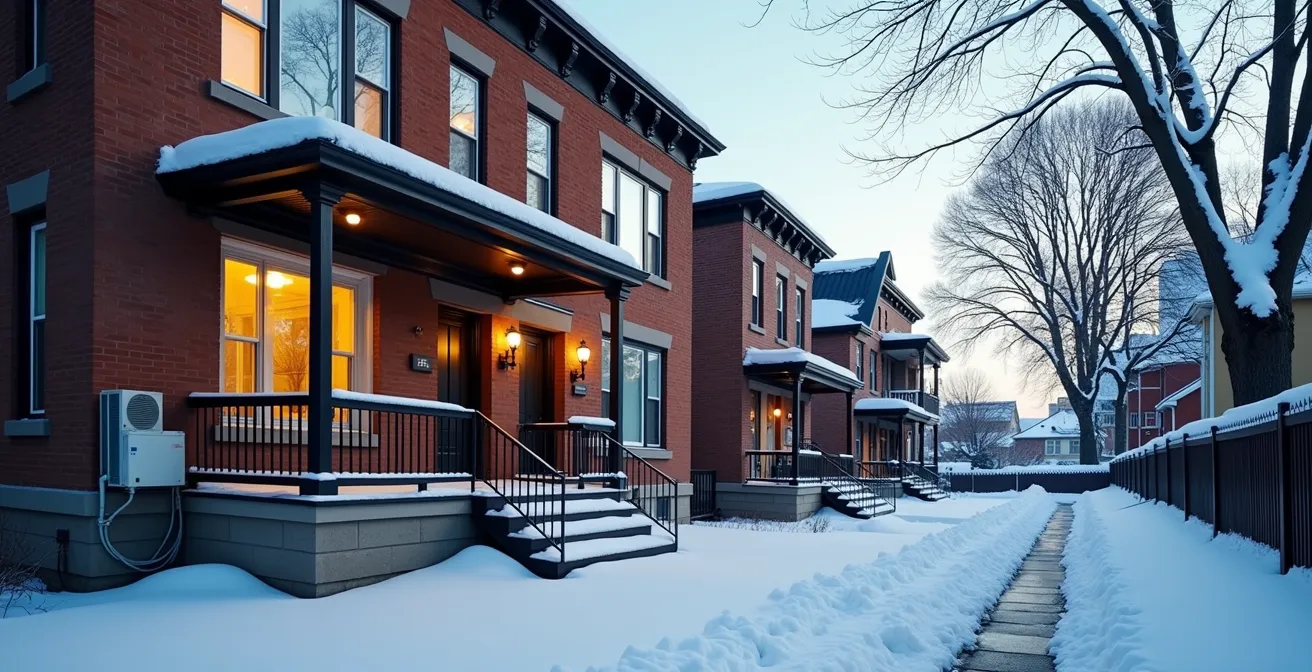
Choosing an eco-friendly heating system for a Montreal duplex is less about the technology and more about a strategic property upgrade that mitigates financial liability.
- Properly calculating your home’s heat loss is the non-negotiable first step before considering any system, preventing costly sizing errors.
- For multi-unit plexes, mini-split systems often provide superior acoustic separation and tenant billing simplicity over a central system.
Recommendation: Begin by having your outdated oil tank assessed and securing a Rénoclimat evaluation to unlock access to stacked provincial grants before any work begins.
As an owner of a Montreal duplex or triplex, the decision to move away from an aging oil furnace or inefficient electric baseboards is no longer a question of ‘if,’ but ‘how.’ The conversation often jumps to technology—heat pumps, geothermal, biomass—but this approach misses the bigger picture. Standard advice to “get a heat pump” or “insulate more” overlooks the unique structural realities of our city’s housing stock, the complex web of provincial grants, and the escalating risks tied to outdated infrastructure. Owning a plex in Montreal means managing a significant asset, and your heating system is one of its most critical components.
The true challenge isn’t just picking a ‘green’ appliance. It’s about executing a system-wide investment that enhances property value, ensures tenant comfort, and actively mitigates financial liabilities, particularly those linked to old oil tanks. This requires a strategic mindset that goes beyond a simple equipment swap. It involves understanding your building’s unique thermal signature, navigating a bureaucracy of grants to maximize your return, and choosing a system architecture that respects the multi-unit nature of your property.
This guide abandons the generic platitudes. Instead, we will walk through the critical decision points from the perspective of a strategic investor. We’ll analyze the real-world trade-offs between popular systems in an urban Montreal context, identify the costly mistakes to avoid, and lay out a clear roadmap for converting your property into a more efficient, valuable, and safer home. This is your consultant’s brief for making a smart, future-proof decision.
To navigate this complex decision, this article breaks down the essential strategic considerations. We will explore everything from the nuances of Quebec’s energy sources to a step-by-step plan for maximizing financial incentives, ensuring you have a comprehensive framework for your project.
Summary: A Strategic Guide to Eco-Heating for Montreal Duplexes
- Why Is Hydro-Quebec Electricity Considered Green Heating?
- How to Calculate Your Home’s Heat Loss Before Buying a System?
- Biomass vs. Geothermal: Which Is More Reliable for Urban Settings?
- The Error of Oversizing a Heating System That Causes Short-Cycling
- When to Use Radiant Floor Heating to Lower Ambient Temperature?
- Why Are Insurance Companies Refusing Homes with Old Oil Tanks?
- Central Heat Pump vs. Mini-Splits: Which is Better for Old Plexes?
- How to Convert an Oil Heating System to Electric in Quebec?
Why Is Hydro-Quebec Electricity Considered Green Heating?
For Montrealers, “green heating” is almost synonymous with “electric heating,” thanks to Hydro-Québec’s massive hydropower portfolio. On the surface, the logic is sound: over 99% of the electricity generated in the province comes from renewable sources, primarily hydro. This gives any electric heating system, from baseboards to advanced heat pumps, an operational carbon footprint that is nearly zero. When compared to burning fossil fuels like oil or natural gas directly in your basement, the environmental benefit is undeniable. This is the core reason electric options are heavily promoted through provincial grant programs.
However, a strategic assessment requires looking beyond operational emissions. The “green” label on hydropower is not without its complexities. The construction of large dams has significant embodied carbon and ecological impacts, including the flooding of vast territories and the release of mercury into northern waterways. Furthermore, Hydro-Québec’s grid faces immense pressure during peak winter demand—those frigid January mornings when everyone’s heating is running at full capacity. To manage this, dual-energy programs are encouraged, which use a natural gas furnace as a backup when temperatures plummet below -12°C. While these systems can reduce natural gas consumption by 70% annually compared to a gas-only system, they acknowledge that our “all-electric” grid still relies on fossil fuels for stability during extreme cold snaps.
Understanding this nuance is key. Choosing an electric system is a significant environmental step forward, but it’s not a silver bullet. It’s a pragmatic choice that leverages Quebec’s low-carbon grid while acknowledging its limitations. The goal is a massive reduction in greenhouse gases, not absolute purity. This perspective helps frame the subsequent decisions around system efficiency and sizing—the more efficient your system, the less strain it places on the grid during those critical peak periods.
How to Calculate Your Home’s Heat Loss Before Buying a System?
Before you even look at a single piece of heating equipment, the most critical step is to perform a heat loss calculation, also known as assessing your building’s thermal integrity. This process determines exactly how much heat your duplex loses to the outside on the coldest day of the year. It’s the single most important data point for correctly sizing any new heating system. In Montreal, with our diverse and often century-old housing stock, skipping this step is a recipe for disaster. Factors like uninsulated stone foundations, original sash windows, shared party walls in a plex, and poorly sealed attic hatches dramatically influence a home’s heating needs.
A professional HVAC contractor will use software adhering to standards from the Heating, Refrigeration and Air Conditioning Institute of Canada (HRAI) to perform this calculation. They measure window and door areas, assess insulation levels (R-value) in walls and ceilings, and account for air leakage rates. However, as a homeowner, you can perform a preliminary audit to identify major problem areas. This initial check will give you a much better understanding of your property and allow you to have a more informed conversation with contractors.

As the thermal image above visualizes, heat escapes through the path of least resistance. These weak points—old windows, uninsulated attics, cracks in the foundation—are where your heating dollars vanish. A proper heat loss calculation quantifies this loss in BTUs (British Thermal Units) per hour, providing the precise target your new system must meet. Without this number, any equipment quote is just a guess.
Case Study: Sizing Error in an Outremont Duplex
A contractor’s failure to perform a detailed heat loss calculation led to an undersized system in an Outremont duplex, which couldn’t adequately heat the basement apartment during cold snaps. The homeowner faced constant complaints and high energy bills from the system running non-stop. According to a report by the Montreal-based company AirGreen, their technicians corrected the issue by first conducting a complete thermal evaluation of the entire building. They then installed a properly sized 36,000 BTU multi-zone system, with indoor units precisely adapted to the unique heat loss of each room, resolving the comfort issues and stabilizing energy consumption.
Biomass vs. Geothermal: Which Is More Reliable for Urban Settings?
For duplex owners seeking the ultimate in eco-friendly heating, biomass and geothermal systems represent two of the most sustainable, yet complex, options. Unlike heat pumps, which move heat, these systems generate it from renewable sources: organic matter for biomass and the earth’s stable temperature for geothermal. However, their feasibility in a dense urban environment like Montreal is fraught with challenges that must be carefully weighed against their benefits.
Biomass systems, which typically burn wood pellets, are attractive due to the regional availability of wood. As noted by HVAC specialists at AirGreen, this can be a viable option. Modern pellet stoves and boilers are highly efficient and automated. The main hurdles in a Montreal plex are logistical and regulatory. You need dedicated, dry space for storing bulky bags of pellets, which is a premium in most duplexes. Furthermore, many boroughs have strict air quality regulations that can complicate the permitting process for any combustion-based appliance. The operational cost also fluctuates with the price of wood pellets.
Geothermal systems offer an incredibly stable and low operating cost by leveraging the ground’s constant temperature (around 10°C) to heat and cool your home. They are silent, have a very long lifespan, and significantly increase property value. The primary barrier is the immense upfront cost and spatial requirement for installation. A vertical loop system, the most common for city lots, requires deep drilling on your property. This process is disruptive, expensive, and can be impossible on tight Montreal lots with municipal servitudes, mature tree roots, or challenging geological conditions like dense shale rock.
The following table provides a clear comparison of the trade-offs for a typical Montreal duplex, based on an analysis of urban feasibility.
| Factor | Biomass Heating | Geothermal System |
|---|---|---|
| Installation Cost | $8,000-$15,000 | $25,000-$45,000 |
| Montreal Permits | Air quality regulations apply | Complex drilling permits required |
| Space Requirements | Storage for wood pellets needed | Limited by property lines/servitudes |
| Operating Cost | Variable with pellet prices | Stable, low electricity cost |
| Urban Feasibility | Challenging in dense boroughs | Geological constraints (shale rock) |
| Property Value Impact | Moderate increase | Significant increase |
The Error of Oversizing a Heating System That Causes Short-Cycling
After carefully calculating your home’s heat loss, the next critical error to avoid is oversizing the heating system. There’s a common and deeply flawed belief among homeowners and even some contractors that “bigger is better.” In reality, a heat pump or furnace that is too powerful for your space is a significant problem. This leads to a phenomenon called short-cycling, where the system turns on, blasts the space with heat to quickly satisfy the thermostat, and then shuts off. This frequent on/off pattern is incredibly inefficient and detrimental to the equipment.
Short-cycling has several negative consequences. First, it drives up your energy bills. A heating system uses the most energy during startup; by constantly starting and stopping, it never reaches its optimal, steady-state running efficiency. One case study in a Laval duplex showed a 30% immediate drop in energy consumption after a correctly sized system was installed to replace an oversized one. Second, it causes excessive wear and tear on components like the compressor, leading to a shorter lifespan and more frequent repairs. Finally, it creates an uncomfortable living environment. The system doesn’t run long enough to properly circulate air or, in the summer, to dehumidify, leaving the home feeling stuffy and prone to uncomfortable temperature swings between cycles.
In a duplex or triplex, this problem can be amplified. One oversized central unit may cause one apartment to overheat while another remains chilly, leading to tenant disputes. This is another reason why a proper heat loss calculation for each zone or unit is not just recommended—it’s essential for a successful system-wide investment.
Action Plan: Diagnosing Short-Cycling in Your Montreal Duplex
- Monitor Hydro-Québec Bill: Check your online consumption data for sharp, repeated energy peaks during mild weather (0°C to 10°C), which is a classic sign of short-cycling.
- Track Cycle Times: Use a timer to measure how long your heating system runs. Consistent cycles of less than 10 minutes strongly indicate an oversized unit.
- Check for Temperature Swings: Use thermometers in different rooms and units. If you notice significant temperature drops between heating cycles, your system is likely too large.
- Listen for Frequent Cycling: Pay attention to the sound of your outdoor unit or furnace. If you hear it turning on and off every few minutes, this is a clear red flag and a potential source of noise complaints from tenants.
- Measure Humidity Levels: In summer, an oversized air conditioning or heat pump system will not run long enough to dehumidify the air, leading to a cool but clammy feeling. High indoor humidity (above 55-60%) is a key indicator.
When to Use Radiant Floor Heating to Lower Ambient Temperature?
Radiant floor heating is a technology that fundamentally changes how a space feels, offering a luxurious form of comfort that traditional forced-air systems can’t match. Instead of heating the air, it warms the objects and people in the room directly by radiation from the floor. This unique method allows you to feel comfortable at a lower ambient air temperature. For example, a room might feel perfectly warm at 19°C with radiant heating, whereas a forced-air system might need to be set to 21°C to achieve the same level of perceived comfort. This ability to lower the thermostat by a few degrees translates directly into energy savings.
In Montreal, with our long heating season, radiant floors can be a powerful strategic addition, particularly in specific applications. Both electric systems (using mats or cables) and hydronic systems (circulating heated water through tubing) are effective. They are most efficient when installed under thermally conductive flooring like ceramic tile, stone, or polished concrete, making them ideal for renovated kitchens, bathrooms, or basements. In these spaces, they can eliminate the cold shock of a tiled floor and create an inviting atmosphere.
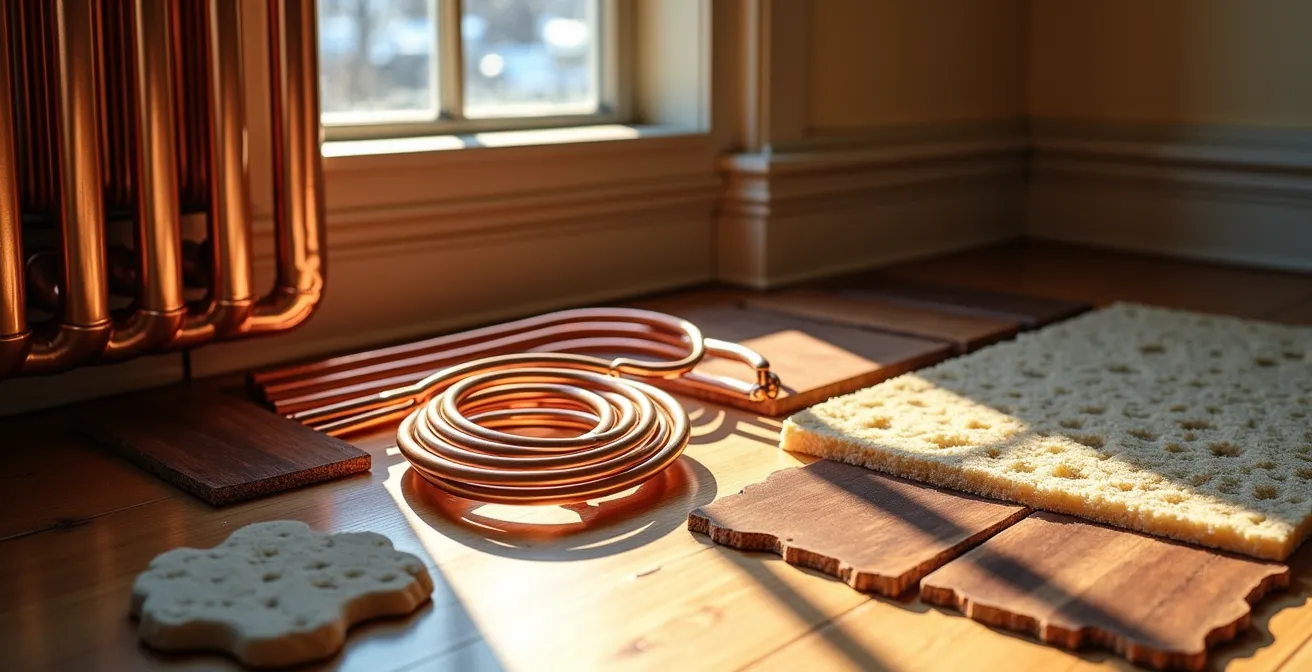
However, it’s important to understand the role of radiant heating within your overall system. In a poorly insulated older duplex, a radiant floor system may struggle to be the sole heat source. It often works best as a supplemental system, providing exceptional comfort in key areas while a primary system like a heat pump handles the bulk of the heating load. As experts from Heavenly Heat Inc. note in their Montreal guide, “Electric radiant floor systems can serve as a primary heat source, provided the room’s heat loss is minimal.” This reinforces the need for excellent insulation if you intend to rely on it exclusively. Therefore, the decision to use radiant heating should be part of a larger renovation strategy, often timed with replacing flooring or finishing a basement.
Electric radiant floor systems can serve as a primary heat source, provided the room’s heat loss is minimal.
– Heavenly Heat Inc., Montreal In-Floor Heating Guide
Why Are Insurance Companies Refusing Homes with Old Oil Tanks?
If you own a Montreal duplex with an oil furnace, the single most pressing reason to convert your system has shifted from efficiency to insurability. In recent years, insurance companies across Quebec have become increasingly unwilling to insure, or renew policies for, homes with oil tanks over a certain age (typically 15-20 years for indoor tanks and even less for outdoor ones). This isn’t about the furnace itself; it’s about the catastrophic financial risk posed by the oil tank.
The core issue is liability mitigation. A leaking oil tank, even a slow drip, can contaminate the soil and groundwater beneath and around your property. Under Quebec’s Environment Quality Act, the homeowner is held responsible for the cleanup, and the costs can be astronomical. A standard home insurance policy does not cover this type of gradual pollution. Remediation can involve excavating large parts of your foundation, trucking away tons of contaminated soil, and extensive environmental testing. The total cost can easily exceed the value of the property itself, and this is the risk that insurers are no longer willing to bear.
This has profound implications for real estate transactions. A hidden or improperly decommissioned oil tank is a major red flag that can halt a sale. Buyers’ insurers will refuse coverage, and lenders will not finance a property with such a significant unmitigated liability. Consequently, removing an old oil tank is no longer just an energy upgrade; it’s an essential step to preserve your property’s value and marketability. When you have the tank removed, it is now standard practice for insurers to demand not only a certificate of removal from the contractor but also a preventative soil test report from an environmental firm to prove that no contamination has occurred. The financial responsibility for soil contamination is a powerful motivator for both homeowners and their insurers.
Central Heat Pump vs. Mini-Splits: Which is Better for Old Plexes?
For most Montreal duplex or triplex owners, the practical choice for an eco-friendly upgrade boils down to two types of air-source heat pumps: a central system or a ductless mini-split system. The decision between them depends almost entirely on the existing architecture of your building and your priorities regarding cost, comfort, and tenant management.
A central heat pump is a logical choice if your plex already has a network of well-maintained ductwork from a previous forced-air furnace. It uses these existing ducts to distribute heated or cooled air from a single indoor air handler, which is connected to an outdoor unit. The primary advantage is a potentially lower installation cost if the ducts are usable. However, in older plexes, this is a big ‘if.’ Ducts can be leaky, poorly insulated, or improperly sized, which severely compromises the efficiency of a new heat pump. A central system also offers poor acoustic separation between units—noise can easily travel through the shared ductwork—and makes individual utility billing a complex challenge.
A multi-zone mini-split system, by contrast, is often the superior solution for older plexes. It consists of a single outdoor unit connected to multiple indoor “heads,” with each head serving a specific zone or apartment. Since they are ductless, installation is far more flexible and less disruptive, with only small conduits for refrigerant lines needing to be run. This architecture provides two massive advantages for a plex owner: perfect zone control, allowing each tenant to set their own temperature, and simple separate metering for each unit’s electricity consumption. A case study from AirGreen highlighted a creative solution in a century-old Montreal home, where a hybrid system with recessed floor consoles was used to preserve heritage style while providing modern comfort and complete acoustic separation between units.
The following table outlines the key decision factors for a typical Montreal plex:
| Feature | Central Heat Pump | Mini-Split System |
|---|---|---|
| Existing Ductwork Required | Yes – must be in good condition | No – ductless installation |
| Acoustic Separation | Poor – shared system noise | Excellent – isolated units |
| Individual Metering | Complex billing issues | Simple separate metering |
| Installation in Old Plexes | Challenging if ducts damaged | Flexible, minimal disruption |
| Zone Control | Limited flexibility | Complete individual control |
| Typical Cost | $8,000-$12,000 | $4,000-$7,000 per zone |
Key takeaways
- Converting from oil is now a financial necessity due to insurance liability, not just an environmental choice.
- Correctly sizing a new system via a heat loss calculation is the single most important step to avoid inefficiency and premature failure.
- For multi-unit duplexes and triplexes, mini-split systems generally offer superior tenant comfort, acoustic separation, and billing simplicity compared to central systems.
How to Convert an Oil Heating System to Electric in Quebec?
Converting your Montreal duplex from oil to an electric system is a significant project, but it is made highly attractive by a robust ecosystem of government grants designed to facilitate the transition. Approaching this conversion with a strategic plan is crucial for maximizing your financial return and ensuring a smooth process. The key is understanding how to “stack” the various provincial programs to your advantage. With the right strategy, Quebec homeowners can access up to $22,000 in combined grants, which can cover a substantial portion of the project cost.
The journey begins not with a contractor, but with a certified Rénoclimat advisor. This government-mandated energy assessment is the gateway to most major grants. The advisor will evaluate your home’s energy performance and provide a report with recommendations, which is a prerequisite for programs like Chauffez Vert and LogisVert. The Chauffez Vert program is specifically designed to help homeowners get rid of fossil fuel heating systems, offering significant financial aid for the removal of the oil tank and installation of an eligible electric system like a heat pump. This can then be combined with Hydro-Québec’s LogisVert program, which provides additional incentives for installing high-efficiency products.
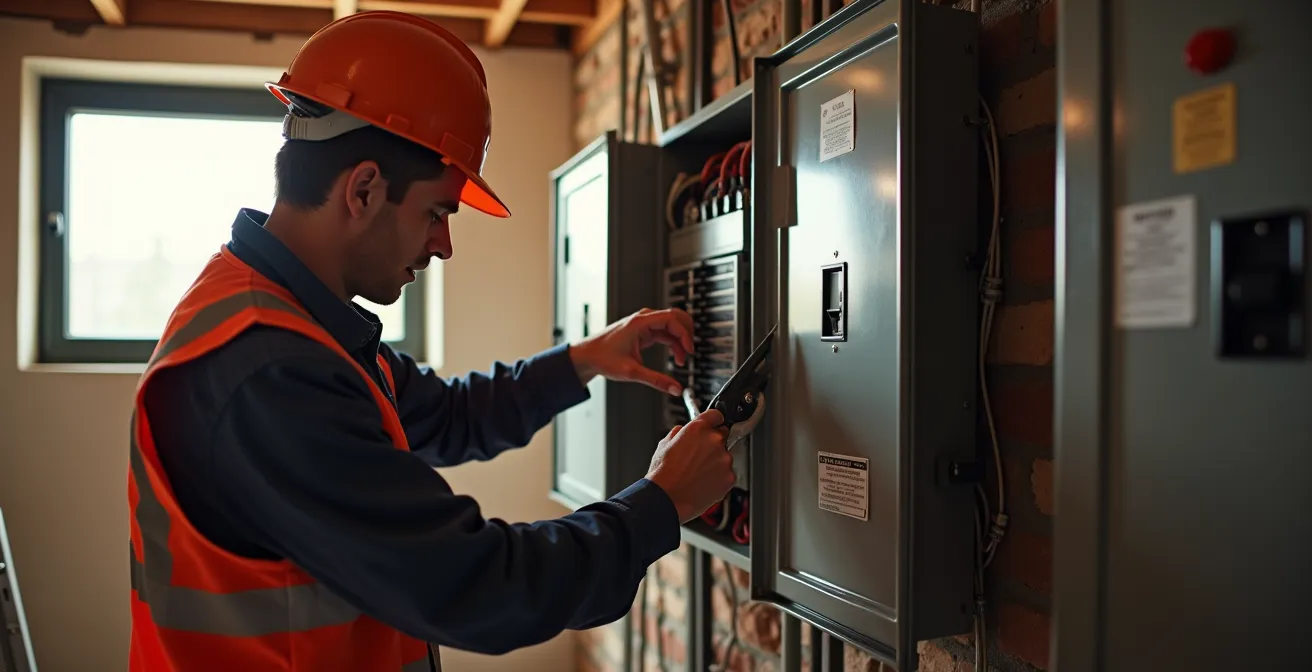
A critical, often-underestimated part of the conversion is the electrical system. Many older Montreal plexes still operate on a 100-amp electrical service, which is insufficient to power a modern all-electric heating system, especially a powerful cold-climate heat pump. Budgeting for an upgrade to a 200-amp service is almost always necessary. This involves hiring a master electrician to install a new panel and coordinate with Hydro-Québec. This upgrade should be factored into your total project cost from the outset. The cardinal rule of this entire process is to submit all your grant applications and get approvals *before* any work begins. Starting the project prematurely can render you ineligible for thousands of dollars in financial aid.
To begin this strategic conversion and ensure you are maximizing all available financial incentives, the first logical step is to schedule an energy assessment with a certified Rénoclimat advisor and request quotes from qualified HVAC contractors who are experienced in Montreal’s specific grant programs.
Frequently Asked Questions about Eco-Friendly Heating in Montreal
What documents do Quebec insurers require after oil tank removal?
Insurers demand a contractor’s certificate of removal and increasingly require a preventative soil test report to confirm no contamination occurred.
Can a hidden oil tank derail a property sale in Montreal?
Yes, an improperly decommissioned oil tank, even if empty, can become a major liability for the seller and halt real estate transactions as insurers refuse to cover the property.
What is the homeowner’s liability under Quebec’s Environment Quality Act?
Financial responsibility for soil contamination from a leaking tank can exceed the property’s value, which is the core reason for insurance refusal and a major driver for converting to electric.