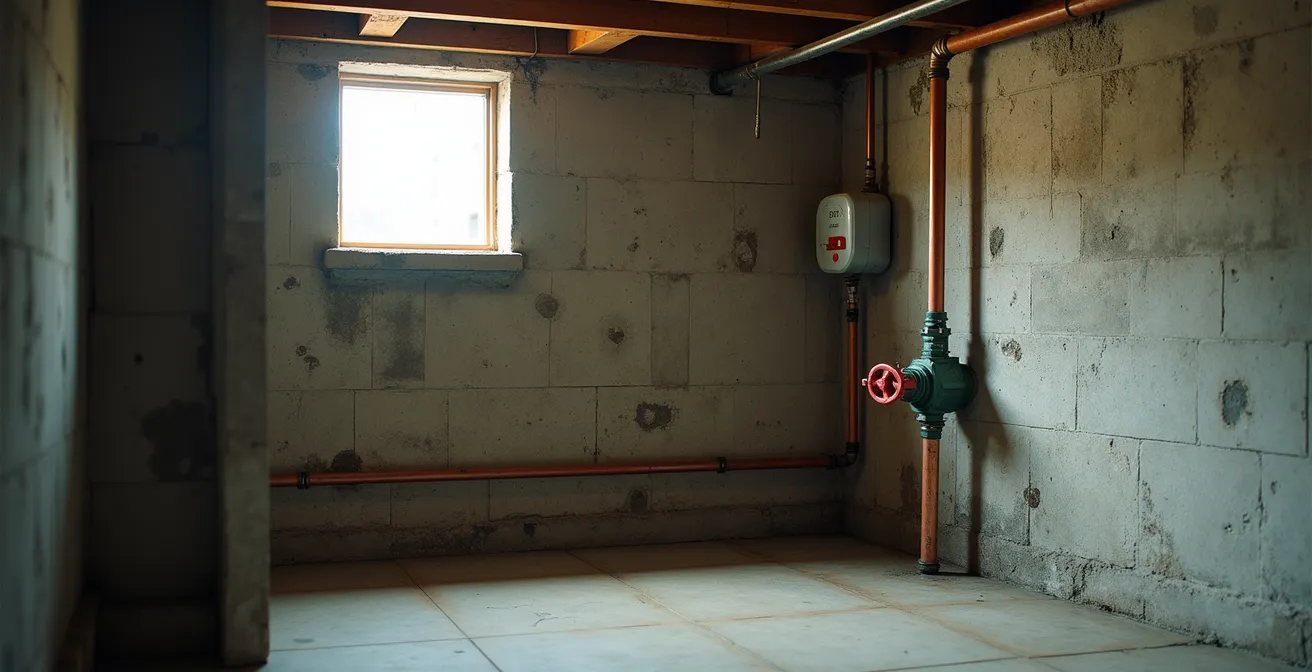
In summary:
- Your main water valve is the single most important flood prevention device in your home; you must locate and test it before an emergency.
- Older gate valves, common in Montreal, are prone to seizing from mineral buildup. Test yours by turning it twice a year.
- If a valve is stuck, do not force it. Use a two-wrench “counter-torque” technique to apply steady pressure without breaking the pipe.
- Installing a smart, automatic shut-off valve can prevent thousands in damages and may qualify you for significant home insurance discounts in Quebec.
The sound of rushing water is the last thing you want to hear inside your Montreal home unless you’re in the shower. A burst pipe or a failed water heater can release hundreds of litres of water in minutes, causing catastrophic damage. In this moment of panic, your ability to act decisively depends on one thing: knowing where your main water shut-off valve is and being certain it will work. For many new homeowners, this critical device is a complete mystery until it’s too late.
Most guides will give you generic advice: “look in the basement” or “check near the water meter.” But what if it’s stuck? What if it’s been tiled over during a renovation? This is not just a guide to finding a valve. This is a home safety preparedness drill. Its purpose is to arm you with the knowledge to not only locate your valve but to diagnose its health, understand its specific failure points, and operate it correctly under pressure.
We will move beyond platitudes and dive into the mechanics of why valves fail, the correct technique to loosen a seized one without causing more damage, and the modern solutions that can protect your home automatically. Mastering this single component of your home’s plumbing is the most powerful step you can take to prevent a water-related disaster.
This article provides a complete action plan, from understanding the mechanics of your valve to leveraging smart technology for ultimate protection and even lowering your insurance premiums. Explore the sections below to become fully prepared.
Summary: Your Complete Guide to the Main Water Shut-Off Valve
- Why Are Gate Valves More Prone to Seizing Than Ball Valves?
- How to Loosen a Seized Valve Without Breaking the Pipe?
- Manual vs. Automatic Shut-Off: Is the Tech Upgrade Necessary?
- The Error of Tiling Over the Access Panel to the Main Valve
- When to Replace Your Main Valve: Signs of Imminent Failure
- When to Shut Off Main Water: A Schedule for Snowbirds Leaving Quebec
- Why Wi-Fi Shut-Off Valves Are Safer Than Simple Alarms?
- How Can Smart Leak Detectors Lower Your Home Insurance Premium?
Why Are Gate Valves More Prone to Seizing Than Ball Valves?
The moment of crisis is not the time to discover your shut-off valve is fused in the open position. Understanding why this happens is the first step in prevention. Most older Montreal homes are equipped with a multi-turn gate valve (with a round, wheel-like handle). Its design, which involves a metal gate lowering into the water flow, is its primary weakness. Over years of inactivity, this mechanism becomes a magnet for mineral deposits.
This is a significant issue in our city. The problem is exacerbated by what water testing in Montreal reveals to be moderately hard water, containing minerals like calcium and magnesium. When the valve isn’t operated, these minerals build up on the valve stem and seat, a process called calcification. This buildup acts like cement, seizing the valve and making it impossible to turn when you need it most. You may also see a green patina on the copper pipes or white mineral deposits around the valve body, which are clear indicators of corrosion and potential seizure.
In contrast, a modern ball valve uses a quarter-turn lever to rotate a sphere with a hole through it. This design has fewer internal surfaces for minerals to cling to and requires only a 90-degree turn to operate. This simple, robust mechanism is far less likely to seize, making it the standard for new installations and a highly recommended upgrade for any homeowner. The rule is simple: if you have a round handle, your valve is at high risk of failure and requires regular “exercise”—turning it fully closed and then open again—at least twice a year to break up any nascent mineral deposits.
How to Loosen a Seized Valve Without Breaking the Pipe?
You’ve found the valve, but it won’t budge. Applying excessive force is a recipe for disaster, as you risk shearing the valve stem or, worse, cracking the pipe itself, turning a leak into a flood. The correct approach requires patience and the right technique, specifically the “two-wrench method” for applying counter-torque.
This paragraph introduces a complex concept. To properly understand it, it’s vital to visualize the hand and tool placement. The illustration below demonstrates this critical technique.
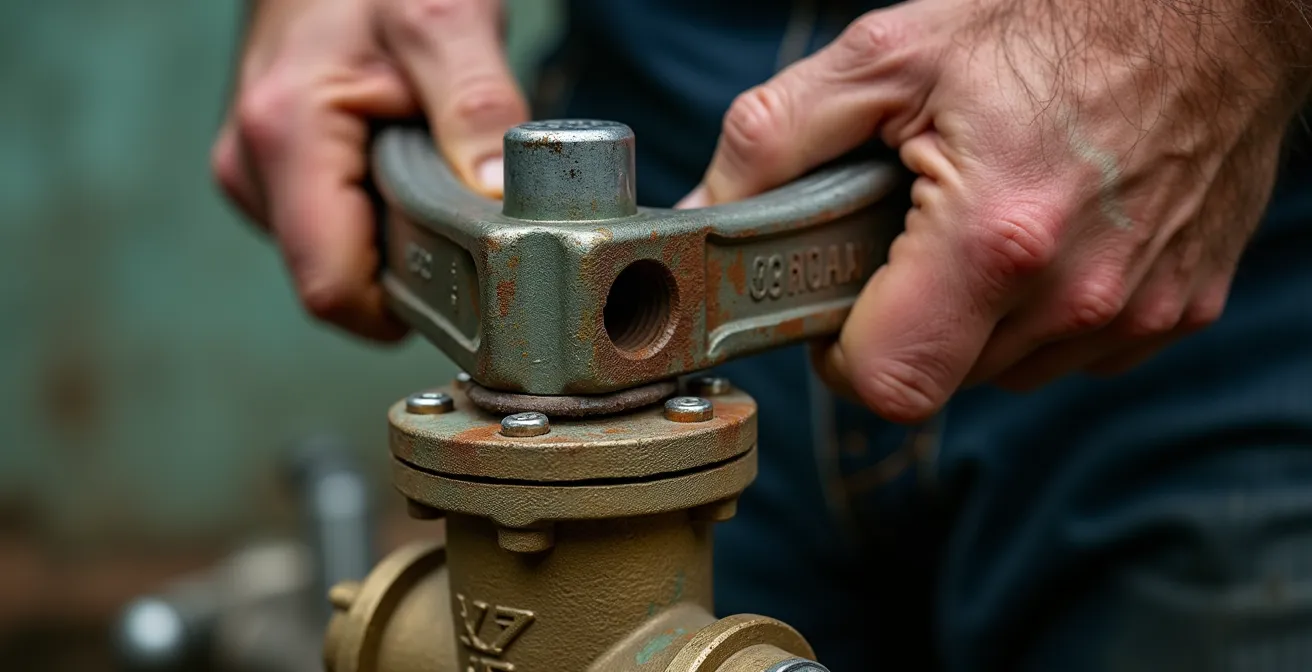
As you can see, one wrench (a pipe wrench is ideal) grips the body of the valve or the pipe immediately next to it. Its only job is to hold the pipe steady and prevent the force you apply from transferring down the line. The second wrench (an adjustable wrench) is placed on the packing nut or the stem of the valve itself. With the first wrench providing counter-torque, you can apply slow, steady pressure with the second. This isolates the force exactly where it’s needed, dramatically increasing your chances of breaking the mineral seal without damaging the plumbing.
Action Plan: Safely Loosening a Seized Valve
- Apply Lubricant: Spray a penetrating lubricant like WD-40 on the valve stem and packing nut. Let it sit for at least 20 seconds to penetrate the threads.
- Position for Counter-Torque: Place your first wrench on the valve body to hold it firmly in place. This wrench does not turn; it only resists movement.
- Apply Steady Pressure: Place your second wrench on the valve stem’s nut (just under the handle). Apply slow, steady, and firm pressure in the ‘close’ direction (clockwise). Avoid jerky movements.
- Work It Back and Forth: If it moves slightly, try turning it a little in the opposite direction before continuing clockwise. This can help break up the corrosion.
- Call for Help: If the valve remains completely seized after these steps, the risk of breakage is too high. It is time to call a professional plumber. The city of Montreal considers a main valve that is broken or cannot be shut off during a water leak to be an urgent situation requiring professional intervention.
Manual vs. Automatic Shut-Off: Is the Tech Upgrade Necessary?
While knowing how to operate your manual valve is a critical skill, modern technology offers a proactive solution: the smart automatic shut-off valve. This device represents a fundamental shift from reactive damage control to automated prevention. A manual valve requires you to be home, aware of the leak, and physically able to shut it off. A smart valve, however, acts as a vigilant guardian 24/7.
These systems work by placing water sensors in high-risk areas like under sinks, behind toilets, and near water heaters. When a sensor detects moisture, it sends a wireless signal to a motorized actuator installed on your main water line, which then automatically closes the valve within seconds. It also sends an alert directly to your smartphone. This immediate action can be the difference between a small puddle and a flooded basement, especially if a leak occurs while you’re at work or on vacation.
The upfront cost is higher, but the investment pays for itself by preventing a single major water damage event. Furthermore, most Quebec insurance companies recognize the immense risk-reduction these devices provide. For example, installing a qualifying system means Desjardins Insurance offers savings of up to 10% on your home insurance premium, helping to offset the initial cost over time.
The following table provides a clear comparison to help you weigh the decision. It outlines the key differences between traditional manual valves and their modern, automated counterparts.
| Feature | Manual Gate/Ball Valve | Smart Automatic Valve |
|---|---|---|
| Cost | $50-150 | $400-1,100 installed |
| Remote Control | No | Yes, via smartphone app |
| Automatic Leak Shut-off | No | Yes, within seconds |
| Power Outage Operation | Yes | Battery backup models available |
| Insurance Discount | None | 5-10% annually |
| Professional Install Required | No | Often for insurance discount |
The Error of Tiling Over the Access Panel to the Main Valve
In the pursuit of a sleek, modern aesthetic, a common and costly mistake is concealing the main water valve’s access panel. During a basement or bathroom renovation, it can be tempting to tile or drywall directly over the panel to create a seamless surface. This decision, however, violates a fundamental principle of home safety and can be in contravention of plumbing code principles that demand accessibility for service and emergencies.
The Régie du bâtiment du Québec (RBQ) emphasizes that plumbing systems must remain accessible for maintenance and repair. As their training documents on amendments to the Plumbing chapter of the Construction Code highlight, changes that impede access can have significant impacts. An inaccessible valve turns a 30-second shut-off into a frantic search for a sledgehammer. By the time you’ve smashed through your new tiles and drywall, significant water damage has already occurred. You must maintain a minimum 24-inch clearance around the panel for a plumber to have adequate room to work in an emergency.
Fortunately, safety and design are not mutually exclusive. Modern solutions allow for both seamless aesthetics and immediate access.

As this image shows, innovative products make it easy to integrate access without sacrificing style. Options include magnetic flush-mount panels that can be painted to match the wall, custom millwork that incorporates the panel into cabinetry, or hinged doors designed to hold the surrounding tile pattern. The key is to ensure the panel is clearly, yet discreetly, labeled and that every adult in the household knows its location. Sacrificing access for aesthetics is a gamble no homeowner should take.
When to Replace Your Main Valve: Signs of Imminent Failure
Like any mechanical part, your main shut-off valve has a finite lifespan. Proactively replacing a failing valve is far less stressful and expensive than dealing with an emergency replacement after it breaks. Several clear signs indicate that your valve is nearing the end of its service life and should be on your priority list for a plumbing upgrade.
The first and most obvious sign is age. According to plumbing safety experts, homes built before 1980 face a higher valve failure risk, as they are almost certain to have an original brass gate valve that has been subjected to decades of mineral buildup. If your home falls into this category and the valve appears to be original, replacement should be considered a preventative measure. It is your responsibility as the homeowner to replace the shut-off valve located inside your house.
Beyond age, look for physical signs of degradation. These include:
- Visible Corrosion or Rust: Any flaking, green or white buildup on the valve body or handle indicates the metal is breaking down.
- Leaks or Drips: A valve that leaks from the stem (around the packing nut) when you operate it is a classic sign of failed internal seals. Tightening the packing nut may offer a temporary fix, but it points to imminent failure.
- Difficulty Turning: While a seized valve can sometimes be loosened, a valve that is consistently stiff or difficult to turn is a liability. It has likely accumulated significant internal corrosion.
- Inability to Fully Close: If you turn the valve and water flow is reduced but not completely stopped, the internal gate or seals are damaged or blocked by debris. The valve can no longer perform its primary function.
If you notice any of these signs, it’s time to call a trusted local plumber to schedule a replacement. Upgrading to a modern quarter-turn ball valve will provide you with decades of reliable service and peace of mind.
When to Shut Off Main Water: A Schedule for Snowbirds Leaving Quebec
For the thousands of Quebec “snowbirds” who head south for the winter, leaving a home unattended for months presents a unique set of risks. An undetected leak or a burst pipe caused by a furnace failure during a cold snap can lead to devastating damage. The single most important preventative measure is a complete and proper shutdown of your home’s water system.
Simply turning off the main valve is not enough. To truly protect your home, you must drain the entire system to ensure no water is left in the pipes to freeze and expand. Insurance companies strongly advocate for this, as it is a leading cause of major winter-time claims.
Planning to be away over the winter? Drain your pipes so they won’t freeze and burst if your heat goes out.
– Desjardins Insurance, Water Damage Prevention Guide
Follow this comprehensive shutdown protocol before any extended winter absence:
- Notify Your Insurer: Inform your insurance company of your exact departure and return dates to ensure your policy remains valid.
- Shut Off the Main Valve: Turn the main water valve clockwise until it is fully and firmly closed.
- Drain All Pipes: Open every faucet in the house, both hot and cold, starting from the highest floor and working your way down to the lowest. Don’t forget laundry sinks and outdoor spigots.
- Flush All Toilets: Flush every toilet to empty their tanks and bowls.
- Drain the Water Heater: Follow the manufacturer’s instructions to completely drain your hot water tank.
- Protect P-Traps: Pour a small amount of non-toxic RV antifreeze into every sink and shower drain, as well as into the toilet bowls, to prevent the water in the P-traps from freezing.
- Set Thermostat: Do not turn off your heat. As per Hydro-Québec recommendations, set your thermostat to a minimum of 12-15°C to protect your home’s interior from extreme cold.
This procedure ensures that even if your heating system fails during a deep freeze, your pipes will be empty and safe from bursting.
Key takeaways
- Smart water valves with automatic shut-off are superior to simple leak alarms because they take immediate, physical action to stop a flood.
- An alarm notifies you of a problem; a smart valve solves it instantly, even if you are away from home.
- The minimal time difference between detection and shut-off is critical in mitigating water damage, which is a leading cause of home insurance claims in Canada.
Why Wi-Fi Shut-Off Valves Are Safer Than Simple Alarms?
A simple battery-powered water alarm that beeps when it gets wet is a good first step, but it has a fundamental flaw: it is entirely passive. It relies on someone being home to hear the alarm and take manual action. A Wi-Fi-enabled automatic shut-off valve, on the other hand, is an active protection system. This distinction is the difference between being informed of a disaster and preventing one altogether.
When a simple alarm goes off in an empty house, water continues to pour out until the problem is discovered, which could be hours or days later. A smart shut-off system, however, stops the flow of water at its source within seconds of detection. This immediate action is crucial, as nearly 60% of all home insurance claims in Canada relate to water damage. Minimizing the amount of water released is the single most important factor in reducing the scope and cost of repairs.
The system provides peace of mind that a simple alarm cannot match. You receive an instant notification on your phone that a leak was detected and that the water has been shut off, allowing you to arrange for a plumber at your convenience rather than in a panic. The real-world effectiveness of these systems is a game-changer for homeowners and condo associations alike.
Since the installation of the AKWA system, we have already avoided 2 water damages in the last 6 months. Not having to deal with painful and expensive repairs is a big relief.
– AKWA Technologies, Quebec Condo Success Story
How Can Smart Leak Detectors Lower Your Home Insurance Premium?
Beyond the primary benefit of preventing catastrophic water damage, installing a smart leak detection system with an automatic shut-off valve provides a significant financial incentive: lower home insurance premiums. Quebec insurance companies are acutely aware of the staggering costs associated with water damage claims. By incentivizing homeowners to install these proactive systems, they reduce their own risk exposure, a savings they pass on to the client.
To maximize your discount, you must choose the right system and ensure it’s installed correctly. Insurers typically require a system with an automatic shut-off feature, not just passive alarms. Many also require proof of professional installation by a certified plumber and may have a minimum requirement for the number of sensors installed (often 5 or more). It’s essential to select a model with battery backup to ensure it remains operational during a power outage—a common occurrence during storms that can also cause plumbing failures like sump pump backups.
Major Quebec insurers like Desjardins have specific programs, such as the Alert program in partnership with HydroSolution, offering a $120 discount on the purchase of a system for their policyholders. The annual premium discounts are substantial and can significantly speed up the return on your investment.
The following table, based on data from Ratehub.ca, shows examples of discounts offered by major insurance providers in the Quebec market. Always contact your own broker to confirm your specific eligibility and the exact discount available to you.
| Insurance Company | Discount Type | Discount Amount |
|---|---|---|
| Desjardins | Automatic shut-off valve | Up to 10% |
| Intact | Flow interrupting system | 5-10% |
| Allstate | Smart water valve | Variable discount |
| La Capitale | Leak detection system | Up to 15% |
Your main water shut-off valve is more than just a piece of plumbing; it’s your home’s primary defense against a flood. By treating it as a critical piece of safety equipment—locating it, testing it regularly, and understanding how to operate it—you transform yourself from a potential victim into a prepared homeowner. For a personalized assessment of your valve’s condition and to explore upgrade options, the next logical step is to consult a certified professional.