
Upgrading to a dual-flush toilet in Montreal isn’t just an eco-friendly choice; it’s a financial asset that can save your family over $140 annually.
- Modern high-efficiency models use up to 40% less water than even 10-year-old “low-flow” toilets.
- Compliance with Montreal’s specific water bylaws avoids future renovation headaches and maximizes your return on investment.
Recommendation: Calculate your specific payback period by comparing the toilet’s purchase price against your projected annual water savings to make an informed financial decision.
For a budget-conscious Montreal parent, the ever-present water bill can feel like a fixed expense. You’ve likely heard the common advice: to save water, you should install a “low-flow” or dual-flush toilet. While true on the surface, this suggestion often lacks the practical, financial detail needed to justify the purchase and installation cost. It treats the decision as a simple eco-friendly gesture rather than what it truly is: a home infrastructure investment.
The real question isn’t just “does it save water?” but “what is the tangible Return on Investment (ROI) for my family?” This requires a shift in perspective. Instead of seeing a new toilet as an expense, we must analyze it as an asset. The key is to move beyond the generic “it’s better for the environment” and dive into a precise financial calculus. This involves understanding the technology’s nuances, the hidden maintenance liabilities that can erode savings, and crucially, how it all aligns with Montreal’s specific municipal water regulations.
This article will provide that exact financial breakdown. We will dissect the performance of modern dual-flush systems, quantify the savings against older models, explore common operational issues that can cost you money, and frame it all within the context of Montreal’s bylaws. By the end, you won’t just know if a dual-flush toilet saves money; you will know exactly how much it can save you, and how to protect that investment for years to come.
To provide a complete financial picture, this guide details every aspect of a dual-flush toilet’s performance, from common maintenance issues to its interaction with local plumbing codes. The following sections break down the key factors that determine your long-term savings.
Summary: The Financial Breakdown: How Much a Dual-Flush Toilet Really Saves a Montreal Family of Four
- Why Does the Half-Flush Button Stick on Certain Models?
- How to Calibrate the Flush Valve for Maximum Cleaning Power?
- Gravity Fed vs. Pressure Assisted: Which Dual-Flush Is Quieter?
- The Error of Using Bleach Tablets That Destroy Seal Gaskets
- When to Replace Your Toilet: Is a 10-Year-Old Low-Flow Efficient?
- Why Are 13-Liter Toilets Now Illegal to Install in Renovations?
- Why Are Gate Valves More Prone to Seizing Than Ball Valves?
- How to Meet Montreal’s Water Bylaws Without Losing Shower Pressure?
Why Does the Half-Flush Button Stick on Certain Models?
One of the most common frustrations that can negate the water-saving benefits of a dual-flush toilet is a sticking button, particularly the half-flush. When the mechanism fails to reset, it can cause a continuous, silent leak, turning a water-saving asset into a financial liability. This issue often stems from two primary causes: mechanical friction or mineral buildup. The internal push rods or levers can become misaligned, or more commonly in this region, deposits from Montreal’s moderately hard water can accumulate within the button assembly, impeding its movement.
Ignoring this seemingly minor issue is a significant financial error. A constantly running toilet, even a slow trickle, can waste hundreds of litres per day, completely erasing any savings you aimed to achieve. Regular inspection and cleaning are not just about functionality; they are essential acts of asset protection for your investment. Fortunately, addressing a sticking button is often a straightforward diagnostic and repair process that does not require a complete replacement of the flush mechanism.
Your Action Plan: Fixing a Sticking Dual-Flush Button
- Step 1: Remove the flush button assembly by twisting it counter-clockwise or carefully lifting the decorative cap.
- Step 2: Clean any visible mineral deposits from the button mechanism and push rods using a cloth soaked in white vinegar solution.
- Step 3: Inspect the rubber seals for signs of brittleness or damage, which can be exacerbated by Montreal’s hard water.
- Step 4: Apply a small amount of silicone-based lubricant to the moving parts, ensuring you avoid petroleum-based products which can degrade rubber components.
- Step 5: Test both flush buttons multiple times to ensure smooth operation before reassembling the decorative cover.
How to Calibrate the Flush Valve for Maximum Cleaning Power?
The financial genius of a dual-flush toilet lies in its ability to use only the necessary amount of water. However, this efficiency is entirely dependent on proper calibration. An improperly set flush valve can lead to either insufficient cleaning power, requiring a second flush (and thus wasting water), or using too much water on the half-flush, diminishing your savings. The goal is to find the perfect equilibrium: the lowest possible water volume that still provides a clean, single-flush bowl clearing for both liquid and solid waste.
Most dual-flush mechanisms feature adjustment settings on the flush valve tower and the fill valve float. These allow you to control how much water is released during a half-flush and full-flush, and to what level the tank refills. Taking 30 minutes to fine-tune these settings after installation is one of the highest ROI activities a homeowner can perform. It directly translates a mechanical setting into tangible, long-term savings on your water bill. According to the EPA, a properly functioning water-saving toilet can contribute to an annual savings of 13,000 gallons for an average family.
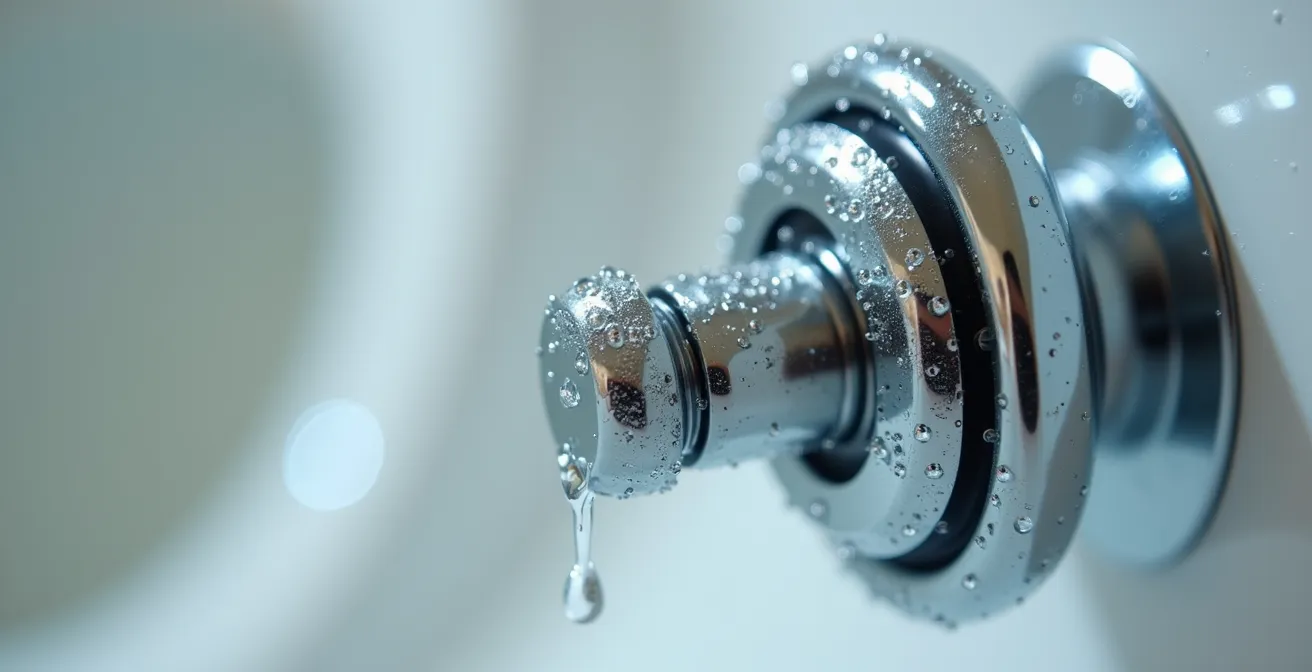
As this detailed view shows, the internal mechanisms are designed for fine-tuning. Adjusting the small dials or sliders on the central overflow tube and the float on the fill valve allows you to customize the flush volume to your home’s specific needs, striking the ideal balance between performance and conservation. The numbers below illustrate the direct financial impact of this calibration.
This table clearly quantifies the financial argument for upgrading and proper calibration. Choosing a high-efficiency model and ensuring it is correctly set can nearly halve your toilet’s annual water consumption compared to older, less efficient models.
| Toilet Type | Liquid Waste Flush | Solid Waste Flush | Annual Water Usage (4-person family) |
|---|---|---|---|
| Traditional (1.6 GPF) | 1.6 gallons | 1.6 gallons | 11,680 gallons |
| Dual-Flush Standard | 0.8-1.1 gallons | 1.6 gallons | 7,300 gallons |
| High-Efficiency Dual-Flush | 0.8-1.0 gallons | 1.28 gallons | 5,840 gallons |
Gravity Fed vs. Pressure Assisted: Which Dual-Flush Is Quieter?
When selecting a dual-flush toilet, the mechanism that powers the flush is a critical decision, especially in the context of Montreal’s dense housing. The choice is primarily between two systems: gravity-fed and pressure-assisted. A gravity-fed system, the most common type in residential settings, uses the weight of the water in the tank to create flushing pressure. It’s known for being significantly quieter, a major consideration in triplexes, condos, or apartments where noise transfer between units is a concern.
In contrast, pressure-assisted toilets use compressed air within the tank to release water with much greater force. While this provides exceptional cleaning power and reduces the chance of clogs, it comes at a cost. According to home improvement experts, pressure-assisted toilets produce a forceful “whoosh” that can be quite noisy. This makes them more suitable for commercial buildings than for a quiet family home. For a budget-conscious parent in a multi-unit dwelling, the peace and quiet offered by a gravity-fed model often represents a higher quality-of-life ROI, even if the flush is slightly less powerful.
The case study from Calgary’s adoption of dual-flush toilets showed widespread success, but for a dense urban environment like Montreal, the noise factor is a more pressing consideration. The selection is not just about water savings but about cohabitation. Choosing a gravity-fed model is often the wisest financial and social investment for maintaining a peaceful home environment.
The Error of Using Bleach Tablets That Destroy Seal Gaskets
One of the most destructive mistakes a homeowner can make after investing in a new dual-flush toilet is using in-tank drop-in cleaning tablets containing bleach. While they promise a clean bowl with minimal effort, they create a significant long-term financial liability. These tablets release harsh chemicals, primarily chlorine bleach, that sit in the tank water and continuously attack the rubber and plastic components of the flush mechanism.
The most vulnerable part is the flush valve seal or flapper gasket at the bottom of the tank. Over time, the bleach causes this critical rubber seal to become brittle, warped, and ultimately fail. This leads to a constant, often silent, leak from the tank into the bowl—the very problem a water-saving toilet is designed to prevent. As the MNS Plumbing Research Team notes in their technical report, this is a predictable outcome. As they state in their findings:
The chemicals in these cleaner tablets will eventually damage the flush valve, flapper, and other elements in the tank.
– MNS Plumbing Research Team, MNS Plumbing Technical Report
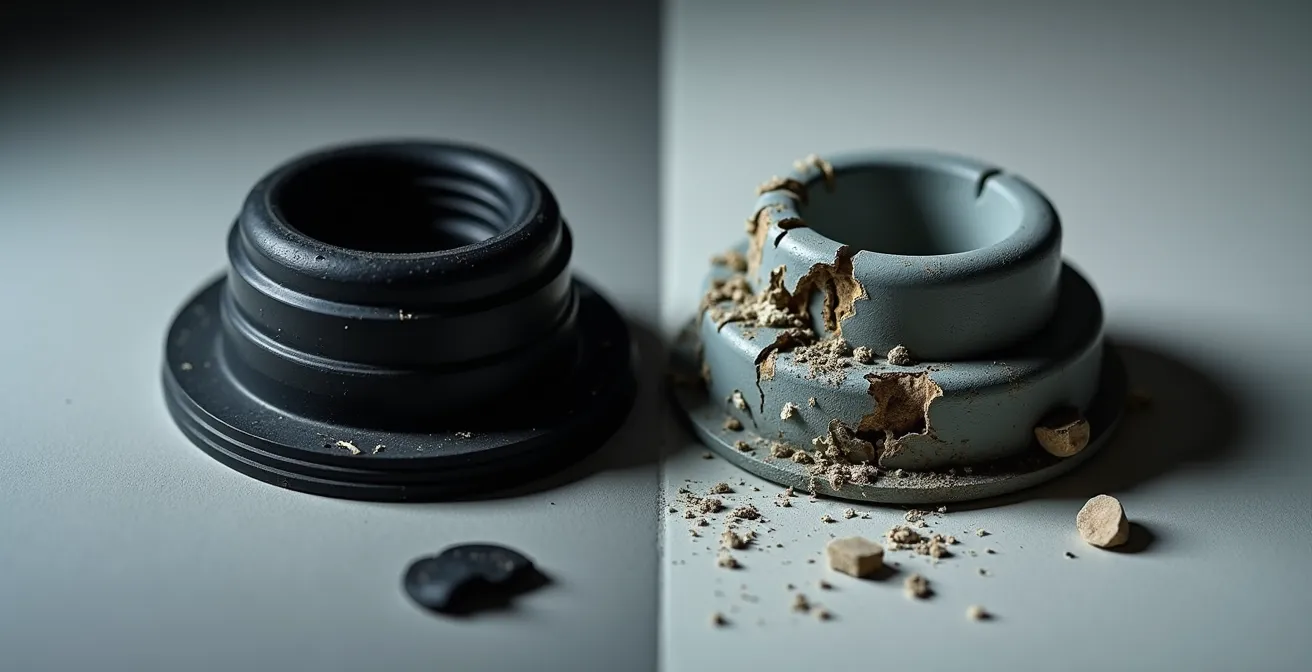
The visual evidence is stark. The cost of replacing these damaged parts, not to mention the value of the water wasted by the leak, far outweighs the convenience of the cleaning tablet. Protecting your investment means committing to manual bowl cleaning and keeping corrosive chemicals out of the tank entirely. This simple change in habit ensures the longevity of the toilet’s components and the persistence of your water savings.
When to Replace Your Toilet: Is a 10-Year-Old Low-Flow Efficient?
A common question for a homeowner is whether a toilet from the “low-flow” era, typically a 6-litre single-flush model from around 10-15 years ago, is still efficient enough. From a financial advisor’s perspective, the answer is a clear no. While these toilets were a significant improvement over older 13-litre models, toilet technology has continued to advance. A modern high-efficiency dual-flush toilet represents another major leap in water conservation, making the 10-year-old model financially obsolete.
The numbers are compelling. A decade-old 6.0L single-flush toilet uses that same amount for every flush, regardless of need. A new dual-flush model uses a more efficient 4.8L for solid waste and as little as 3.0L for liquid waste. For a family of four, this difference adds up to a substantial volume of water and money saved each year. Upgrading is a direct contribution to city-wide conservation efforts, as upgrading from an old toilet to a modern dual-flush model directly supports Montreal’s water conservation goals.
The following table breaks down the annual water usage, demonstrating a clear financial incentive to upgrade. The 40% reduction in water usage represents a tangible return that will, over a few years, pay for the cost of the new toilet itself.
| Model Year | Technology | Full Flush (L) | Half Flush (L) | Annual Water Use (Family of 4) |
|---|---|---|---|---|
| 2014 Low-Flow | Single Flush | 6.0L | N/A | 43,800L |
| 2024 Dual-Flush | Dual Flush | 4.8L | 3.0L | 26,280L |
| Water Saved | – | – | – | 17,520L (40%) |
Why Are 13-Liter Toilets Now Illegal to Install in Renovations?
For any Montreal homeowner planning a bathroom renovation, understanding the legal landscape is as crucial as choosing the right fixtures. A key piece of this is the status of old, high-volume toilets. Models that use 13 litres per flush (LPF) or more, common in homes built before the mid-1990s, are now effectively illegal to install. This is not just a recommendation; it’s a mandate enforced by plumbing codes designed to conserve water on a massive scale.
This regulation is rooted in both national and municipal policy. As plumbing experts at Transcanada Drain Services clarify, all work must adhere to strict standards. They state:
All work must comply with the National Plumbing Code of Canada and the Montreal Water and Sewer Connection Bylaw (20-030).
– Transcanada Drain Services, Montreal Plumbing Regulations Guide
These codes prohibit the installation of new toilets that exceed a maximum flush volume (typically 6 litres). The impact of these regulations over the past few decades has been profound. In fact, data shows that the overall consumption of water in the average single-family household has dropped by nearly 22% since 1994, largely due to the phasing out of these inefficient fixtures. For a parent undertaking a renovation, this means a 13-litre toilet isn’t just a bad investment; it’s a non-compliant one that could cause issues with inspections and the future sale of the property.
Why Are Gate Valves More Prone to Seizing Than Ball Valves?
During any toilet replacement or repair, the project’s success hinges on a small but critical component: the water shutoff valve. In many of Montreal’s older homes, particularly in areas like the Plateau with pre-1970s triplexes, you’ll find an outdated “gate valve.” From a financial and risk perspective, these valves are a significant liability. A gate valve works by lowering a metal “gate” to block water flow. Over decades, mineral deposits from the St. Lawrence River water supply can cause the gate and its screw mechanism to corrode and seize in the open position.
When you need to shut off the water to replace a toilet, a seized gate valve can turn a simple DIY project into an expensive emergency plumbing call. Attempting to force a seized valve can cause it to break, leading to an uncontrollable leak. The modern alternative, a ball valve, is far superior. It uses a simple quarter-turn lever to rotate a ball with a hole through it, a design that is significantly less prone to seizing and provides a clear visual indicator of whether it’s open or closed.
For a homeowner, recognizing that you have gate valves is the first step. If you plan to replace your toilet, it is a financially prudent decision to have a licensed plumber replace the old gate valve with a new ball valve at the same time. This preventative upgrade mitigates the risk of a future plumbing emergency and ensures your home’s plumbing is reliable and serviceable for years to come.
Key Takeaways
- A high-efficiency dual-flush toilet can save a Montreal family of four over $140 and thousands of litres of water annually.
- Choosing the right model (e.g., quiet gravity-fed for condos) and avoiding harmful in-tank bleach tablets is crucial for long-term ROI.
- Upgrading from a 13L or even a 10-year-old 6L toilet is often mandated by local bylaws during renovations and delivers significant financial benefits.
How to Meet Montreal’s Water Bylaws Without Losing Shower Pressure?
The commitment to water conservation in Montreal extends beyond toilets. A common concern for parents is that complying with water-saving bylaws will result in a weak, unsatisfying shower. This fear, however, is largely based on outdated technology. Modern water-saving fixtures are engineered to maintain performance while reducing consumption, allowing you to be both compliant and comfortable. The key is understanding the regulations and choosing the right hardware.
Montreal’s regulations are specific and strict. For instance, Montreal’s water conservation bylaws require that all new and replacement showerheads have a maximum flow rate of 7.6 litres per minute. While this sounds restrictive, showerheads certified by the WaterSense program are designed to meet this standard without sacrificing the feeling of pressure. They do this through superior design and aeration, mixing air with the water stream to create the sensation of a much higher flow rate.
The financial incentive is clear. As an example of WaterSense fixture savings, upgrading an old toilet alone can save about $140.00 every year. Similar principles apply to certified showerheads available at Canadian retailers like Canadian Tire or RONA. By investing in these modern, efficient fixtures, a family can meet municipal requirements, drastically lower their annual water bill, and still enjoy a satisfying shower. It’s a clear win-win scenario where compliance directly translates to financial savings and a better user experience.
To ensure your renovation is both compliant and financially optimized, the next logical step is to consult a certified plumber who understands Montreal’s specific building codes and can recommend the most effective water-saving technologies for your home.