Innovations and technologies
Montreal homeowners face unique challenges when it comes to maintaining their plumbing and heating systems. Harsh winters with temperatures regularly dropping below -20°C, aging infrastructure in many neighborhoods, and the constant threat of freeze-thaw cycles demand solutions that go beyond traditional approaches. Fortunately, the plumbing and heating industry has undergone a remarkable transformation, introducing technologies that not only address these challenges but fundamentally change how we monitor, control, and maintain our home systems.
From sensors that detect the earliest signs of water damage to heating systems that learn your household patterns, these innovations represent more than incremental improvements—they’re reshaping what’s possible. Whether you’re dealing with the strain of an extreme cold snap or simply want to reduce your energy bills, understanding these emerging technologies empowers you to make informed decisions about your home’s critical systems. This comprehensive overview explores the key technological advances currently transforming the plumbing and heating landscape.
Smart Home Integration and Connected Systems
The integration of Internet of Things (IoT) technology into plumbing and heating systems represents perhaps the most significant shift in how we interact with our home infrastructure. These aren’t just “smart” in name—they’re genuinely intelligent systems capable of learning, adapting, and communicating.
IoT-Enabled Water Damage Prevention
Water damage costs Canadian homeowners millions annually, with basement flooding being particularly prevalent in Montreal’s older districts like Verdun and Rosemont. Modern IoT sensors can now detect moisture, temperature fluctuations, and unusual water flow patterns in real-time. When a sensor detects abnormal conditions—such as a slow leak behind a wall or a sudden pressure drop indicating a burst pipe—it immediately sends alerts to your smartphone and can even automatically shut off water supply to prevent catastrophic damage.
Think of these systems as having a vigilant guardian watching every corner of your plumbing network. Unlike traditional methods that only detect problems after visible damage appears, IoT sensors identify issues at the molecular level, often days or weeks before you’d notice anything wrong. For Montreal homeowners who travel south during winter months, this technology provides invaluable peace of mind.
Connectivity Standards and System Compatibility
Not all smart systems speak the same language. Understanding connectivity protocols is essential when building an integrated home system. The most common standards include:
- Wi-Fi: Offers high data transfer rates and easy smartphone integration, but can drain battery-powered sensors quickly
- Zigbee and Z-Wave: Low-power mesh networks ideal for sensor arrays, with signals that can hop between devices to extend range
- Bluetooth Low Energy (BLE): Perfect for proximity-based controls and devices that don’t require constant internet connectivity
- Thread: An emerging standard designed specifically for smart home devices, offering robust security and mesh networking capabilities
The key consideration is choosing systems that integrate smoothly with your existing smart home ecosystem. A heating controller using one protocol may not communicate with water sensors using another unless you have a compatible hub. Recent developments have introduced multi-protocol hubs that act as translators, allowing different systems to work together seamlessly.
Advanced Detection and Monitoring Technologies
Early detection saves money, time, and structural integrity. The latest monitoring technologies have evolved from simple visual inspections to sophisticated diagnostic tools that reveal problems hidden from the naked eye.
Non-Invasive Detection Methods
Traditional leak detection often required invasive exploratory demolition—tearing open walls or ceilings to locate the source of moisture. Modern non-invasive detection technology eliminates this destructive approach entirely. Acoustic leak detection uses sensitive microphones to identify the distinctive sound signature of water escaping under pressure, pinpointing leak locations within centimeters without removing a single tile.
Thermal imaging cameras detect temperature differentials caused by water movement behind walls or under floors. In Montreal’s climate, where pipes run through exterior walls in older homes, thermal imaging can identify areas where insulation has failed or where cold air infiltration creates freeze risks—all before damage occurs. Infrared moisture meters and electromagnetic scanners complete the toolkit, allowing technicians to map entire moisture patterns through building materials.
The cost-benefit equation is compelling: spending a few hundred dollars on professional non-invasive detection can save thousands in unnecessary demolition and reconstruction costs. One Montreal homeowner in Outremont avoided $8,000 in potential bathroom demolition when acoustic detection pinpointed a leak to a specific joint in the wall cavity, allowing for a targeted repair through a single small access hole.
Digital Logging and Data Analytics
Modern systems don’t just detect problems—they create detailed historical records that reveal patterns and predict future issues. Digital logging systems continuously record parameters like water pressure, flow rates, temperature, and energy consumption. Over time, this data creates a baseline “fingerprint” of your system’s normal operation.
When deviations occur, analytics algorithms flag them for attention. For example, gradually increasing water usage might indicate a toilet flapper that’s starting to fail, while subtle pressure fluctuations could suggest sediment buildup in your water heater. Data-driven water management apps translate this technical information into actionable insights, sending notifications like “Your water heater efficiency has decreased by 12% over the past month—scale buildup likely” or “Unusual water flow detected at 3 AM on Tuesday—possible toilet leak.”
These systems essentially provide a continuous audit of your plumbing and heating infrastructure, transforming maintenance from reactive crisis management to proactive system optimization.
Energy-Efficient Heating Solutions
Montreal’s heating season stretches from October through April, making heating efficiency both an environmental and economic priority. Recent technological advances offer unprecedented control and efficiency.
Intelligent Climate Control
Smart thermostats have evolved beyond simple programmable timers into learning systems that understand your household’s rhythms. Modern climate control systems use occupancy sensors, weather forecasts, and machine learning algorithms to optimize heating delivery. They learn that you typically arrive home at 5:30 PM on weekdays and begin warming the house 30 minutes earlier—but only if outside temperatures are below a certain threshold.
During extreme cold snaps—which Montreal experiences regularly—these systems automatically adjust to prevent frozen pipes while minimizing energy waste. Advanced models integrate with humidity sensors to maintain optimal moisture levels, preventing both the dry air that causes respiratory discomfort and the excessive humidity that promotes mold growth. Zone-based heating allows different areas of your home to maintain different temperatures, so you’re not heating guest bedrooms or the basement to the same level as living spaces.
The dimming and modulation capabilities of modern heating systems deserve special attention. Rather than cycling on and off like traditional systems, modulating burners adjust their output continuously, maintaining more consistent temperatures while consuming less fuel. It’s analogous to cruise control in a car—maintaining steady speed uses less fuel than constant acceleration and braking.
Passive Energy Capture Systems
Innovative heating solutions now incorporate passive energy capture technology that harvests waste heat from unexpected sources. Heat recovery ventilators (HRVs) extract warmth from outgoing stale air and transfer it to incoming fresh air, reducing the energy needed to heat ventilation. Some systems capture waste heat from drain water—the warm water from showers and dishwashers passes through heat exchangers that preheat incoming cold water, reducing water heating costs by up to 25%.
Solar thermal systems, while not new conceptually, have become significantly more efficient and affordable. Even in Montreal’s climate with its cloudy winter days, modern evacuated tube collectors can provide meaningful contributions to water heating and even space heating when integrated with radiant floor systems.
Professional-Grade Equipment and Advanced Tools
While homeowner-focused technology receives much attention, professional-grade equipment continues advancing rapidly, delivering results that DIY approaches simply cannot match. The gap between consumer and professional tools has actually widened as specialized equipment becomes more sophisticated.
Professional hydro-jetting equipment, for instance, uses precisely controlled high-pressure water streams (up to 4,000 PSI) to clear blockages and clean pipe interiors without chemical additives. The nozzles are engineered with specific spray patterns for different applications—forward-facing jets for breaking through obstructions, rear-facing jets for propulsion, and rotating heads for thorough wall cleaning. A skilled technician with professional jetting equipment can clear roots from a sewer line and restore it to near-original flow capacity, something chemical drain cleaners or consumer-grade snakes cannot achieve.
Advanced aeration technology in modern water treatment and heating systems optimizes oxygen levels for various purposes—from preventing anaerobic bacteria growth in water heaters to improving combustion efficiency in high-efficiency furnaces. Professional-grade separation equipment for hydronic heating systems removes micro-bubbles and impurities that reduce efficiency and cause corrosion, extending system lifespan significantly.
Pipeline rehabilitation technologies, including epoxy lining options, allow professionals to essentially create a new pipe inside an old one without excavation. These trenchless solutions are particularly valuable in Montreal’s urban environment, where digging up a sewer line might require coordinating with the city, obtaining permits, and disrupting streets or mature landscaping. The specialized equipment required—including inversion drums, calibration tubes, and curing systems—represents investments of tens of thousands of dollars, firmly in the professional domain.
Resilience and Future-Proofing Your Systems
Climate uncertainty and aging infrastructure make system resilience increasingly important. Future-proofing isn’t about predicting the future perfectly—it’s about building flexibility and redundancy into your systems.
Battery backup systems for critical components ensure that sump pumps continue operating during power outages, a common occurrence during Montreal’s ice storms. Modern backup systems use marine-grade deep-cycle batteries or lithium-ion technology, providing hours of runtime. Smart backup systems automatically test themselves monthly and send alerts when battery capacity degrades below acceptable thresholds.
Planning for future regulatory tightening is also prudent. Building codes and environmental standards continuously evolve toward greater efficiency and lower emissions. Installing systems that exceed current minimum standards—such as ultra-high-efficiency condensing boilers or advanced water treatment systems—protects against obsolescence and potential mandatory upgrades. Many Montreal homeowners who installed basic efficiency systems a decade ago now face pressure to upgrade as provincial energy efficiency programs raise baseline expectations.
Integration capabilities matter too. Choosing systems with open protocols and documented APIs (Application Programming Interfaces) ensures you’re not locked into a single manufacturer’s ecosystem. As new technologies emerge, you want the flexibility to integrate them with your existing infrastructure rather than replacing everything.
The technological transformation of plumbing and heating systems offers Montreal homeowners unprecedented control, efficiency, and peace of mind. From IoT sensors that detect problems before they become crises to intelligent heating systems that adapt to your lifestyle and climate conditions, these innovations represent genuine improvements in how we maintain our homes. While the array of options can seem overwhelming initially, understanding the fundamental categories—smart integration, advanced detection, energy efficiency, professional equipment, and resilience planning—provides a framework for making informed decisions. Whether you’re addressing an immediate challenge or planning long-term upgrades, these technologies offer practical solutions worth exploring in greater depth based on your specific needs and circumstances.

How to Build a Smart Home in Montreal: A Beginner’s Guide to Water and Heat Automation
Building a smart home doesn’t have to be an overwhelming collection of gadgets; it’s about designing an invisible, unified system that anticipates your needs. Start with a “protocol-first” approach by choosing devices that support Matter, the universal language for smart…
Read more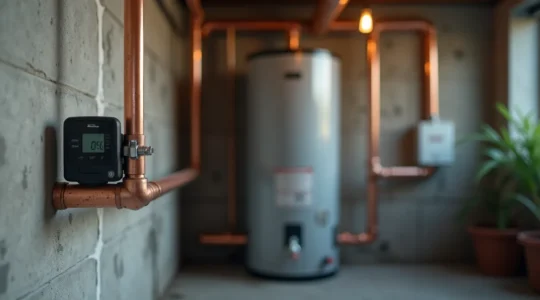
Real-Time Water Monitoring: A Data-Driven Guide to Detecting Hidden Leaks
A smart water monitor’s true value isn’t just detecting leaks; it’s providing the granular data to predict and prevent them entirely. By learning the unique “water signature” of each fixture, you can identify anomalies that default settings would miss. Calibrating…
Read more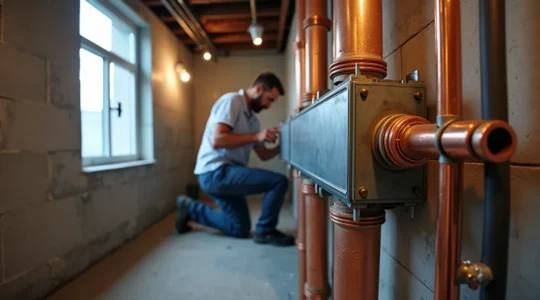
How to Recover 40% of Your Hot Water Energy from the Drain?
The profitability of a Drain Water Heat Recovery (DWHR) system isn’t just an eco-claim; it’s an engineering certainty driven by the physics of film flow and the strategic advantages of Montreal’s climate. Maximal efficiency is achieved in vertical drain stacks,…
Read more
How to Find a Hidden Leak Without Tearing Down Your Walls?
That unexplained spike on your water bill is a signal, not a mystery. Finding a hidden leak isn’t about destructive guesswork; it’s about using specialized technology to interpret invisible clues like sound, temperature, and tracer gases. This guide explains how…
Read more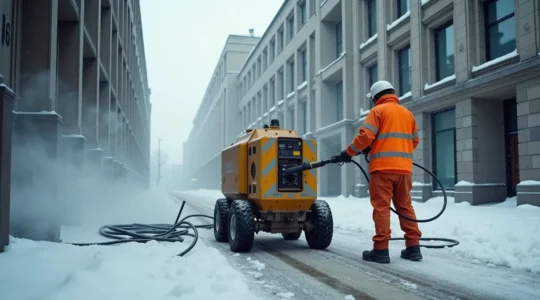
Why Does Hydro-Jetting Clean Drains Better Than a Mechanical Snake?
For a Montreal restaurant, a recurring grease clog isn’t a plumbing issue; it’s a critical business risk, and the conventional snake is not a solution, but a temporary patch. High-PSI jetting doesn’t just poke a hole; it emulsifies and scours…
Read more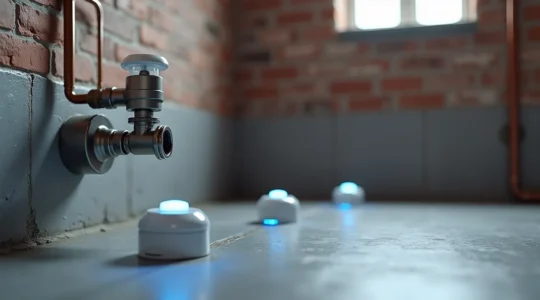
How Can Smart Leak Detectors Lower Your Home Insurance Premium?
A smart water detector lowers your insurance premium not by its mere presence, but by providing verifiable proof that you have fundamentally reduced your property’s risk profile. Installing a system with an automatic water shut-off valve can yield a discount…
Read more