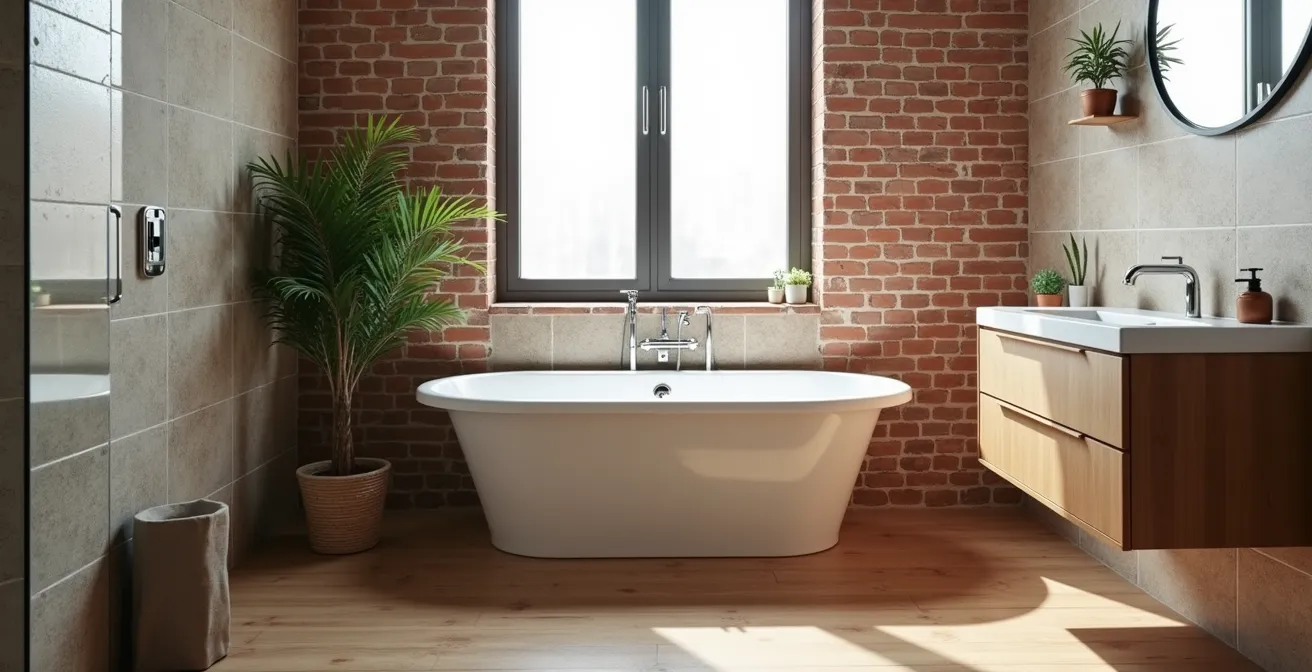
True eco-renovation in Montreal is less about the products you buy and more about strategic project management for longevity.
- Focus on repairability over generic ‘green’ labels to avoid the ‘fast furniture’ trap and reduce long-term waste.
- Align your project with Quebec-specific programs like Novoclimat and RénoClimat *before* work begins to maximize financial aid and energy savings.
Recommendation: The single most important step is to vet your plumber for CMMTQ certification and proven experience with local energy-saving systems like drain water heat recovery.
Embarking on a bathroom renovation in Montreal presents a thrilling opportunity to create a space that is both beautiful and functional. For the environmentally conscious homeowner, the goal is to go a step further: to build a sanctuary that aligns with sustainable values. Yet, the market is flooded with ‘green’ labels and eco-friendly claims, making it difficult to distinguish genuine impact from clever marketing. The common advice—buy WaterSense fixtures, use low-VOC paint, switch to LEDs—is a valid starting point, but it barely scratches the surface of a truly holistic approach.
These product-focused tips often overlook the most critical factors that define a project’s real environmental footprint: longevity, repairability, and the systemic integration of your choices within the unique context of Quebec’s climate and building programs. A cheap, ‘eco-friendly’ faucet that fails in five years and cannot be repaired creates more waste and frustration than a durable, classic fixture with a lifetime supply of parts. The real key to an eco-responsible renovation isn’t a shopping list; it’s a project management mindset.
But what if the most impactful ‘green’ decision isn’t a product at all, but a process? This guide reframes the challenge from purchasing to planning. We will explore how to think like a green building project manager, focusing on the strategic decisions that deliver lasting sustainability. We’ll dissect the lifecycle cost of your choices, navigate Quebec’s specific grant systems, vet professionals for the right expertise, and build a framework for a bathroom that is not just green today, but sustainable for decades to come.
This article provides a complete roadmap for your project. The following sections will guide you through each critical decision-making stage, from evaluating certifications to selecting fixtures built to last, ensuring your Montreal bathroom renovation is a model of environmental stewardship.
Summary: A Strategic Plan for Your Montreal Eco-Bathroom Renovation
- Why Is Refinishing a Bathtub More Eco-Friendly Than Buying New?
- How to Vet Plumbers for Experience with Green Technologies?
- LEED vs. Novoclimat: Which Standard Should Guide Your Renovation?
- The Error of Buying ‘Green’ Fixtures That Are Not Repairable
- When to Apply for Renoclimat: Before or After Work Begins?
- WaterSense vs. Standard: Which Fixtures Qualify for Rebates?
- Why Are Cartridges for 10-Year-Old Faucets Hard to Find?
- Is the Energy Star Label Worth the Extra Cost for Water Heaters?
Why Is Refinishing a Bathtub More Eco-Friendly Than Buying New?
The first major decision in many bathroom renovations revolves around the largest fixture: the bathtub. The instinct may be to replace an outdated or slightly damaged tub to achieve a fresh look. However, from a sustainability perspective, this is often the least eco-friendly choice. The environmental cost of manufacturing, shipping, and installing a new bathtub is substantial, not to mention the waste generated. A single cast iron tub can weigh up to 300 pounds, all of which is destined for a Quebec landfill if discarded. This single decision can significantly inflate the project’s carbon footprint and contribution to construction waste.
Refinishing, or reglazing, offers a powerful alternative. This process involves repairing chips and cracks, then applying a new, durable surface finish directly onto the existing tub. Modern refinishing techniques use low-VOC (Volatile Organic Compound) products, minimizing indoor air quality concerns. The energy consumption is drastically lower—reportedly up to 90% less energy is used compared to manufacturing and installing a new tub. It’s a prime example of prioritizing resource conservation over replacement.
Before dismissing your current tub, conduct a simple impact evaluation:
- Material Condition: Is the tub structurally sound, with only surface-level damage like stains, scratches, or an outdated color? If so, it’s an ideal candidate for refinishing.
- Waste Reduction: Consider the logistical and environmental impact of removing and disposing of your heavy, bulky tub.
- Local Economy: Refinishing supports local skilled tradespeople rather than distant manufacturers.
- Salvage Alternatives: If replacement is unavoidable, contact Montreal architectural salvage shops like Habitat for Humanity’s ReStore to see if your old tub can be donated and given a second life.
This “repair-first” mindset challenges the disposable culture common in renovations. By choosing to refinish, you are making a conscious decision that values existing materials and significantly reduces your project’s overall environmental impact. It is the first step in shifting from a consumer to a steward of your home’s resources.
How to Vet Plumbers for Experience with Green Technologies?
Your choice of plumber is arguably more critical to your project’s sustainability than your choice of toilet. An inexperienced contractor can improperly install high-efficiency fixtures, negating their benefits, or lack the knowledge to recommend integrated systems that offer the greatest savings. In Quebec, finding a true green building professional goes beyond a simple license check. It requires vetting for specific, localized expertise that aligns with provincial energy-saving programs and building codes.
The first non-negotiable credential is CMMTQ certification (Corporation des maîtres mécaniciens en tuyauterie du Québec). This ensures the plumber is licensed and accountable. However, for an eco-renovation, you must dig deeper. You need a partner who understands the systemic nature of green plumbing and can seamlessly handle the technical and regulatory aspects of sustainable technologies.
Case Study: The CMMTQ-Certified Plumber and Hydro-Québec Incentives
Montreal homeowners are increasingly aware of their environmental impact. A knowledgeable, CMMTQ-certified plumber doesn’t just install a faucet; they act as a consultant. For example, they can advise on and correctly install a drain water heat recovery (DWHR) system—a technology that captures heat from used shower water to preheat fresh cold water. This system is actively incentivized by Hydro-Québec, but its effectiveness hinges entirely on proper installation, a task for which a specialized plumber is essential.
This is where your vetting process becomes crucial. During interviews, ask targeted questions:
- Have you installed drain water heat recovery (DWHR) systems or high-efficiency water heaters eligible for Hydro-Québec grants?
- Can you provide examples of projects that successfully integrated with the RénoClimat program?
- What are your preferred brands for fixtures, and why do you recommend them for longevity and parts availability in Montreal?
- How do you approach water pressure and flow optimization in older Montreal homes to maximize WaterSense fixture performance?
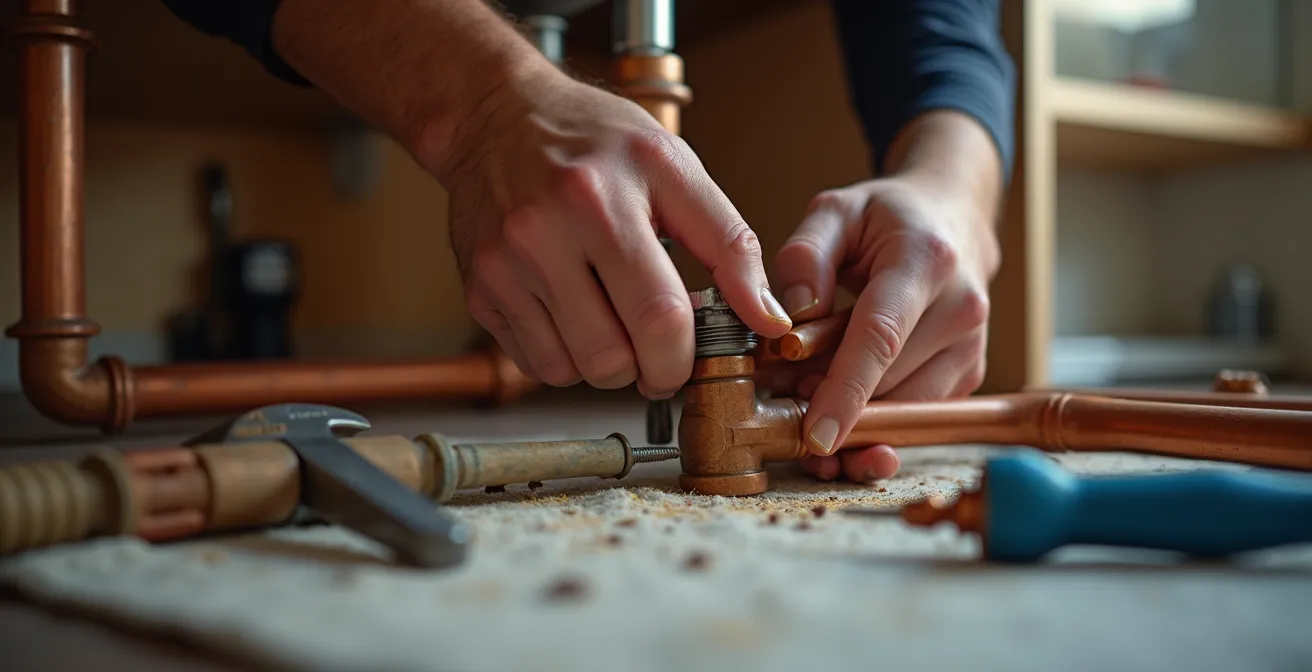
A truly experienced green plumber’s answers will be specific, referencing local suppliers, provincial programs, and technical considerations unique to the region. They will speak the language of lifecycle cost and system integration, not just brand names and installation fees. This expertise is the engine that will power your sustainable renovation from plan to reality.
LEED vs. Novoclimat: Which Standard Should Guide Your Renovation?
For homeowners committed to a rigorous, third-party-verified eco-renovation, adopting a certification standard provides a clear framework and adds significant value. In Quebec, two main programs come into play: LEED for Homes and the provincial Novoclimat program. While both promote energy efficiency and sustainability, they are designed for different scales and have distinct financial implications for a bathroom-focused project in Montreal. Choosing the right one is a key strategic decision that should be made at the very outset of your planning.
LEED for Homes is a holistic, internationally recognized standard that evaluates a home across multiple categories, including water efficiency, materials, indoor air quality, and site sustainability. It is best suited for large-scale, comprehensive renovations or new constructions where the entire home is being upgraded. Attempting a LEED certification for a single bathroom renovation is often impractical and not cost-effective.
Conversely, Novoclimat is a program administered by the Government of Quebec focused squarely on energy efficiency, particularly insulation, air-tightness, and ventilation (like Heat or Energy Recovery Ventilators – HRV/ERV). While it also applies to the whole home, its recommendations are often directly linked to provincial grants, including the popular RénoClimat program. For a homeowner making targeted upgrades, aligning with Novoclimat’s principles is often the more financially rewarding path. In fact, homeowners can receive up to $20,000 through the RénoClimat program for eligible energy-efficient improvements, many of which are core to the Novoclimat standard.
The following table, drawing from data provided by Transition énergétique Québec, breaks down the key differences to help you decide which path is right for your Montreal bathroom project.
| Criteria | Novoclimat | LEED for Homes |
|---|---|---|
| Focus Area | Energy efficiency and ventilation | Holistic sustainability |
| Best for Bathrooms | Single room renovations | Whole-home projects |
| Quebec Grants | Direct link to provincial funding | Limited local incentives |
| Required Elements | HRV/ERV units, insulation upgrades | WaterSense fixtures, material tracking |
| Cost-Benefit | More financially rewarding for small projects | Better for comprehensive renovations |
| Evaluation Process | Certified evaluator before work starts | LEED AP professional consultation |
For most bathroom renovations, the conclusion is clear: while LEED principles offer a valuable philosophical guide, the Novoclimat framework provides a more practical and financially advantageous roadmap for Montreal homeowners.
The Error of Buying ‘Green’ Fixtures That Are Not Repairable
One of the most pervasive myths in sustainable design is that a “green” label automatically equals a sustainable choice. In the world of plumbing fixtures, this can lead to a critical error: purchasing a trendy, water-efficient faucet or showerhead from an obscure online brand, only to find it’s impossible to repair when a part fails years later. This is the ‘fast furniture’ phenomenon applied to your bathroom, and it directly contradicts the core principle of sustainability: longevity.
True sustainability is longevity. A ‘green’ faucet that can’t be repaired in 10 years creates more waste than a standard, high-quality faucet with readily available parts.
– Bathroom renovation expert, Sustainable Bathroom Design Guide
A fixture’s true environmental cost—its lifecycle cost—includes not just its manufacturing and water use, but also its maintenance, repair, and eventual disposal. A faucet that must be entirely replaced due to a single unfindable cartridge is a disposable product, regardless of its WaterSense label. This is why a repairability index should be central to your selection process. Before falling for a sleek design or a low price, your primary question should be: “Can I get parts for this in Montreal in 2034?”
To avoid this trap, prioritize established brands with a strong Canadian presence and a reputation for long-term parts support. Brands like Moen, Delta, and American Standard typically offer lifetime warranties and ensure that replacement cartridges and components are available for decades through local plumbing suppliers. This commitment to serviceability is a far better indicator of sustainability than any marketing label.
Your Montreal Repairability Checklist for Fixture Selection
- Verify Parts Locally: Contact major Montreal plumbing suppliers (e.g., Plomberie-Montréal, EMCO) *before* purchase to confirm they stock parts for the brand and model.
- Choose Canadian Presence: Prioritize established brands known for their service in Canada, such as Moen, Delta, and American Standard.
- Demand Warranty Docs: Request and review the lifetime warranty documentation, specifically verifying the process for service within Canada.
- Check Cartridge Standards: Ask if the faucet uses standardized cartridge sizes that may fit multiple models, increasing future availability.
- Factor in Hard Water: Consider Montreal’s hard water and its impact on aerators and cartridges. Choose fixtures known for durability in such conditions.
- Scout Specialized Shops: Be aware of specialized parts stores like S.P.S. Centre de Pièces as a backup for sourcing obscure parts down the line.
By using this checklist, you shift your focus from short-term aesthetics to long-term performance and resilience, ensuring your beautiful new fixtures don’t become premature landfill fodder.
When to Apply for Renoclimat: Before or After Work Begins?
The RénoClimat program is one of the most valuable financial resources for Quebec homeowners undertaking an energy-efficient renovation. However, its benefits are governed by a strict, non-negotiable rule of procedure: you must register and have a pre-retrofit energy evaluation completed *before* any work begins. This is not a mere suggestion; it is an absolute requirement for eligibility. Many well-intentioned homeowners lose out on thousands of dollars in grants simply because they get the timing wrong.
The entire premise of the program is to measure the “before and after” energy performance of your home. If you start demolition or install new insulation before the initial evaluation, the baseline data is lost, and you automatically become ineligible for any financial assistance related to that work. The process requires patience and planning. As of November 2024, a fee of $150 plus taxes is now required for the mandatory energy assessment, which is a small investment to unlock potentially thousands in grants.
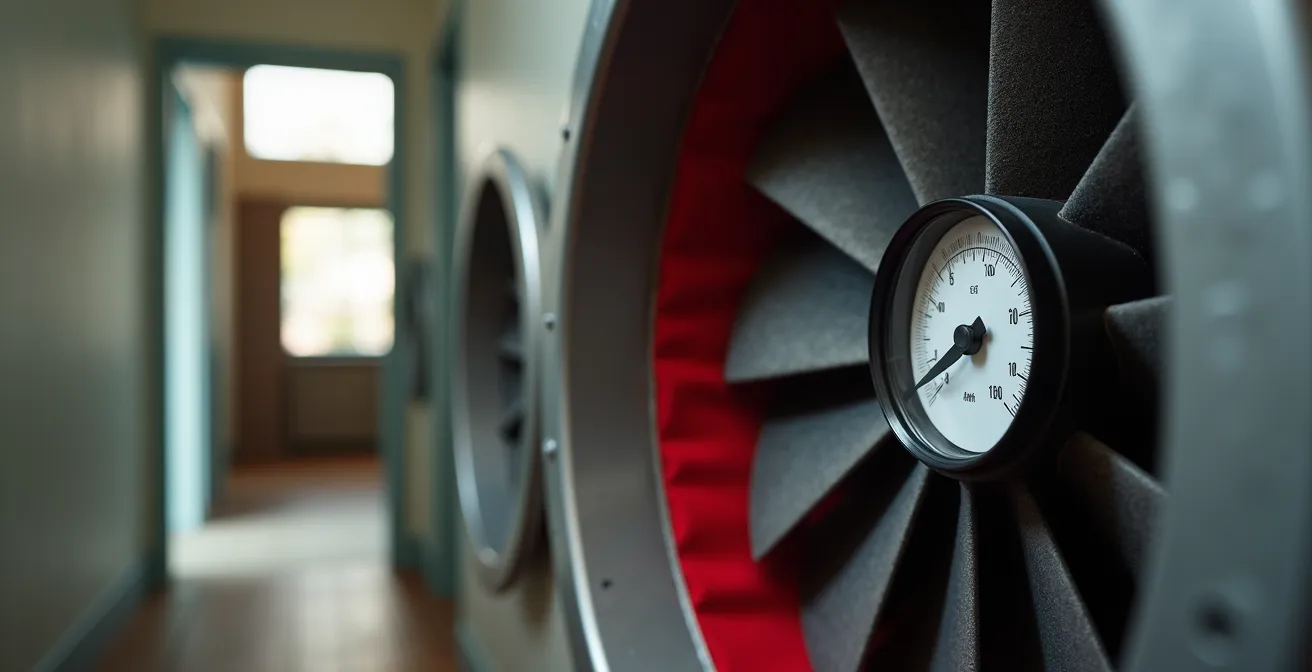
The pre-retrofit evaluation, performed by a certified RénoClimat advisor, involves a full inspection of your home’s envelope and systems, often including a blower door test to measure air leakage. Following the visit, you will receive a detailed report with an EnerGuide rating and a list of recommended improvements. This report becomes your roadmap for the renovation, outlining the specific work (e.g., insulating bathroom walls, upgrading windows, installing an HRV) that will qualify for grants.
To ensure you follow the correct procedure, adhere to this strict timeline:
- Step 1: Register First. Go to the official Quebec government website and register for the RénoClimat program before you touch a single tool.
- Step 2: Schedule the Pre-Retrofit Evaluation. A certified advisor will contact you to schedule the initial home energy assessment.
- Step 3: Receive and Review Your Report. Wait for the evaluation report. This document is your guide to eligible work.
- Step 4: Begin Your Renovation. Only now can you start demolition and construction, following the recommendations in the report.
- Step 5: Complete All Work. Finish all the eligible improvements you plan to claim.
- Step 6: Schedule the Post-Retrofit Evaluation. Once the work is done, have the advisor return to measure the improvements.
- Step 7: Submit for Your Grant. With both evaluations complete, you can submit your documentation for grant processing.
Understanding and respecting this procedural integrity is the difference between a smart, subsidized renovation and a missed opportunity.
WaterSense vs. Standard: Which Fixtures Qualify for Rebates?
The WaterSense label, a program sponsored by the U.S. Environmental Protection Agency (EPA), has become the North American standard for identifying water-efficient plumbing fixtures. Choosing WaterSense-labeled toilets, showerheads, and faucets is a foundational step in any eco-friendly bathroom renovation. These products are independently certified to be at least 20% more water-efficient than standard models without sacrificing performance. The savings are significant; replacing old, inefficient toilets with WaterSense models alone can reduce a family’s water use for toilets by 20 to 60 percent.
However, a common misconception among Montreal homeowners is that the WaterSense label automatically qualifies them for a local rebate. While some municipalities or utilities offer direct rebates for purchasing these fixtures, it is crucial to verify the current programs available in your specific area. As of now, the City of Montreal does not offer a widespread, direct rebate for simply purchasing WaterSense fixtures. The primary financial benefit comes from long-term savings on your water bill and, in some cases, eligibility for broader programs offered by utilities like Hydro-Québec when these fixtures are part of a larger energy-saving project.
It’s also important to understand that WaterSense is not just about flow rate; it’s also about performance. For example, to earn the label, toilets must meet a minimum threshold for flush power (a MaP score of at least 350 grams). This ensures that you are not trading efficiency for functionality. The table below, using data from Hydro-Québec’s own guidance, clarifies the performance differences and rebate status for Montreal.
| Fixture Type | Standard Flow Rate | WaterSense Flow Rate | Water Savings | Montreal Rebates |
|---|---|---|---|---|
| Toilets | 6.0 L/flush (old models) | 4.8 L/flush | 20-60% | No city rebate currently |
| Showerheads | 9.5 L/min | 7.6 L/min | 20%+ | Check Hydro-Québec programs |
| Faucet Aerators | 8.3 L/min | 5.7 L/min | 30% | No direct rebate |
| Performance Rating | Variable | MaP 350g minimum | Better flush efficiency | Long-term bill savings |
The takeaway is clear: always specify WaterSense-labeled products for their proven efficiency and performance. But treat the selection as an investment in lower utility bills and resource conservation, not as a direct path to an immediate cash rebate in Montreal unless you have confirmed a specific, active program.
Why Are Cartridges for 10-Year-Old Faucets Hard to Find?
The frustration is familiar to many homeowners: a perfectly good-looking 10-year-old faucet starts to drip. The repair should be simple—a new cartridge—but a trip to the plumbing supply store reveals the part is discontinued and impossible to find. This problem stems directly from the ‘fast furniture’ business model that has infiltrated the plumbing industry. Many trendy, low-cost fixtures, especially from online-only or big-box store brands, are designed for visual appeal and a low upfront price, with little to no consideration for long-term serviceability.
These manufacturers prioritize novelty and rapid product cycles over building a lasting support ecosystem. They produce a specific model for a few years, then move on to the next trend, abandoning the parts supply chain for the older models. The result is a ‘disposable’ fixture. While it may have been inexpensive initially, its true lifecycle cost is extremely high when the entire unit must be ripped out and replaced due to the unavailability of a single, small component. This is a primary driver of preventable renovation waste.
Case Study: The ‘Fast Furniture’ Faucet vs. Salvaged Sustainability
The “fast furniture” approach prioritizes design novelty over durability. In contrast, a truly sustainable strategy, as discovered by many Montreal homeowners, involves pairing high-quality, serviceable fixtures with unique, salvaged materials. Opting for a vintage sink from a local antique market or designing a vanity with recycled materials creates a unique aesthetic while reducing waste. The key is to pair these salvaged items with a new faucet from an established brand that guarantees lifetime parts availability, creating a solution that is both environmentally responsible and built to last.
To avoid this scenario, the most important question you can ask before purchasing any fixture is not “Is it on sale?” but, as one Montreal plumbing supplier advises, “Can I buy a replacement cartridge for this exact model?” This simple verification shifts the focus to long-term value and repairability. By choosing brands that are committed to their products for the long haul, you are investing in a fixture that can be maintained for decades, not just a few years. This decision is one of the most powerful eco-friendly choices you can make, ensuring your bathroom remains functional and beautiful without contributing to the cycle of disposable design.
Key Takeaways
- Longevity Over Labels: True sustainability in a renovation comes from choosing durable, repairable fixtures, not just products with a ‘green’ sticker.
- Procedural Integrity Is Key: For Quebec grants like RénoClimat, the timing is everything. You must register and complete the pre-retrofit evaluation *before* any work begins.
- Local Expertise Is Non-Negotiable: A CMMTQ-certified plumber with proven experience in local programs like Hydro-Québec incentives is your most valuable asset.
Is the Energy Star Label Worth the Extra Cost for Water Heaters?
Water heating is a significant energy consumer in any home. According to the U.S. Energy Information Administration, an estimated 18 percent of home energy use is for heating water. Consequently, selecting a new water heater during a bathroom renovation is a major decision with long-term financial and environmental consequences. ENERGY STAR certified models promise higher efficiency, but they often come with a higher upfront cost. For a Montreal homeowner, determining if this extra cost is “worth it” requires a systemic analysis that goes beyond the sticker price.
An ENERGY STAR water heater can be 10-50% more efficient than a standard model, depending on the technology (e.g., heat pump vs. high-efficiency tank). The higher initial investment is designed to be paid back over time through lower electricity bills from Hydro-Québec. However, the simple payback calculation is only part of the story. A holistic decision must integrate several factors specific to your home and location.
For instance, your home’s electrical service is a critical factor. Many older Montreal homes have 100-amp panels, which may be insufficient for some modern, high-demand electric tankless or heat pump models, requiring a costly panel upgrade. Furthermore, Quebec’s notoriously cold incoming groundwater temperatures in winter can challenge the performance and efficiency of certain tankless models. Your household’s specific water usage patterns—a large family with simultaneous morning showers versus a single person—will also dictate whether a tank or tankless model is more appropriate. Finally, and most importantly, both the federal and provincial governments, including through the RénoClimat program, often offer substantial grants specifically for installing ENERGY STAR certified water heaters, which can dramatically shorten the payback period and make the initial investment far more attractive.
To make the right choice, you need a decision framework, not just a price comparison. Use the following points as your guide:
- Calculate Payback Period: Use your current Hydro-Québec electricity rate (and dual-rate system, if applicable) to estimate the annual savings and calculate how long it will take to recoup the extra cost.
- Factor in All Grants: Research and include all available RénoClimat and Hydro-Québec grants for ENERGY STAR models in your calculation.
- Evaluate Your Electrical Panel: Confirm your panel has the capacity for the new unit, especially for older Montreal homes.
- Assess Your Household’s Needs: Consider your family size, hot water demand patterns, and the impact of Quebec’s cold tap water on different technologies.
- Check for Instant Rebates: Some retailers and partners of Hydro-Québec offer instant rebates at the point of sale.
When viewed through this systemic lens, the ENERGY STAR label is often well worth the extra cost, not just for the energy savings but as a smart, grant-supported investment in your home’s long-term efficiency and value.
Begin your eco-responsible renovation by building a strategic plan, not a shopping list. Evaluate your home’s entire system, engage certified local professionals, and prioritize longevity to ensure your investment is sustainable for decades to come.