Converting from oil to electric heating in Quebec is a critical risk-management project, not just a simple appliance upgrade.
- Insurers are increasingly refusing coverage for older homes with oil tanks, making professional removal a financial and legal necessity.
- A 200-amp electrical panel upgrade is often the biggest unforeseen cost and bottleneck, and must be assessed before any other work begins.
Recommendation: Start planning in the winter to secure certified contractors and process grant applications, positioning you for a summer conversion—the optimal window for the required outdoor electrical work.
If you’re a Quebec homeowner with an oil furnace, that letter from your insurance provider might already be on its way. More and more, insurers are viewing aging oil tanks not as outdated equipment, but as a significant liability. The threat of policy cancellation is no longer a distant possibility; it’s a primary driver forcing homeowners to confront a complex and often intimidating project: converting to an all-electric heating system.
While many discussions about this transition focus on the clear environmental benefits or long-term energy savings, they frequently overlook the most critical aspect: a successful conversion is a multi-stage project that demands careful strategic planning. Failing to manage it correctly can lead to spiraling costs, regulatory hurdles, and dangerous installation errors. The key to success isn’t just choosing a new heat pump; it’s mitigating risk, navigating a chain of regulatory compliance, and executing on a precise timeline.
This guide abandons the generic advice and instead provides a project manager’s roadmap. We will deconstruct the process step-by-step, from understanding the insurance imperatives and safely decommissioning your oil tank, to budgeting for the real costs (including hidden ones), selecting the right system for unique Montreal housing like a duplex, and ensuring the contractor you hire is fully licensed and insured.
To navigate this complex project, it’s essential to understand each critical stage. This guide is structured to walk you through the entire process, from initial risk assessment to final system selection, ensuring you’re equipped to make informed decisions.
Summary: How to Convert an Oil Heating System to Electric in Quebec?
- Why Are Insurance Companies Refusing Homes with Old Oil Tanks?
- How to Dispose of an Indoor Oil Tank Safely and Legally?
- Keep Existing Ducts or Switch to Baseboards: Which Is Cheaper?
- The Error of Not Checking Panel Capacity Before Converting to Electric
- When to Schedule a Heating Conversion: Why Summer Is Crucial
- How to Confirm a Contractor’s Liability Insurance Coverage?
- When to Replace an Old Cast Iron Boiler: Efficiency vs. Durability
- Which Eco-Friendly Heating System Is Best for a Montreal Duplex?
Why Are Insurance Companies Refusing Homes with Old Oil Tanks?
The primary reason your insurance company is concerned about your oil tank has little to do with heating efficiency and everything to do with risk mitigation. An old, corroded oil tank, particularly one over 20 years of age, represents a ticking time bomb for an environmental disaster in your basement. A leak can lead to soil and water contamination, requiring remediation efforts that are astronomically expensive, often running into the tens or even hundreds of thousands of dollars.
Insurance companies are not in the business of taking on predictable, high-cost risks. Data clearly shows the financial devastation these incidents cause. For instance, a survey from the Insurance Bureau of Canada covering Atlantic Canada revealed that 1,239 claims related to oil spills cost insurers $61.4 million between 1999 and 2002 alone. Faced with this data, insurers have shifted their policies, often outright refusing to cover homes with tanks past a certain age or without specific ‘Escape of Fuel Oil’ endorsements, which are becoming harder to obtain.
This isn’t a scare tactic; it’s a calculated business decision that directly impacts your ability to secure a mortgage or sell your home. A house that is uninsurable is effectively unmarketable. Therefore, the decision to convert to electric is often less a choice and more a financial and legal necessity driven by the insurance industry’s intolerance for the liability your oil tank represents.
How to Dispose of an Indoor Oil Tank Safely and Legally?
Once you’ve decided to convert, the oil tank doesn’t just disappear. Its removal is a regulated process that requires certified professionals to protect both your property and the environment. Attempting a DIY removal is not only dangerous due to the risk of spills and flammable vapors, but it also leaves you without the crucial documentation needed to prove to insurers and future buyers that the liability has been neutralized.
The process, as detailed by Montreal-based specialists, follows a strict protocol. A licensed technician must first pump any remaining oil from the tank. Then, the tank is thoroughly cleaned and degassed according to regulations set by Quebec’s Ministry of the Environment (MELCC). This step is critical to eliminate explosive fumes. Only then can the tank be safely disconnected and physically removed from your property. The final step is its transportation to a registered waste management site that can legally process it.
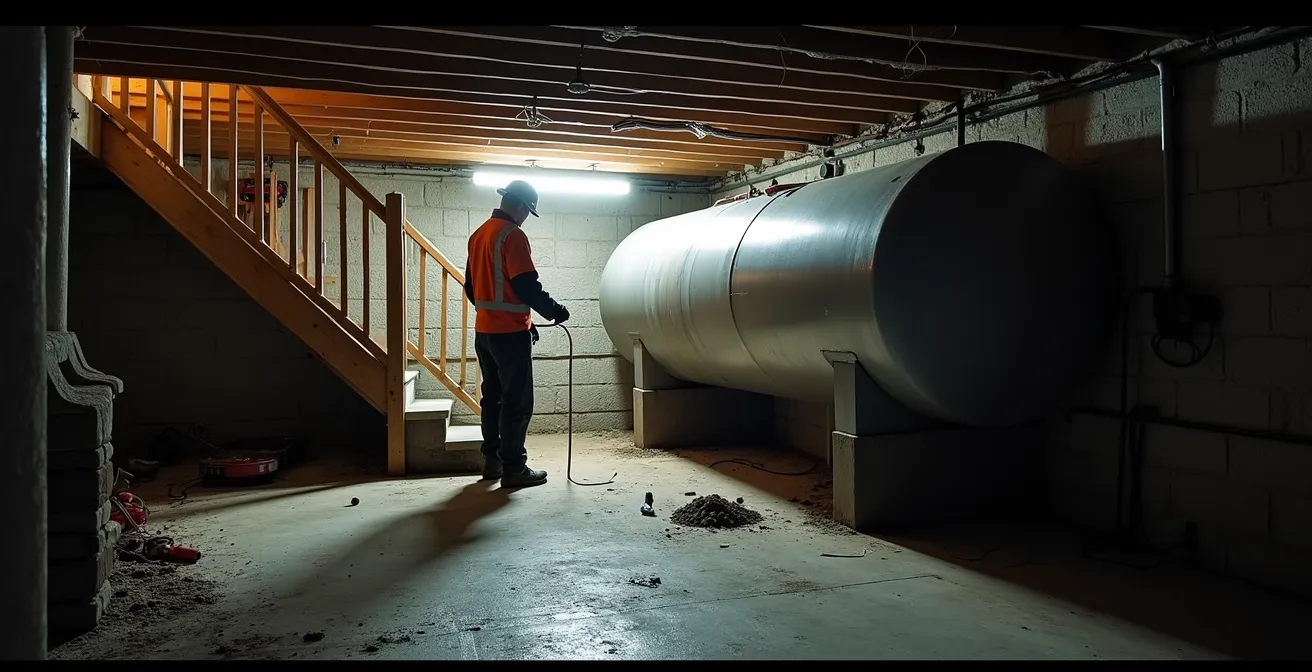
Upon completion, you must secure a “regulatory chain of custody” in the form of two key documents: a certificate of degassing and a disposal certificate. These papers are your legal proof that the tank was handled in compliance with all provincial laws. As conversion specialist Écoconversions notes, the cost and complexity of this process can vary widely, depending on the tank’s accessibility—a job in a tight Plateau basement is vastly different from one in an open suburban garage.
Keep Existing Ducts or Switch to Baseboards: Which Is Cheaper?
With the oil furnace gone, you face a major decision: leverage your existing ductwork or install a completely new system like electric baseboards? This choice has significant implications for cost, comfort, and eligibility for government grants. For homes with pre-existing forced-air ducts, the most synergistic option is often a central heat pump. It uses the ducts you already own for both heating and, crucially, central air conditioning—a major value-add in Montreal’s humid summers.
Alternatively, you could decommission the ducts and install electric baseboards, often paired with a wall-mounted heat pump for efficient heating and cooling in the main living area. This can sometimes appear cheaper upfront, but it provides less consistent whole-home temperature control. The choice hinges on a balance of installation costs, long-term operating efficiency, and available subsidies.
This comparative analysis from Montreal conversion specialists illustrates the financial trade-offs for a typical 1200 sq ft home. As the data shows, while baseboards have a lower entry cost, a central heat pump system, despite its higher initial price, can become much more affordable after factoring in the maximum available government subsidies.
| Option | Equipment Cost | Installation Cost | Total Cost Range | Government Subsidies Available |
|---|---|---|---|---|
| Central Heat Pump with Existing Ducts | $5,000-$8,000 | $4,000-$7,000 | $9,000-$15,000 | Up to $6,275 (Chauffez Vert + Federal) |
| Electric Baseboards + Wall Heat Pump | $3,000-$4,500 | $2,000-$3,500 | $5,000-$8,000 | Up to $1,275 (Chauffez Vert only) |
| Electric Furnace Only | $2,500-$3,500 | $1,700-$2,500 | $4,200-$6,000 | Up to $1,275 (Chauffez Vert) |
Furthermore, modern technology has eliminated old concerns about performance. As André Trudel, Sales Director at Confort Expert in Montreal, confirms:
For several years, some heat pumps can operate down to -30°C!
– André Trudel, Sales Director at Confort Expert, Montreal
This makes them a viable primary heating source even in the depths of a Quebec winter, reinforcing their position as a top choice for ducted homes.
The Error of Not Checking Panel Capacity Before Converting to Electric
The single most common and costly mistake in an oil-to-electric conversion project is ignoring the electrical panel. An oil furnace uses a negligible amount of electricity, but a new electric furnace or central heat pump is a power-hungry appliance. Most older Montreal homes equipped with oil heating have electrical panels of 100 or 125 amps, which is critically insufficient to handle the new load. Proceeding without an upgrade will lead to constantly tripping breakers and a dangerous overload of your home’s electrical system.
A full conversion to electric heating almost invariably requires upgrading your main service entrance and panel to at least 200 amps. This is not a minor task; it’s a significant sub-project that requires a certified master electrician, permits from the city, and coordination with Hydro-Québec. The cost for this upgrade is substantial and must be factored into your total budget from day one. According to West Island electrical contractors, homeowners should budget between $2,500 to $3,500 for a 200 amp panel upgrade, a figure that can increase if outdated wiring, like knob-and-tube, is discovered during the work.
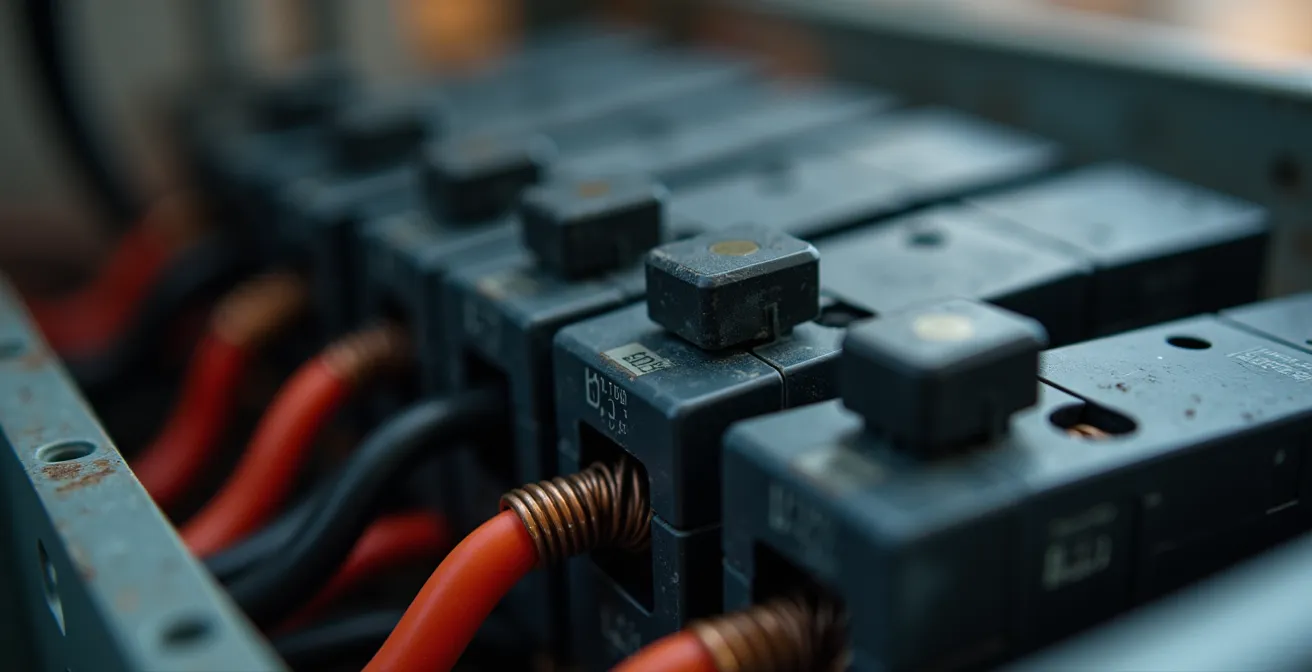
Failing to account for this “electrical headroom” can derail your entire project. Imagine having your new heating system installed, only to find it cannot be safely turned on. Assessing your electrical panel is not step two or three; it is step one. Before you even request quotes for a heat pump, you must have a master electrician confirm your panel’s capacity and provide a firm quote for the necessary upgrade.
When to Schedule a Heating Conversion: Why Summer Is Crucial
From a project management perspective, the timing of your conversion is as critical as the technical specifications. The ideal project timeline does not begin when the weather gets warm. It begins in the dead of winter. A well-executed conversion is a six-month strategic process, not a last-minute job. The goal is to have the physical work performed during the summer months, specifically between April and November.
This schedule is dictated by two main factors. First, contractors are in high demand during peak season; booking them in March for a June installation is essential to secure a qualified team. Second, and more importantly, significant electrical work, especially a service entrance upgrade from 100 to 200 amps, often requires favorable outdoor conditions for the technicians to work safely and efficiently. Trying to schedule this during a January ice storm is impractical and often impossible.
A case study of the optimal timeline recommended by specialists like Écoconversions suggests the following sequence:
- January: Register with provincial grant programs like Rénoclimat to get the process started.
- February-March: Obtain multiple quotes from certified contractors and make your selection.
- April-May: Finalize contracts and apply for any necessary municipal permits.
- June-August: The core work is performed—oil tank removal, electrical panel upgrade, and new system installation.
- September: Final inspections are completed and grant money is typically received.
This proactive scheduling ensures a smooth workflow and avoids the stress of a rushed project. Furthermore, homeowners must be aware of hard deadlines for subsidies. As of now, the Quebec government has stated that March 31, 2026, is the final deadline for all work to be completed to be eligible for the popular Chauffez Vert program. This regulatory endpoint adds another layer of urgency to proper project planning.
How to Confirm a Contractor’s Liability Insurance Coverage?
In a project with so many financial and safety variables, the single greatest asset you have is a qualified, licensed, and fully insured contractor. Hiring an unvetted or under-insured individual is the fastest way to turn your conversion project into a financial catastrophe. In Quebec, the trades are highly regulated, and you have powerful tools at your disposal to verify a contractor’s credentials before you sign any contract. Your role as the project manager is to perform this due diligence rigorously.
A contractor’s word is not enough. You must independently verify their status with the official governing bodies. This includes checking their license number on the website of the Régie du bâtiment du Québec (RBQ), which is the ultimate authority on construction licensing in the province. For HVAC work specifically, they must hold the correct sub-licenses, such as 15.1, 15.4, and 15.5. You should also confirm their good standing with the Commission de la construction du Québec (CCQ) and the CNESST (the workplace safety board).
Most importantly, you must ask for and receive a copy of their liability insurance certificate. This document should clearly state that they carry a minimum of $2 million in liability coverage. This is non-negotiable. This insurance is what protects you if their work accidentally causes a fire, flood, or other major damage to your property. A contractor without adequate insurance is transferring all that risk directly onto you. Membership in the CMMTQ (Corporation des maîtres mécaniciens en tuyauterie du Québec) is another strong indicator of professionalism and adherence to industry standards.
Your Contractor Verification Checklist
- Verify their license number and status on the official RBQ (Régie du bâtiment du Québec) website.
- Check for the specific HVAC sub-licenses required for the work (e.g., 15.1, 15.4, 15.5).
- Request their current liability insurance certificate and confirm it shows a minimum of $2 million in coverage.
- Confirm their registration is in good standing with the CCQ (Commission de la construction du Québec) and the CNESST.
- Look for proof of membership in a professional trade organization like the CMMTQ (Corporation des maîtres mécaniciens en tuyauterie du Québec).
When to Replace an Old Cast Iron Boiler: Efficiency vs. Durability
For owners of older Montreal homes, particularly those with graceful cast iron radiators, the conversion conversation is different. Your home has a hydronic (hot water) system, not a forced-air one. The good news is that you don’t need to rip out your beloved, efficient radiators. The bad news is that your oil-fired boiler is still a liability. While these cast iron behemoths are known for their incredible durability, they operate at very low efficiency compared to modern electric alternatives.
The strategic decision here is not whether to keep the radiators—you absolutely should—but when to replace the boiler that feeds them. While an old boiler might feel indestructible, its lifespan is still finite. Montreal conversion specialists note that oil-fired systems typically last around 20 years, whereas new electric boilers can have a lifespan of up to 30 years with minimal maintenance. The conversion becomes a question of pre-emptive action versus waiting for a failure.
The modern solution is elegant and preserves your home’s character. Compact, wall-mounted electric boilers, many of which are made right here in Quebec, can be installed and connected directly to your existing hydronic loop. These units are highly efficient, silent, and take up a fraction of the space of their oil-guzzling predecessors. This approach provides the best of both worlds: you retain the superior, comfortable radiant heat of your cast iron radiators while eliminating the insurance risk, maintenance, and environmental impact of the oil tank and boiler. It’s a surgical upgrade that enhances your home’s value and comfort without a destructive renovation.
Key Takeaways
- Insurance liability, not just age, is the main driver for oil tank removal in Quebec.
- Your electrical panel’s capacity (a minimum of 200 amps is usually required) is the most critical and often overlooked prerequisite for conversion.
- A successful conversion is a 6-month project; start planning in January for physical work in the summer to secure contractors and meet grant deadlines.
Which Eco-Friendly Heating System Is Best for a Montreal Duplex?
Montreal’s housing stock is dominated by duplexes, triplexes, and other multi-unit dwellings, which introduces another layer of complexity to a heating conversion. As a building owner, you must decide on a strategy: install two completely separate systems, or one larger, centralized system that serves all units? This decision impacts installation complexity, future Hydro-Québec billing, and the property’s overall value and appeal to future tenants or buyers.
Installing two separate systems (one per unit) is often the superior long-term strategy. While the upfront equipment and installation cost is higher, it allows for individual metering by Hydro-Québec. This is a huge advantage, as it makes each tenant responsible for their own heating costs, eliminating disputes over shared bills. It also increases the property’s value, as the independence is highly attractive to potential buyers or renters. Furthermore, with separate systems, each unit may be individually eligible for the full range of government grants, potentially maximizing your total subsidy.
This table from HVAC specialists outlines the strategic considerations when choosing a heating setup for a duplex, highlighting the clear benefits of separate systems in terms of billing and property value.
| Strategy | Installation Complexity | Hydro-Québec Billing | Property Value Impact | Grant Eligibility |
|---|---|---|---|---|
| Two Separate Systems (one per unit) | Higher – requires separate equipment and controls | Individual metering possible | Higher – independent control appeals to buyers | Each unit eligible separately |
| Single Centralized System | Lower – one system to maintain | Shared billing requires agreement | Moderate – cost-sharing complexities | Single application for building |
For these applications, cold-climate heat pumps are an excellent choice. As Montreal HVAC specialists from Écoconversions point out:
Cold climate heat pumps are eligible for Hydro-Québec’s LogisVert grant program. They are a great option for Montreal residents because they are particularly effective in homes that do not have central air ducts.
– Écoconversions, Montreal HVAC specialists
This makes them highly adaptable for duplexes, which may have varying or non-existent ductwork, allowing for flexible and efficient independent systems in each unit.
To ensure your conversion project is a success from start to finish, the logical next step is to obtain a professional assessment of your current electrical panel and heating infrastructure. This initial consultation is the foundation of your entire project budget and timeline. Contact a CMEQ-certified master electrician to schedule an evaluation and begin the process of securing your home’s safety, insurability, and future value.