Home guides
Montreal homeowners face unique challenges that demand more from their plumbing and heating systems than most other North American regions. With temperature swings ranging from -30°C in January to +30°C in July, your home’s mechanical systems must withstand conditions that can spell disaster for the unprepared. A single frozen pipe can release hundreds of liters of water into your home within hours, causing damage that far exceeds the cost of preventive measures.
This comprehensive resource equips you with the knowledge to protect, maintain, and optimize your home’s plumbing and heating infrastructure throughout Quebec’s demanding seasons. Whether you’re a first-time homeowner in Plateau-Mont-Royal, managing a duplex in Rosemont, or overseeing a condo in the Old Port, understanding these systems is essential to avoiding costly emergencies and ensuring year-round comfort. We’ll explore winterization fundamentals, common mistakes that lead to failures, inspection protocols, property-specific considerations, and sustainable heating approaches tailored to our climate.
Why Montreal’s Climate Demands Special Plumbing Considerations
Montreal’s continental climate creates conditions that stress plumbing systems in ways rarely seen elsewhere. The freeze-thaw cycles that occur throughout fall and spring subject pipes to repeated expansion and contraction, gradually weakening joints and connections. Water expands approximately 9% when it freezes—a force capable of bursting even copper pipes rated for high pressure.
The extended heating season, typically running from October through April, means your system operates under demand for over half the year. Buildings constructed before modern building codes were established—common throughout neighborhoods like Notre-Dame-de-Grâce and Verdun—often lack the insulation standards that newer construction provides. Pipes installed in exterior walls, unheated basements, or poorly insulated crawl spaces become vulnerable zones during cold snaps.
Think of your plumbing system as a network of arteries carrying water throughout your home. Just as human circulation suffers when exposed to extreme cold, these water pathways require protection. The physics are unforgiving: when temperature drops below 0°C for extended periods, any stagnant water in exposed pipes will freeze. The ice blockage creates pressure that seeks the weakest point—often a joint or valve—where rupture occurs.
Essential Winterization and Freeze Protection Strategies
Proper winterization transforms your plumbing system from vulnerable to resilient. This process involves more than simply draining outdoor faucets; it requires a systematic approach to identifying and protecting every potential failure point.
Identifying Your Home’s Vulnerable Zones
Begin with a methodical inspection of areas where pipes pass through or near exterior walls, unheated spaces, or areas with limited insulation. Common vulnerable locations in Montreal homes include:
- Exterior wall cavities, particularly on north-facing walls that receive minimal solar warming
- Unheated garages where water lines run to utility sinks or second-floor bathrooms
- Crawl spaces and rim joist areas where foundation meets framing
- Attic spaces where supply lines serve upper-floor fixtures
- Outdoor hose bibs and irrigation system components
The Systematic Winterization Process
Effective winterization follows a specific sequence designed to eliminate water from vulnerable areas while maintaining function where needed. For seasonal properties or planned absences during winter months, this becomes even more critical:
- Shut off exterior water supplies at indoor isolation valves, then open outdoor faucets to drain remaining water
- Drain and blow out irrigation systems using compressed air to remove all water from underground lines
- Insulate exposed pipes in vulnerable areas using foam sleeves rated for at least R-3 thermal resistance
- Apply heat trace cable to pipes in extremely vulnerable locations, ensuring proper electrical safety measures
- Set thermostats to maintain minimum temperatures of 15°C throughout the home, even in unused areas
- Open cabinet doors beneath sinks on exterior walls to allow warm air circulation during extreme cold
Safe Thawing Techniques When Prevention Fails
Despite best efforts, frozen pipes occasionally occur. The thawing approach determines whether you’ll restore flow safely or create a flood. Never use open flames or high-heat sources like propane torches, which can vaporize water inside the pipe, creating explosive pressure, or damage pipe materials and nearby combustibles. Instead, apply gentle, gradual heat using a hairdryer, heating pad, or warm towels, working from the faucet backward toward the frozen section to allow melting water an escape path.
Common Homeowner Mistakes That Lead to System Failures
Experience shows that most plumbing and heating emergencies stem from preventable oversights rather than equipment defects. Understanding these patterns helps you avoid becoming another cautionary tale.
Maintenance Neglect and Timing Errors
Many homeowners defer maintenance until a problem becomes obvious—a costly approach given Montreal’s climate. Annual inspections should occur in early fall, before the heating season begins, allowing time to address issues before they become emergencies. Waiting until the first deep freeze to discover a failed heating zone or uninsulated pipe leaves you scrambling for emergency service during peak demand periods when costs spike and availability plummets.
Consider the case of a Westmount homeowner who postponed replacing a 20-year-old water heater despite rust stains and intermittent performance. When it finally failed during a February cold snap, the replacement cost was 40% higher due to emergency service premiums, and the family spent three days without hot water waiting for equipment availability.
Ventilation and Draft Prevention Oversights
Modern high-efficiency heating systems rely on precise air-fuel ratios and proper venting to operate safely and efficiently. Blocking intake vents with storage, allowing exhaust vents to become obstructed by snow, or failing to maintain proper combustion air supply creates dangerous conditions. Carbon monoxide accumulation poses immediate life-threatening risks, while incomplete combustion reduces efficiency and accelerates equipment deterioration.
Reliance on Single Protection Measures
Depending solely on one protection strategy—whether continuous heating, pipe insulation, or freeze sensors—creates a single point of failure. Effective protection employs layered defenses: insulation reduces heat loss, thermostats maintain baseline warmth, sensors provide early warning, and heat trace cables offer active protection for the most vulnerable sections. Think of this as a safety net with multiple strands; if one fails, others maintain protection.
Inspection and Monitoring Best Practices
Regular inspection transforms reactive crisis management into proactive system stewardship. Knowing what to look for and when to look makes the difference between catching small issues early and facing major failures.
Executing Effective Visual Inspections
A thorough visual inspection examines both obvious and hidden components. Look beyond the immediately visible to check:
- Pipe joints and connections for moisture, corrosion, or mineral deposits indicating slow leaks
- Water heater tanks for rust staining, particularly around the base and fittings
- Pressure relief valve discharge tubes for calcium buildup or corrosion
- Heating system heat exchangers for cracks, rust, or soot accumulation
- Condensate drain lines for blockages or biological growth
- Expansion tanks for proper pressurization and diaphragm integrity
Installing and Utilizing Sensors Correctly
Modern monitoring technology provides early warning of developing problems, but only when properly installed and maintained. Water leak sensors placed near water heaters, beneath sinks, and in basement floor drains can alert you to problems before significant damage occurs. Temperature sensors in vulnerable areas provide warning when conditions approach freezing thresholds. However, sensors require periodic testing—monthly battery checks and quarterly functional tests ensure they’ll perform when needed.
Avoiding Interpretation Errors
Recognizing warning signs requires understanding what normal operation looks like. Small changes—slightly reduced water pressure, minor temperature fluctuations, subtle noises from heating equipment—often signal developing issues. A heating system that cycles more frequently may indicate a failing circulation pump, clogged filter, or thermostat calibration drift. Water pressure that gradually decreases might point to accumulating mineral deposits, a failing pressure reducing valve, or developing leaks. Document baseline performance when systems are new or freshly serviced to establish reference points for future comparison.
Property Type Considerations: Co-ownership, DIY, and Rental Dynamics
The relationship between you and your plumbing systems varies significantly based on property ownership structure, creating different responsibilities and constraints.
Co-ownership and Condo-Specific Challenges
Montreal’s abundant condo stock, particularly in developments throughout downtown and Griffintown, creates unique plumbing scenarios. Understanding where individual unit systems end and common elements begin determines who bears responsibility for maintenance and repairs. Declaration of co-ownership documents define these boundaries, but interpretation isn’t always straightforward.
Vertical stacks serving multiple units typically fall under condo association responsibility, while horizontal branches serving individual units belong to owners. However, when a leak from your unit damages a neighbor’s space, liability questions become complex. Maintaining adequate insurance coverage and promptly addressing any issues within your control protects both your investment and community relationships.
DIY Limitations and Professional Intervention
Quebec’s Régie du bâtiment du Québec regulates plumbing work, requiring licensed professionals for most installations and modifications. While homeowners can legally perform work on their own single-family residences, knowing when a task exceeds your capabilities prevents costly mistakes. Replacing a faucet washer differs fundamentally from rerouting supply lines or modifying heating zones—the latter require expertise in building codes, proper materials, and system integration that professionals spend years developing.
Consider material compatibility alone: connecting copper pipes directly to galvanized steel creates galvanic corrosion that will fail within years. Using PEX tubing without understanding expansion rates and proper support spacing leads to sagging lines and stress failures. Professional contractors carry liability insurance that protects you if work goes wrong—a consideration when modifications could affect your home’s structural integrity or safety systems.
Rental Property Dynamics and Tenant Education
Landlords managing rental properties in neighborhoods from Côte-des-Neiges to Hochelaga face the challenge of maintaining systems they don’t personally monitor daily. Quebec’s Tribunal administratif du logement establishes landlord obligations for maintaining habitable conditions, including functional plumbing and heating. However, preventing problems requires tenant cooperation in reporting issues early and avoiding behaviors that stress systems.
Providing tenants with clear guidance on winter preparation—maintaining adequate heat, reporting drips immediately, knowing main shut-off locations—reduces emergency calls and preserves property value. Annual lease renewals provide natural opportunities to review these expectations and conduct preventive inspections.
System Design and Capacity Planning Fundamentals
Proper system sizing and design determines whether your plumbing and heating infrastructure performs efficiently or struggles perpetually. Undersized systems run continuously without achieving comfort, while oversized equipment cycles excessively, reducing efficiency and lifespan.
Sizing Heating Systems for Montreal’s Climate
Heat loss calculations must account for Quebec’s design temperatures—the coldest conditions reasonably expected. For Montreal, this typically means designing for outdoor temperatures around -25°C. Factors including insulation levels, window quality, air infiltration rates, and desired indoor temperatures all factor into proper equipment sizing.
A common misconception holds that larger heating equipment provides better comfort. In reality, oversized furnaces or boilers reach temperature set-points rapidly, shutting down before fully warming the building envelope. This creates temperature swings and reduces efficiency. Properly sized equipment runs longer cycles that maintain even temperatures while optimizing fuel consumption.
Optimizing Installation Space and System Integration
Montreal’s older housing stock often features basement mechanical rooms barely adequate for modern equipment. High-efficiency heating systems require space for proper venting, combustion air intake, electrical disconnects, and service access. Water heaters need clearance for maintenance and emergency shut-off access. When renovating or replacing equipment, consider not just whether new equipment physically fits, but whether technicians can service it effectively.
Understanding Compatibility and Design Limitations
Modern high-efficiency condensing boilers cannot simply replace conventional equipment in older systems without addressing compatibility issues. Condensing boilers require lower return water temperatures to achieve rated efficiency—typically below 55°C. Older radiator systems designed for high-temperature operation may require zone reconfiguration or radiator upgrades to function properly with new equipment.
Similarly, tankless water heaters promise endless hot water but require adequate gas supply, electrical service for controls, and appropriate venting—modifications that may exceed the cost savings compared to conventional tanks. Understanding these integration requirements before committing to equipment changes prevents expensive surprises.
Sustainable Heating Approaches for Quebec Homes
Rising energy costs and environmental awareness drive interest in sustainable heating strategies. However, effective approaches must acknowledge Montreal’s heating-dominated climate rather than simply importing solutions designed for milder regions.
Holistic System Thinking
Sustainable heating begins with reducing demand through comprehensive air sealing and insulation improvements. Quebec’s Rénoclimat program provides energy assessments that identify your home’s specific weaknesses and available financial incentives for improvements. Investing in building envelope upgrades often delivers better returns than equipment replacement alone—reducing heat loss by 30% through insulation and air sealing means any heating system, regardless of fuel source, operates more efficiently.
Consider heating distribution efficiency alongside generation. Forced-air systems lose heat through ductwork, particularly in unconditioned spaces. Sealing and insulating ducts recovers this loss. Hydronic (hot water) heating systems can accommodate multiple heat sources—conventional boilers supplemented by solar thermal panels or heat pumps during shoulder seasons—providing flexibility as technology and energy costs evolve.
Heat Pump Considerations in Cold Climates
Recent advances in cold-climate heat pump technology have improved viability for Quebec applications. Modern units maintain capacity down to -25°C or lower, handling most heating demand without supplementary heat. However, understanding performance curves—how capacity and efficiency decline as outdoor temperatures drop—ensures realistic expectations.
Heat pumps work most effectively in well-insulated homes with modest heating demands. Using them to replace electric baseboard heating in a poorly insulated home may disappoint, while integrating them into a renovated, well-sealed building can dramatically reduce operating costs. Many successful Montreal installations use heat pumps as primary heating with existing systems providing backup during the coldest weeks.
Long-Term Maintenance and Protection Strategies
Effective maintenance extends equipment lifespan, maintains efficiency, and prevents premature failures. Understanding what requires attention and appropriate intervals establishes a sustainable routine.
Managing Mineral Buildup and Water Quality
Montreal’s municipal water, drawn from the St. Lawrence River and treated at multiple facilities, generally features moderate hardness—enough to cause gradual mineral accumulation without the severe scaling seen in extremely hard water regions. Over years, this buildup reduces pipe diameter, decreases heat exchanger efficiency, and contributes to valve failures.
Water heaters accumulate sediment that settles at tank bottoms, insulating heating elements and reducing capacity. Annual flushing removes this buildup, though many homeowners neglect this simple task until performance degrades noticeably. Tankless units require periodic descaling using appropriate solutions to maintain heat exchanger efficiency—neglecting this maintenance can reduce lifespan by years.
Corrosion Prevention and Material Protection
Multiple corrosion mechanisms threaten plumbing systems. Galvanic corrosion occurs when dissimilar metals contact in the presence of water, creating electrical current that degrades one material. Oxygen corrosion affects hot water systems where dissolved oxygen attacks metal surfaces. Microbiologically influenced corrosion results from bacterial action in stagnant water.
Protection strategies include using dielectric unions when joining dissimilar metals, maintaining proper anode rod condition in water heaters, avoiding prolonged water stagnation, and ensuring proper system pressurization to minimize oxygen infiltration in closed-loop heating systems. Regular inspection identifies early corrosion signs—discolored water, metallic tastes, or visible surface degradation—before they progress to leaks.
Balancing Cleaning Practices with Material Safety
Chemical drain cleaners promise quick fixes for slow drains but exact hidden costs. Caustic formulations generate heat that can damage PVC drain lines and accelerate corrosion in metal pipes. Repeated use weakens pipe materials, eventually causing failures that require expensive repairs. Mechanical clearing using augers or hydro-jetting addresses blockages without chemical damage, while preventive practices—drain screens, regular hot water flushing, avoiding grease disposal—minimize blockage formation.
Addressing External Threats
Montreal’s urban-rural interface brings wildlife interactions that affect plumbing systems. Rodents entering through foundation gaps can damage insulation around pipes, chew through plastic components, and compromise vapor barriers. Regular foundation inspection and sealing entry points protects against these intrusions. For properties with UV-exposed components—exterior hose bibs, pool equipment, irrigation controls—understanding material degradation from sun exposure guides appropriate replacement intervals before failures occur.
Your home’s plumbing and heating systems represent significant investments that fundamentally affect comfort, safety, and property value. The knowledge presented here provides a foundation for understanding how these systems function, what they require, and how Montreal’s unique climate influences their performance. Whether you’re preparing for your first Quebec winter, planning system upgrades, or simply seeking to maintain what you have more effectively, the principles of proper winterization, regular inspection, informed maintenance, and timely professional intervention will serve you well. Building this understanding transforms you from a passive homeowner reacting to crises into an informed steward capable of making decisions that protect your investment and ensure reliable performance through decades of Montreal’s demanding seasons.
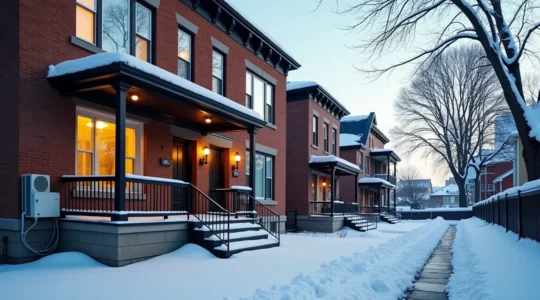
Which Eco-Friendly Heating System Is Best for a Montreal Duplex?
Choosing an eco-friendly heating system for a Montreal duplex is less about the technology and more about a strategic property upgrade that mitigates financial liability. Properly calculating your home’s heat loss is the non-negotiable first step before considering any system,…
Read more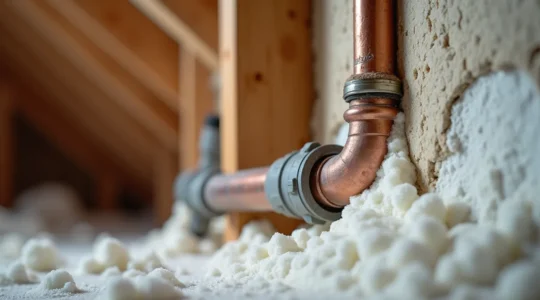
How to Seal Pipe Penetrations to Stop Water and Pest Entry?
Stopping drafts and pests isn’t just about plugging visible holes; it’s about restoring the integrity of your home’s entire building envelope, especially in Montreal’s demanding climate. Unsealed gaps around pipes create pathways for major heat loss, moisture damage, and pest…
Read more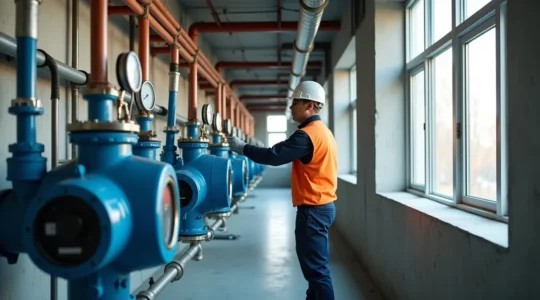
How to Manage Water Damage Risks in High-Rise Montreal Condos?
Managing water damage in a high-rise isn’t just about fixing leaks; it’s about governing a complex vertical plumbing ecosystem where standard homeowner logic fails. The responsibility for a pipe is not based on visibility but on its function within the…
Read more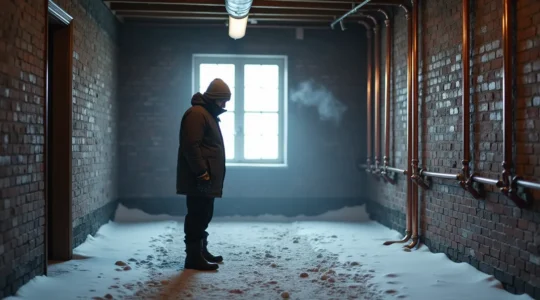
How to Winterize Your Montreal Home’s Plumbing Before -20°C Hits?
In summary: Winterizing your Montreal plumbing is not a chore; it’s a financial strategy to prevent catastrophic damage and six-figure insurance claims. Focus on points of failure: outdoor faucets, pipes in unheated spaces like crawl spaces, and those along exterior…
Read more