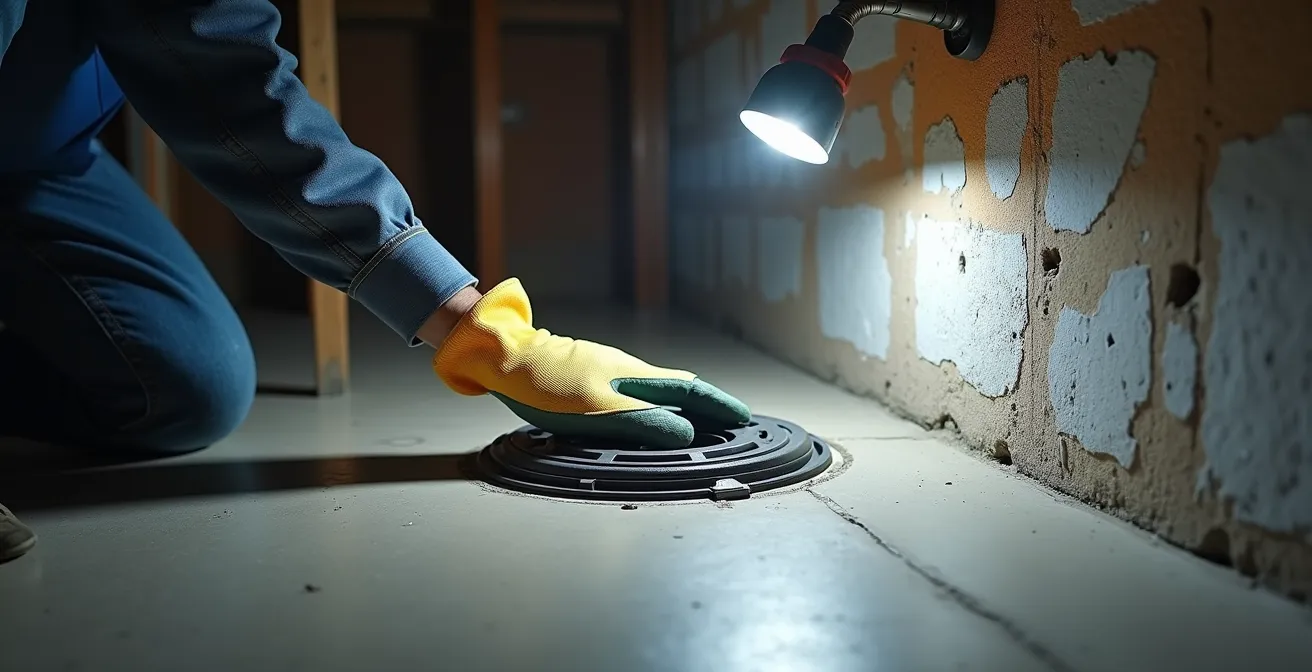
The legality of a backwater valve in Montreal isn’t a simple ‘yes’ or ‘no’—it depends on your building’s age, location, and specific borough by-laws.
- Valves are mandatory in all new constructions since 2011 and often required for properties that have previously flooded.
- Proper installation on the sanitary line (not the storm drain) is critical, especially in the areas of Montreal with combined sewers.
Recommendation: Your primary responsibility is to verify the specific requirements with your local borough office and perform seasonal maintenance to ensure protection.
As a homeowner in Montreal, navigating the regulations around flood protection can feel overwhelming. You hear about sewer backups during heavy spring thaws or intense summer storms, and the term “backwater valve” or “clapet anti-retour” is often mentioned as the definitive solution. However, the information can be fragmented, leading to confusion: is this device recommended, or is it a legal requirement? The answer is nuanced and depends heavily on your specific situation.
Many guides offer generic advice about regular maintenance or the basic function of a valve. They often fail to address the core of a Montrealer’s confusion: the patchwork of rules that can vary from one borough to another and the unique challenges posed by our city’s infrastructural legacy. This isn’t just about having “old pipes”; it’s about understanding the direct impact of combined sewer systems and post-war construction on your specific property.
This guide departs from simple recommendations. It is structured to act as a clear, official clarification from a municipal perspective. We will move beyond the question of “if” you need a valve to the more critical questions of “why,” “which type,” and “how” to ensure it functions correctly within the Montreal context. The true key to protecting your home lies not just in installing a device, but in understanding its role as an interface between your property and the city’s sewer system, especially during a hydraulic surcharge event.
This article will provide a clear framework for your responsibilities as a homeowner. We will examine the mechanics of these valves, outline proper maintenance protocols adapted to our climate, clarify the differences between valve types for various Montreal housing scenarios, and address critical installation mistakes. By understanding these elements, you can confidently ensure your home is protected.
Summary: Do You Legally Need a Backwater Valve in Your Montreal Borough?
- Why Does the Flapper Close Only When Sewer Water Rises?
- How to Open and Clean Your Backwater Valve Safely?
- Normally Open vs. Normally Closed: Which Valve Type Is Better?
- The Error of Installing the Valve on the Storm Drain Instead of Sanitary
- When to Check Your Valve: The Importance of Pre-Storm Inspection
- The Mistake of Never Testing the Check Valve Before Heavy Rains
- Why Do Heavy Rains Cause Sewage Backups in Older Neighborhoods?
- Which Sump Pump Capacity Do You Need for a 1000 Sq. Ft. Basement?
Why Does the Flapper Close Only When Sewer Water Rises?
A backwater valve is a simple yet crucial mechanical device designed to protect your home from one specific event: a municipal sewer backup. Its function is based on a fundamental principle of pressure and gravity. Under normal conditions, the wastewater from your home—from toilets, sinks, and showers—flows freely through your main drain, pushing open a small flap, or “flapper,” inside the valve. Gravity then carries the waste out to the city’s sewer line. The flapper remains open or returns to an open state, allowing air to circulate in your plumbing system.
The critical moment occurs during a hydraulic surcharge event. This happens when the municipal sewer system is overwhelmed, typically by intense rainfall or rapid snowmelt, and its water level rises dramatically. As the city sewer fills, water is forced backward up your home’s sanitary lateral pipe. This reverse flow of water creates pressure against the outside of the valve’s flapper.
This external pressure is what forces the flapper to swing shut, creating a seal. Once closed, it physically blocks the sewage and stormwater from the city’s overloaded system from entering your basement. It’s a one-way gate: it allows water out from your house but prevents it from coming back in. The valve will remain sealed as long as the pressure from the municipal sewer is greater than the pressure inside your home’s plumbing. Once the surcharge event subsides and the city’s sewer level returns to normal, the pressure equalizes, and the flapper can open again to allow normal drainage.
Understanding this mechanism is key. The valve is not an electronic device; it is a passive guard that reacts solely to the physical pressure of rising sewer water. Its reliability depends entirely on its ability to move freely and create a tight seal when that pressure is applied.
How to Open and Clean Your Backwater Valve Safely?
A backwater valve is only effective if its flapper can move freely and create a perfect seal. Debris common to the Montreal environment, such as road salt, grit from snow clearing, or autumn leaves, can easily obstruct the mechanism and render it useless. Therefore, regular inspection and cleaning are not just recommended; they are an essential part of your home’s flood prevention protocol. Performing this maintenance is a straightforward process that any homeowner can undertake.
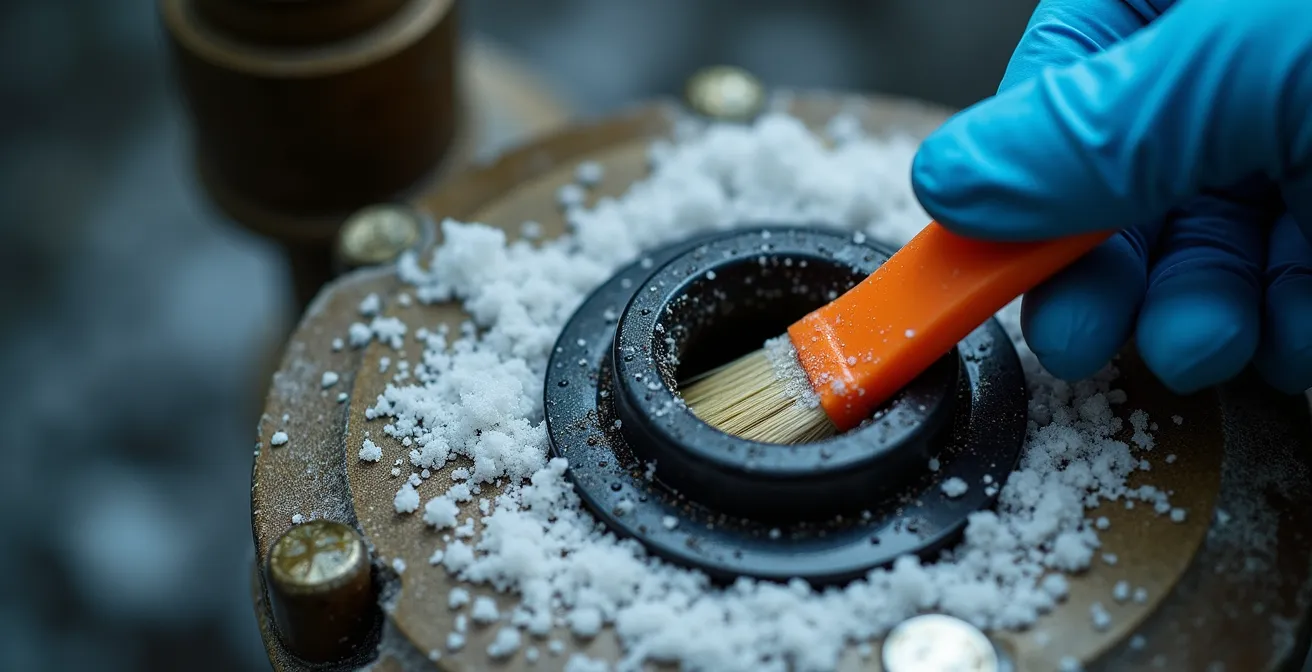
As the image above illustrates, the internal components of the valve are accessible once the cover is removed. The primary goal is to ensure the hinge of the flapper is clear and that the surface where the flapper seats is free of any particles that could prevent a watertight seal. This is a hands-on task that requires only basic tools and a few minutes of your time.
Your Montreal Seasonal Maintenance Protocol
- Pre-Melt Check (March): Inspect the valve before the major spring thaw (“la fonte des neiges”) begins, as the ground is saturated and systems are at high risk.
- Pre-Storm Season Check (Late June): Clean the valve before the peak summer thunderstorm season to prepare for sudden, heavy downpours.
- Open Safely: Carefully remove the cleanout plug or cap. Many have a threaded design. Be sure to keep the O-ring or gasket with the cap to ensure a proper seal upon reassembly.
- Inspect for Debris: Use a flashlight to look inside the valve body. Specifically check the hinge and the sealing edge of the flapper for any accumulated grit, leaves, or other obstructions.
- Clean and Test: Wearing rubber gloves, remove any visible debris. Flush the valve with a bucket of water to clear out smaller particles. Manually move the flapper back and forth to confirm it moves freely without sticking.
Once your inspection and cleaning are complete, ensure the O-ring is in good condition and properly seated before securely tightening the cap. This simple, twice-yearly check is the most important action you can take to guarantee your valve will protect you when needed.
Normally Open vs. Normally Closed: Which Valve Type Is Better?
When selecting or evaluating a backwater valve, one of the key distinctions is whether it is a “normally open” or “normally closed” model. This refers to the default position of the flapper when no water is flowing. The choice between them is not about which is universally “better,” but which is more appropriate for your specific Montreal housing scenario and the level of risk you face. Since 2011, stop valves are mandatory in all new Montreal buildings, but the type can vary.
A normally open valve allows for constant airflow through the plumbing system, which can help prevent the buildup of sewer gases. This is often an advantage in older buildings, like many of Montreal’s plexes and triplexes built before the 1960s, where plumbing ventilation may be less robust. However, its protection is reactive; the flapper must swing shut during a backup event.
A normally closed valve, by contrast, provides a constant seal. Wastewater flowing from the house pushes the flapper open, and it closes again once the flow stops. This offers maximum, proactive protection, as it is already sealed before a backup event begins. For this reason, the City of Montreal often requires normally closed valves for properties in designated flood zones or for homes that have previously experienced flooding. For homeowners who leave for the winter (“snowbirds”), this type provides peace of mind, though it is crucial to check the seal before a long absence. The cost for a retrofit installation can be significant; one study shows that while installing a valve under an existing slab costs approximately $560, financial assistance may be available through programs like RenoPlex for qualifying homes.
The following table outlines the best use cases for each type within the Montreal context.
| Valve Type | Best For | Montreal-Specific Advantages | Potential Issues |
|---|---|---|---|
| Normally Open | Older plexes, triplex buildings | Allows airflow, prevents sewer gas buildup common in pre-1960 buildings | Less protection during sudden backups |
| Normally Closed | Flood zones (Pierrefonds-Roxboro, Verdun lowlands) | Maximum protection for snowbirds leaving for winter | Must check seal before extended absence |
Ultimately, your decision should be guided by your borough’s specific by-laws and a realistic assessment of your property’s risk level. For high-risk areas, a normally closed valve is the superior choice for protection.
The Error of Installing the Valve on the Storm Drain Instead of Sanitary
Perhaps the most critical and costly mistake in backwater valve installation is placing it on the wrong pipe. A backwater valve is designed to protect your home from a municipal sanitary sewer backup. It must be installed on the main sanitary line that carries waste from your home’s fixtures. It offers absolutely no protection if it is mistakenly installed on the storm drain, which is intended to handle rainwater and foundation drainage.
This confusion is especially prevalent in Montreal, where the city’s infrastructural legacy complicates matters. According to municipal officials, two-thirds of Montreal Island uses combined sewers. In these older systems, a single underground pipe carries both sanitary sewage and stormwater runoff. In newer areas, these systems are separate. If your home has separate drains for sanitary and storm, placing the valve on the storm line would allow a sanitary sewer backup to bypass the valve completely and flood your basement. It would also block your foundation drain from evacuating groundwater, potentially causing hydrostatic pressure to build up against your foundation walls.
Ensuring the valve is installed on the correct line is non-negotiable. It must be located downstream from all the fixtures in your home but before the pipe exits the foundation wall to connect to the city main. A licensed CMMTQ-certified plumber has the expertise to make this determination correctly. Here are the steps to verify a proper installation:
- Dye Test: A plumber can perform a dye test, flushing a special non-toxic dye down a toilet to visually confirm which pipe is the sanitary main.
- Camera Inspection: For older homes with cast iron pipes, a camera snake inspection can identify the lines and their condition.
- Permit and Inspection: A plumbing permit must be obtained from the City of Montreal before installation. A post-installation inspection by a borough official is often required to ensure the work complies with the code, providing a final layer of assurance.
This verification is the homeowner’s responsibility. Do not assume an installation is correct without confirmation. An improperly placed valve provides a false sense of security and can lead to catastrophic damage.
When to Check Your Valve: The Importance of Pre-Storm Inspection
Owning a backwater valve is not a “set it and forget it” solution. Its effectiveness is entirely dependent on its readiness at the exact moment a storm hits. Proactive inspection is key, and your maintenance schedule should be dictated by Montreal’s specific weather patterns and official warnings, not just a generic date on a calendar. Thinking of it as a pre-event preparedness task, rather than routine maintenance, can make all the difference.
The goal of a pre-storm inspection is simple: to ensure nothing is impeding the valve’s flapper from closing and sealing tightly. Debris can accumulate at any time, and a valve that worked perfectly in the fall may become fouled with sand and salt from winter road clearing operations. A quick check before a high-risk event is your final confirmation that your home’s primary line of defense is operational.
Your inspection schedule should be dynamic and triggered by specific environmental cues unique to our region. This ensures your efforts are focused when the risk of a municipal sewer surcharge is at its highest. A formal, weather-based protocol is the most effective approach:
- Heavy Rainfall Warnings: Check your valve immediately any time Environment and Climate Change Canada issues a “Heavy Rainfall Warning” for the Montreal area. This is your most direct alert of an imminent threat.
- Major Spring Thaw (La Fonte des Neiges): In March and April, the combination of melting snow and rain-saturated ground places enormous strain on the sewer system. This is a critical period for inspection.
- Post-Event Check: After any significant storm, it is wise to perform a quick check, even if your basement remained dry. The event itself could have washed debris into the valve mechanism.
- Pre-Vacation Check: Before leaving your home for an extended period, especially for “snowbirds” heading south for the winter, a final test ensures your property remains protected in your absence.
In addition to these triggered checks, scheduling an annual professional inspection with a CMMTQ-certified plumber is a valuable part of a comprehensive maintenance plan. They can identify potential wear and tear on components like the O-ring or flapper that might not be obvious to an untrained eye.
The Mistake of Never Testing the Check Valve Before Heavy Rains
The most common reason a backwater valve fails during a storm is not mechanical breakdown, but simple obstruction. Assuming the valve is functional without ever performing a manual test is a significant and avoidable mistake. A few grains of sand or a small leaf stuck in the hinge are all it takes to compromise the seal, allowing thousands of litres of sewer water into your basement. A manual test before the rainy season is the only way to be certain your primary defense is ready.
This test is not complicated and does not require specialized plumbing knowledge. It involves manually operating the valve’s components to ensure they move as intended. This process simulates the action of a backup and confirms the flapper can travel through its full range of motion without sticking or catching on debris. It is a tangible way to gain peace of mind before a storm is on the horizon.
Here is the standard procedure for a manual float test, which should be performed at least once a year, ideally before the summer storm season:
- Prepare Safely: Always wear rubber gloves and protective eyewear before opening the valve.
- Access the Valve: Carefully remove the cleanout plug or cap, taking care to keep the rubber O-ring with the plug.
- Visual Inspection: Use a flashlight to inspect the valve chamber for debris, paying close attention to the hinge area. In Montreal, look specifically for the tell-tale signs of salt and sand from winter road maintenance.
- Manual Movement Test: Reach into the valve and manually move the gate or flapper back and forth. It should move smoothly and without resistance.
- Flush the System: Pour a bucket of clean water through the valve to help wash away any small particles or sediment you may have missed.
- Document for Insurance: It is a wise practice to document your test with a quick photo and note the date. This can serve as proof of due diligence for your home insurance provider.
- Secure the Cap: Check the O-ring for any cracks or damage. Replace it if necessary. Secure the cap tightly to ensure a watertight and airtight seal.
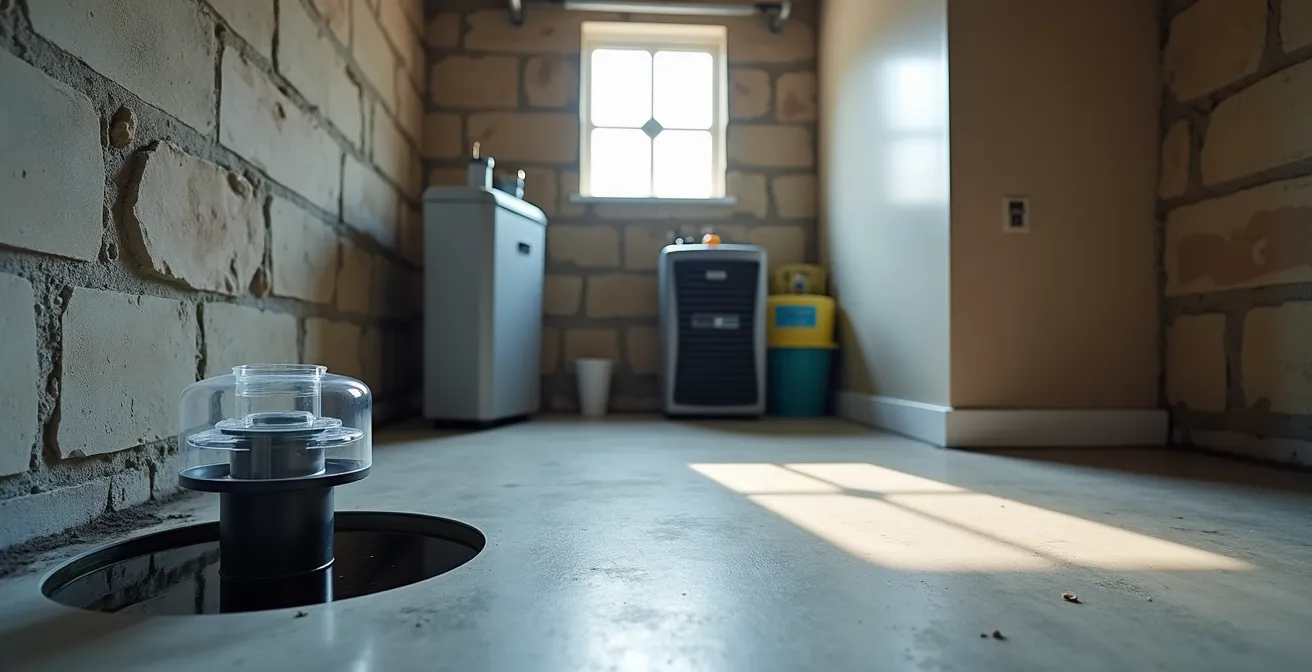
This simple test, part of a complete flood protection system as shown above, transforms the backwater valve from a passive, unknown element in your basement floor into a verified and reliable part of your home’s defense system.
Why Do Heavy Rains Cause Sewage Backups in Older Neighborhoods?
To fully appreciate the necessity of a backwater valve in Montreal, one must understand the city’s infrastructural legacy. The frequent sewage backups experienced in older boroughs like Plateau Mont-Royal, Rosemont-La Petite-Patrie, and Verdun are not random accidents; they are a direct consequence of historical engineering choices. The primary cause is the prevalence of combined sewer systems built decades ago.
A combined sewer system uses a single, large-diameter pipe to carry both sanitary wastewater from homes and businesses and stormwater runoff from streets and rooftops. While Montreal’s 60 kilometers of massive interceptor tunnels successfully handle the vast majority of flow to the Jean-R. Marcotte treatment facility, the smaller, local combined sewer lines are the weak point. An infrastructure analysis reveals that the majority of Quebec’s sewers were built between 1950 and 1960. These systems were designed for the rainfall patterns and urban density of that era.
Today, during an extreme rainfall event, these aging systems are quickly overwhelmed. A massive volume of stormwater enters the pipe, and its capacity is exceeded. When this hydraulic surcharge occurs, the system has nowhere else to go. The water level rises, and the path of least resistance is often backward—up the lateral sewer connections into the basements of homes. Your property is, in effect, acting as a relief valve for an overloaded municipal system. It’s a systemic issue that manifests as a localized disaster in your basement.
This is why the problem is more acute in certain neighborhoods. They are serviced by the oldest parts of this combined system. While the city continues to invest in modernizing this infrastructure, including the construction of retention basins, the process is gradual and expensive. For the foreseeable future, the risk remains. A backwater valve is therefore not just a piece of plumbing; it is your personal and essential line of defense against a known vulnerability in the public infrastructure that serves your home.
Key Takeaways
- Verifying borough-specific by-laws is your first and most critical responsibility as a homeowner.
- A backwater valve only protects from municipal sewer backups; it does nothing to prevent groundwater infiltration.
- Regular, weather-triggered maintenance is not optional; an obstructed valve is a useless valve.
Which Sump Pump Capacity Do You Need for a 1000 Sq. Ft. Basement?
A frequent and dangerous point of confusion for homeowners is the distinction between a backwater valve and a sump pump. They are not interchangeable. They protect against two completely different sources of water. Understanding this difference is essential for creating a complete flood protection strategy for your Montreal home. A backwater valve provides systemic protection from the city’s sewer line, while a sump pump provides localized protection from groundwater around your foundation.
A sump pump is an electric pump installed in a pit, or “sump,” at the lowest point of your basement. It addresses the issue of hydrostatic pressure—the pressure exerted by groundwater in saturated soil. After heavy rain or during the spring thaw, the water table can rise, and this pressure can force water through cracks in your foundation or up through the floor. The sump pump’s float switch rises with the water level in the pit, activating the pump, which then expels the water away from your home’s foundation. It is essential for homes in areas with high water tables, such as Verdun or LaSalle.
For an average 1000 sq. ft. basement in Montreal, a 1/2 horsepower (HP) sump pump is generally considered the appropriate capacity. This provides a good balance of pumping power and efficiency. However, a sump pump is useless during a power outage—a common occurrence during severe storms. Therefore, a battery backup system is not an optional upgrade; it is a mandatory component for reliable protection. A 12V deep-cycle marine battery is the minimum requirement for most backup systems.
As experts in home protection often state, these systems represent different investments for different problems. In their guide, Square One Insurance highlights the cost difference:
Installation costs range from $2,000 to $5,000 to retrofit a backwater valve, while new construction only costs around $500
– Square One Insurance, Backwater Valves: How They Work, Costs and Repairs
The following table clarifies their distinct roles:
| Protection Type | What It Prevents | Montreal-Specific Need | Recommended Capacity |
|---|---|---|---|
| Backwater Valve | City sewer backup | Critical for combined sewer areas | N/A – mechanical device |
| Sump Pump | Groundwater infiltration | Essential for high water table areas (Verdun, LaSalle) | 1/2 HP for 1000 sq ft basement |
| Battery Backup | Power outage failure | Mandatory for storm-related outages | 12V marine battery minimum |
A backwater valve and a sump pump are two halves of a complete basement protection system. Having one without the other leaves your home exposed to a significant and predictable risk.
Your final step is to move from understanding to action. Verify the specific by-laws with your local borough office and schedule an inspection with a CMMTQ-certified plumber to assess your home’s unique needs and ensure compliance.