Blog
Montreal’s plumbing and heating systems face challenges unlike almost any other major North American city. With winter temperatures regularly plunging below -20°C and a building stock that ranges from century-old walk-ups to modern high-rises, understanding how water, heat, and pressure behave in your home isn’t just academic—it’s essential for protecting your property and your wallet. Every winter, thousands of Montreal homeowners face burst pipes, flooding, and heating failures that could have been prevented with better knowledge of how these systems actually work.
This resource brings together the fundamental principles, practical diagnostics, safety protocols, and regulatory requirements that every Montreal homeowner and property manager should understand. Whether you’re trying to decode strange noises in your radiators, prevent ice-related damage, navigate insurance requirements, or make informed decisions about repair versus replacement, the following sections break down complex technical concepts into accessible, actionable information. From the physics that governs water pressure to the environmental impact of your heating choices, consider this your starting point for mastering the systems that keep your home comfortable and safe year-round.
The Science Behind Your Home’s Plumbing and Heating
Before troubleshooting problems or making upgrade decisions, understanding the fundamental physics at play gives you a significant advantage. These aren’t abstract theories—they directly explain why your third-floor bathroom has weak water pressure, why your heating bills spike in certain conditions, or why your basement floods when specific factors align.
Pressure, Gravity, and Flow Fundamentals
Water pressure in your home operates on principles that seem simple but have complex implications. Static pressure—what you measure when no water is flowing—typically ranges from 40 to 80 PSI in Montreal’s municipal system, though older neighborhoods near Mount Royal may experience lower pressure due to elevation. When you open a faucet, that pressure drops as water begins moving, a phenomenon called pressure loss that increases with distance, pipe diameter changes, and the number of bends in your plumbing.
Gravity plays an equally crucial role, particularly in drainage systems. Your waste water doesn’t need pressure—it needs slope. The standard quarter-inch drop per foot of horizontal pipe allows gravity to do its work without allowing solid waste to separate from the water carrying it. Too steep, and water races ahead leaving solids behind; too shallow, and everything moves sluggishly, creating clogs. This gravity limit explains why basement bathrooms often require ejector pumps and why DIY plumbing modifications frequently create drainage nightmares.
Heat Transfer: Convection, Conduction, and Stack Effect
Heat moves through three mechanisms in your home, and understanding each helps you diagnose heating problems and improve efficiency. Conduction is direct transfer through materials—why metal pipes feel cold to touch in winter and why insulation works. Convection is heat transfer through fluid movement, the principle behind both your hot water recirculation loops and the way warm air rises in your home.
The stack effect deserves special attention in Montreal’s multi-story buildings. As indoor air warms, it becomes less dense and rises, creating negative pressure in basements and positive pressure in upper floors. During brutal January cold snaps, this effect intensifies dramatically. Warm air escaping from your upper floors pulls cold air into basements through any available crack, while simultaneously creating backdraft conditions that can pull combustion gases from furnaces and water heaters into living spaces—a serious safety concern that building codes specifically address through proper venting requirements.
Montreal’s Unique Challenge: Protecting Your Systems from Winter
Montreal’s freeze-thaw cycles are relentless and unforgiving. While cities further north may have colder average temperatures, few combine Montreal’s intense cold with its density of older building stock, creating a perfect storm for winter plumbing disasters. Understanding how ice forms, where it forms, and what it does to your systems is non-negotiable for property protection.
Understanding Ice-Related Damage: Financial and Structural Consequences
Water expands approximately 9% when it freezes, exerting pressure that exceeds the tensile strength of copper, PEX, and even cast iron pipes. A single burst pipe can discharge hundreds of gallons per hour, causing damage that routinely exceeds $20,000 in repair costs. But the financial impact extends beyond immediate water damage. Structural consequences include compromised floor joists, ruined insulation that reduces R-value permanently, and mold growth that may not appear for weeks but requires expensive remediation.
The most vulnerable points in Montreal homes aren’t always obvious. Exterior walls on the north side of buildings, pipes in unheated crawl spaces, and water lines that run through uninsulated rim joists fail most frequently. Less obvious are pipes that run through parking garages in condo buildings—technically indoors but unheated and exposed to vehicle traffic that brings in cold air repeatedly throughout winter. Insurance companies increasingly require documentation of preventive measures in these high-risk areas.
Thermal Bridging and Dew Point Considerations
Thermal bridging occurs when conductive materials like metal studs or pipes create pathways for heat to bypass insulation. In plumbing contexts, this means copper pipes running through exterior walls conduct cold from outside directly to the water inside, creating freeze risk even in supposedly insulated cavities. The solution isn’t just more insulation around the pipe—it’s breaking the thermal bridge with insulating pipe supports and ensuring continuous insulation without gaps.
The dew point—the temperature at which water vapor condenses into liquid—creates different but equally expensive problems. When warm, humid indoor air meets cold surfaces (like cold water pipes in summer or uninsulated ductwork), condensation forms. Over years, this persistent moisture rots wood framing, corrodes pipes from the outside, and creates ideal conditions for mold. Montreal’s humid summers make this a year-round concern, not just a winter issue. Proper vapor barriers and consistent insulation temperatures prevent condensation from forming in the first place.
Early Warning Signs You Shouldn’t Ignore
Systems rarely fail without warning. Recognizing early signals gives you time to prevent catastrophic failures:
- Frost on pipes or valves in supposedly heated spaces indicates insulation failure or air leaks bringing cold air to vulnerable areas
- Water pressure changes that develop gradually often signal ice formation partially restricting flow before complete blockage occurs
- Strange sounds like banging when heating turns on (called water hammer) indicate loose pipes that expand and contract with temperature changes, eventually leading to joint failure
- Discolored water appearing seasonally suggests corrosion accelerating during specific conditions, requiring investigation before pipe failure
- Unexplained water meter activity when no fixtures are running reveals leaks that may be small now but indicate failing pipe integrity
The cost of addressing these warning signs is measured in hundreds of dollars. The cost of ignoring them is measured in thousands.
Common Installation and Design Errors That Cost You Money
Even professional installations can harbor mistakes that reduce efficiency, create safety hazards, or accelerate system failure. Understanding these common errors helps you evaluate contractor work, diagnose performance problems, and make informed decisions during renovations.
Sizing Errors: When Bigger Isn’t Better
The persistent myth that oversizing provides better performance drives countless expensive mistakes. An oversized water heater doesn’t give you more hot water—it gives you higher standby losses as a larger volume of water constantly cools and reheats. The energy wasted over a 12-year heater lifespan often exceeds the purchase price of the unit itself. Similarly, oversized heating zones cycle on and off rapidly, never reaching optimal efficiency and wearing out components faster.
Undersizing creates different problems but stems from the same calculation errors. A heat loss calculation for Montreal homes must account for design temperatures around -25°C, not the milder temperatures contractors from other regions might assume. Undersized heating systems run continuously during cold snaps, never achieving comfortable temperatures and costing more to operate while delivering less comfort. Proper sizing requires room-by-room calculations accounting for insulation values, air changes, window quality, and exposure—not rules of thumb based on square footage.
Venting Errors and Their Consequences
Plumbing venting allows air into drain systems to prevent siphoning that would pull water from P-traps, eliminating the seal that blocks sewer gases from entering your home. Improperly vented fixtures drain slowly, make gurgling sounds, and allow harmful gases including methane and hydrogen sulfide into living spaces. In extreme cases, negative pressure can completely empty traps, creating health hazards.
Heating system venting carries even higher stakes. Atmospheric gas appliances rely on proper draft through chimneys or vents to exhaust combustion gases including deadly carbon monoxide. When renovation work disconnects old chimneys, changes air pressure through improved air sealing, or adds exhaust fans that overpower the draft, backdrafting can pull these gases into homes. Current building codes in Montreal require spillage testing after any work that might affect combustion appliance venting, but this step gets skipped in unlicensed work.
Diagnosing System Health Through Acoustic Listening and Corrosion Signals
Professional plumbers increasingly use acoustic listening technology to detect leaks and corrosion without destructive investigation. These sensitive instruments detect the specific frequency signatures of water escaping under pressure, pinpointing leak locations within inches even through concrete. For homeowners, simpler acoustic clues tell important stories: hissing indicates leaks or pressure problems, clicking sounds suggest thermal expansion in improperly supported pipes, and banging reveals water hammer from loose pipes or missing air chambers.
Corrosion signals appear before pipes fail catastrophically. Discolored water, particularly when isolated to specific fixtures or occurring at specific times of day, reveals advanced corrosion releasing iron or copper into your water. White or green deposits around joints indicate leaks allowing water to wick through threads. Pipes that appear flaky or pitted on exposed sections are failing invisibly inside walls too. Modern diagnostic tools like pipe cameras allow inspection of drain lines to assess corrosion, scale buildup, and root intrusion before they cause backups.
Safety, Emergencies, and Flood Prevention
When plumbing or heating systems fail, response time determines whether you face minor inconvenience or major disaster. Understanding emergency protocols, knowing where critical controls are located, and maintaining systems properly transforms potential catastrophes into manageable incidents.
Emergency Control Protocols and Valve Mechanics
Every household member should know the location and operation of the main water shutoff valve. In Montreal homes, these are typically in basements near where the water service enters, but in apartments and condos they’re often in hallways or mechanical rooms. Quarter-turn ball valves operate with a 90-degree handle rotation; traditional gate valves require multiple rotations and often become stuck from corrosion. Testing your shutoff annually prevents the nightmare scenario of discovering during an emergency that the valve is seized.
Valve mechanics matter more than most homeowners realize. Ball valves provide reliable shutoff but can fail catastrophically when the ball separates from the stem. Gate valves close slowly, allowing gradual pressure reduction that prevents water hammer, but their complex internal mechanisms corrode and break. Modern quarter-turn valves combine reliability with speed, but cheap versions fail quickly. Understanding these tradeoffs helps you prioritize which valves deserve professional-grade components—main shutoffs, water heater isolation valves, and outdoor hose bibs being prime candidates.
Flood Prevention and FOG Separation
Montreal’s combined sewer system in older neighborhoods means that during heavy rain events, sanitary sewers can backup into homes through basement drains. Backwater valves prevent this reverse flow but require proper installation with access for cleaning and inspection. Many homeowners discover their backwater valve only when it fails, often because it was never maintained and became stuck in one position or blocked by debris.
FOG (Fats, Oils, and Grease) separation prevents the most common cause of drain blockages in residential properties. These materials flow easily when hot but solidify as they cool, coating pipe walls and trapping other debris. Over time, this buildup completely blocks drains, causing backups. Commercial properties require grease interceptors, but residential properties cause problems too. The solution isn’t just avoiding pouring grease down drains—it’s understanding that even small amounts from dish washing accumulate over time, requiring periodic professional drain cleaning before blockages occur.
Energy Efficiency and Environmental Impact
Montreal’s cold climate means heating costs dominate household energy budgets, making efficiency improvements some of the highest-return investments available. Understanding efficiency metrics, realistic performance expectations, and the environmental implications of equipment choices allows informed decision-making that benefits both your budget and the broader environment.
Understanding Standby Loss and the EF Factor
Standby loss—the heat that escapes from stored hot water even when you’re not using any—accounts for up to 20% of water heating costs with traditional tank heaters. Well-insulated tanks minimize this loss, but physics dictates that maintaining 60°C water in a tank sitting in a 20°C basement requires constant energy input. The R-value of tank insulation directly determines standby loss, making insulation upgrades one of the simplest efficiency improvements available.
The Energy Factor (EF) provides standardized efficiency comparison across water heaters. Higher numbers indicate better efficiency, but understanding what the rating includes matters for real-world performance. EF ratings include standby losses, making tankless heaters appear more efficient—they have no standby loss—but don’t account for pilot light energy consumption in gas models or electrical inefficiency in electric models. For Montreal’s climate and municipal water temperature around 8°C in winter, actual performance often differs significantly from rated efficiency, making local performance data more valuable than manufacturer specifications alone.
Repair vs. Replace: Environmental Impact Strategies
The conventional wisdom of replacing equipment at first sign of trouble ignores the substantial embodied energy—the total energy required for manufacturing, transportation, and installation—in new equipment. A furnace contains steel, copper, aluminum, and complex electronics, representing hundreds of hours of embodied energy. Sometimes repair extends equipment life effectively, preventing that embodied energy waste while avoiding the carbon emissions from manufacturing replacement equipment.
The switch point—when replacement becomes more environmentally sound than continued repair—depends on multiple factors. Equipment nearing end of rated lifespan with declining efficiency and requiring expensive repairs generally justifies replacement. Mid-life equipment with minor issues usually favors repair. The calculation must include the carbon footprint of new equipment production versus the increased operating emissions from older, less efficient equipment. For Montreal homeowners, local utility incentives often shift this equation by subsidizing high-efficiency replacements, effectively reducing both financial and environmental costs of upgrading.
Consumption Tiers and Usage Patterns
Hydro-Québec’s rate structure creates consumption tiers where electricity costs increase after exceeding daily baseline amounts during winter months. For electrically heated homes, this means the first kilowatt-hours each day cost significantly less than peak usage hours. Understanding this structure influences everything from setback thermostat strategies to heat pump selection. Even for gas-heated homes, water heating and household electricity follow similar patterns where concentrated usage creates inefficiency while distributed usage optimizes consumption.
Heat pump technology deserves particular attention in Montreal’s evolving energy landscape. Modern cold-climate heat pumps maintain efficiency at temperatures that would have defeated earlier models, though performance still drops significantly below -15°C. This creates optimization opportunities: heat pumps handle the majority of milder winter days efficiently, with fossil fuel backup only during extreme cold snaps. This hybrid approach minimizes both operating costs and environmental impact while maintaining comfort during all conditions.
Legal Framework: Regulations, Insurance, and Property Boundaries
Quebec’s regulatory environment for plumbing and heating work protects consumers but creates compliance requirements that homeowners and contractors must navigate. Understanding these regulations, insurance requirements, and property responsibility boundaries prevents legal problems and ensures work meets safety standards.
Compliance Requirements and License Subclasses
The Régie du bâtiment du Québec (RBQ) requires licensing for plumbing and heating work, with license subclasses specifying exactly what work each contractor can legally perform. A plumber licensed for residential work cannot legally perform commercial installations; a heating contractor may hold licenses for oil systems but not gas. Homeowners who hire unlicensed contractors face multiple problems: work may not meet code, insurance may refuse claims for damage resulting from that work, and selling the property later requires disclosure of unpermitted work that can derail sales or reduce value.
Avoiding compliance fines starts with verifying contractor licenses through the RBQ database before work begins and obtaining proper permits for regulated work. In Montreal, even seemingly minor work like replacing a water heater or installing a new furnace requires permits and inspection. The permit process ensures work meets current code, provides documentation for future owners, and protects your insurance coverage. Permit fees are modest compared to the risk of unpermitted work, and inspection often catches problems before they become expensive failures.
Insurance Implications and Mandates
Homeowner insurance policies increasingly include specific requirements for plumbing and heating systems. Insurance mandates may require professional winterization of seasonal properties, regular heating system maintenance, or specific protective measures like backwater valves in flood-prone areas. Failure to meet these requirements can void coverage, leaving you personally liable for tens of thousands in flood damage that would otherwise be covered.
When damage occurs, understanding insurance implications determines claim outcomes. Sudden and accidental damage—like a pipe bursting from freezing—is typically covered. Gradual damage from lack of maintenance—like slow corrosion finally causing a leak—often isn’t covered. This distinction means that addressing warning signs promptly not only prevents expensive damage but ensures insurance will cover damage if prevention fails. Documentation matters enormously: photographs of system condition, maintenance records, and repair invoices all support claims and demonstrate reasonable care.
Clarifying Ownership Boundaries: Where Your Responsibility Ends
The interface between private property and municipal infrastructure creates frequent confusion about maintenance responsibility. In Montreal, homeowners typically own and must maintain the water service line from the municipal main to their home, which may run dozens of feet through your yard and the city’s right-of-way. When these lines fail—often from corrosion in old galvanized steel or lead pipes—replacement costs several thousand dollars and is the homeowner’s responsibility, not the city’s.
Understanding combined sewers explains why basement flooding sometimes occurs during heavy rain despite your plumbing being in perfect condition. Montreal’s older neighborhoods use combined systems where storm water and sanitary sewage share pipes. During extreme rain events, these systems become overwhelmed, and pressure forces water back through the lowest opening—usually basement floor drains. While the city maintains the sewer main, protecting your property from this backup through backwater valves and sump pumps remains your responsibility. The boundary line is typically at the property line or sometimes at the foundation wall, depending on when the building was constructed and local regulations at that time.
Understanding your plumbing and heating systems transforms you from a reactive homeowner managing crises to a proactive steward preventing problems before they develop. The physics principles, diagnostic techniques, regulatory requirements, and efficiency strategies covered here provide the foundation for informed decisions about maintenance, repairs, and upgrades. Montreal’s demanding climate doesn’t forgive ignorance or neglect, but rewards knowledge with lower costs, greater comfort, and avoided disasters. Whether you’re investigating strange noises, planning a renovation, or simply trying to understand your utility bills, these fundamentals give you the context to ask better questions, evaluate contractor recommendations critically, and protect your most significant investment—your home.
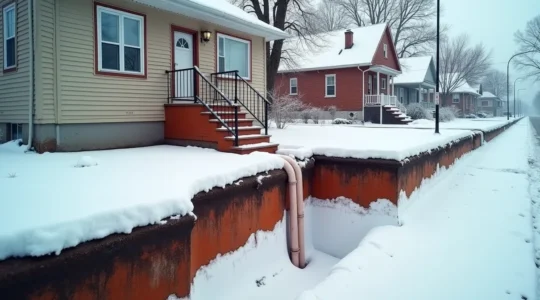
Blocked Sewer Lateral? Who Is Responsible: You or the City of Montreal?
The line is clear: homeowners are 100% responsible for the sewer lateral from their house to the municipal connection point, but liability is complicated by Montreal’s shared infrastructure. Your private pipe’s failure is often triggered by systemic pressures from the…
Read more
How to Repair High-End Faucets Instead of Throwing Them Away?
Repairing a high-end faucet is an act of stewardship that preserves its value, far surpassing the short-term convenience of replacement. Restoration requires a diagnostic mindset to address the root cause, not just the symptom, which is especially true with Montreal’s…
Read more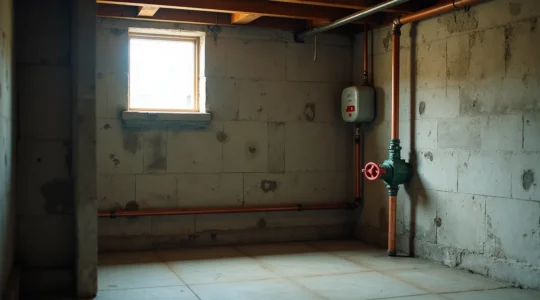
Where Is Your Main Shut-Off Valve and How to Test It?
In summary: Your main water valve is the single most important flood prevention device in your home; you must locate and test it before an emergency. Older gate valves, common in Montreal, are prone to seizing from mineral buildup. Test…
Read more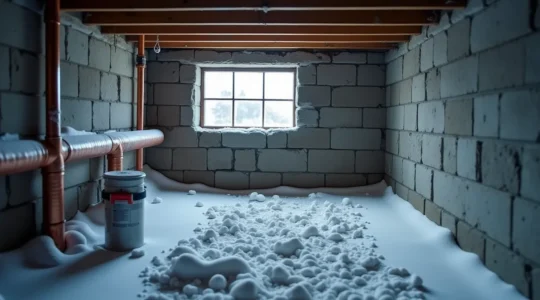
A Montreal Plumber’s Guide: Handling a Frozen Pipe Emergency Before It Bursts
In summary: If you suspect a frozen pipe, immediately locate and close your main water shut-off valve to prevent a potential flood. Apply gentle, indirect heat to the frozen area using a hairdryer or space heater; never use an open…
Read more